



By Karolos Grohmann
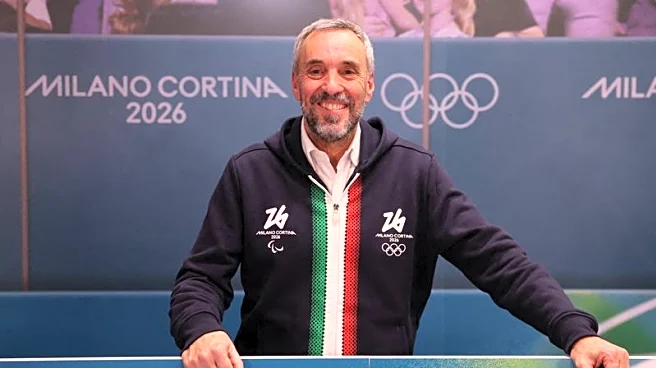
MILAN, Feb 3 (Reuters) - The Milano Cortina 2026 Olympics cost more than initially budgeted, preparations faced near impossible deadlines but organisers managed to deliver most of what was initially planned, Games CEO Andrea Varnier said on Tuesday.
Italian organisers are still rushing to complete some of the venues ahead of Friday's opening ceremony, having faced intense pressure and a mounting budget.
Initially having budgeted around $1.3 billion for staging the Games, that figure
has gone up to more than $1.7 billion, with other associated infrastructure costs also up, including $3.5 billion in public money.
"This journey has proven to be even more arduous than initially imagined, with challenges and difficulties, some expected and some unexpected and probably unnecessary," Varnier told the International Olympic Committee session in his final progress report before the start of the Games.
"The financial situation of our organising committee has been extremely difficult throughout the years," he said. "We must, however, acknowledge that the Games cost more than initially foreseen in the candidature budget.
"You will not find in these Games everything you might have expected or everything we originally wanted to have," he added.
The original Milano Cortina bid included several existing or temporary venues but midway through the preparations, organisers decided to build a new, multi-million dollar, sliding centre at Cortina which faced the tightest of deadlines.
The construction of the new sliding centre was vehemently opposed by the IOC, who wanted the hosts to utilise an existing venue - possibly in a neighbouring country considering Austria, Switzerland and France as well as nearby Germany all have sliding centres.
Organisers are also rushing to complete the Santagiulia ice hockey stadium, which was tested only as recently as January.
"There are moments when an organising committee must operate under emergency conditions and the Milano Cortina Games were certainly one of those cases," Varnier said. "With extremely tight deadlines... we worked under constant pressure coming from all sides.
"One of the most demanding challenges: the sliding centre and ice hockey arena. Both delivered literally to the organising committee at the final breath at the very edge of every available deadline," Varnier said.
"Nevertheless both venues will be outstanding for the Games and we hope they will remain as tangible legacies for the communities."
(Reporting by Karolos Grohmann, editing by Pritha Sarkar)