



By Alan Baldwin
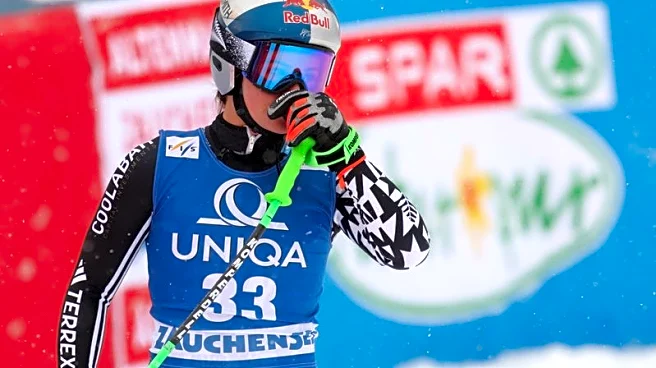
Jan 13 (Reuters) - Alice Robinson might have been a surfer on Bondi Beach rather than a world-beating Alpine skier had her parents not moved from Australia to New Zealand when she was four-years-old.
The Sydney-born 24-year-old has instead made waves in a snow sport where Europeans and North Americans have historically swept up most of the medals and all of the golds.
The most successful skier ever from outside the powerhouse regions, Robinson is ready to take another big step at next
month's Milano Cortina Olympics in what will be her third Winter Games.
The Queenstown-based athlete has won seven career World Cup races, three this season including becoming the first Kiwi to triumph in super-G.
A gold medallist in 2019 at junior level, Robinson took silver in giant slalom at last year's world championships in Saalbach, Austria.
"New Zealand is a small country in the middle of nowhere but we punch well above our weight in terms of sport," she said last February. "It's cool that winter sports are starting to become like that as well."
With several top rivals sidelined by surgery, or fighting their way back from injury, Robinson should be a genuine medal contender as she seeks her Olympic first.
The pressure is something Robinson, who has had her ups and downs but leads this season's super-G standings after two of seven races, feels better equipped to manage.
"There's always been a lot of extra noise around the Olympics ... because nationally in New Zealand it's such a bigger deal than the World Cup tour," she told the FIS Alpine Pulse podcast.
"It's definitely something I put a lot of pressure on myself in the past and it hasn't gone so well. So this time I'm really going to just want to treat it as another race.
"I think we've got good systems in place now that I can just go there and have fun and enjoy being a competitor..."
FIRST FOR THE SOUTHERN HEMISPHERE
Only three countries from outside Europe and North America have won medals in Alpine skiing at a Winter Olympics -- New Zealand, Australia and Japan -- and none have stood on the top step.
At Albertville in 1992 New Zealand's Annelise Coberger -- whose brother Nils is now Robinson's co-coach and part of a close team around her -- won a breakthrough women's slalom silver.
Coberger was the first athlete from the Southern Hemisphere to medal in the sport, followed by Australia's Zali Steggall, who won slalom bronze in 1998.
Before them, Japan's Chiharu Igaya was men's slalom silver medallist in Cortina in 1956.
Robinson competed in giant slalom and slalom at the 2018 Pyeongchang Olympics as a 16-year-old, making her New Zealand's youngest Winter Olympian.
Her first World Cup win came in giant slalom in Soelden, Austria, in October 2019.
Unlike European rivals born and bred in the mountains, Robinson does not have generations of skiers in the family.
What she did have was a ski school on the doorstep and a fearless disposition and raw speed -- now tempered by maturity on the World Cup circuit.
"My mum told me the other day actually that it was cheaper to put me in the ski creche than to get a babysitter," Robinson told the FIS podcast.
Moving to the other side of the world to compete was tough but life would have been very different had she stayed in Australia.
"I think I would have been in sports but I probably would have been playing something that's a bit more mainstream in New Zealand or Australia," she said.
"Maybe I would have been a surfer if I grew up in Bondi."
(Reporting by Alan Baldwin, editing by Peter Rutherford)