





By Mark Gleeson
ATLANTA, July 5 (Reuters) - Knee-jerk coaching changes before World Cups are nothing new to African football, but only Morocco have made them work, bucking the trend again to advance deep in the tournament.
Four years ago, their ground-breaking progress to the semi-final of the World Cup in Qatar came despite changing their coach three months before the tournament.
They did the same again ahead of the finals in Canada, Mexico and the United States, where Morocco meet France in Boston
in the first quarter-final on Thursday.
Mohamed Ouahbi is proving to be an inspired replacement for Walid Regragui, who quit after the Africa Cup of Nations finals earlier this year.
Regragui had not only taken Morocco to the World Cup semi-final but subsequently set a world record for 19 successive international wins, yet he was never a fan favourite and was jeered at times by supporters despite his remarkable achievements.
His departure was not unexpected, but what was also predicted was that Morocco would struggle as a result.
Ouahbi has picked up the mantle, however, without a hiccup and in a short space of time imposed his own mark on the team despite only taking over in March.
He changed personnel and tactical plans, notably dispensing with a traditional centre forward, deploying Ismael Saibari in a 'false nine', while getting midfielder Azzedine Ounahi to play higher up the pitch.
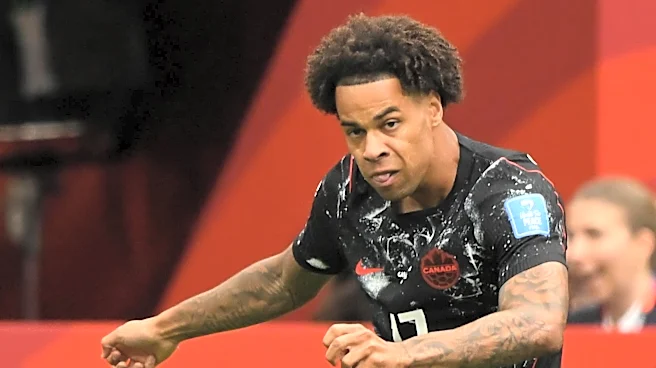
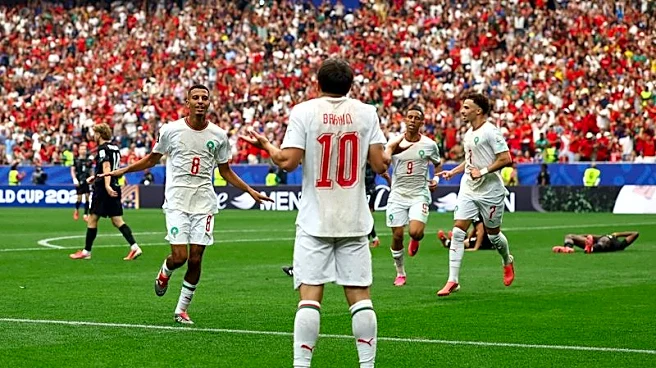
The results were instant - Ounahi scored twice against Canada on Saturday as Morocco became the first side into the last eight.
Ouahbi’s anticipation of potential problems was also key.
To mitigate the loss of injured centre back Nayef Aguerd, he worked hard to persuade Issa Diop to commit to Morocco and also convinced teenage prodigy Ayyoub Bouaddi to switch his international allegiance from France.
It was not always this way for African sides at the World Cup. South Africa dispensed with Carlos Queiroz ahead of the 2002 World Cup in a populist move that backfired, while Nigeria changed their coach months before the 2002 finals, as well as in 2010 when the Swede Lars Lagerbeck came in at short notice.
In both tournaments, they collected a solitary point from their three group fixtures.
Also ahead of the 2010 finals, Ivory Coast drafted in Sven-Goran Eriksson with two months’ notice and, despite a squad that included Didier Drogba, Salomon Kalou, and Yaya Toure, did not advance past the first round.
(Writing by Mark Gleeson in Atlanta; Editing by Toby Davis)