
By Giselda Vagnoni and Cristina Carlevaro
MILAN, Feb 10 (Reuters) - Lindsey Vonn could return to elite ski racing within a year after her displaced tibia fracture, orthopaedic specialists say, but age and
mental resilience will play a key role in whether the former Olympic champion can come back at the highest level.
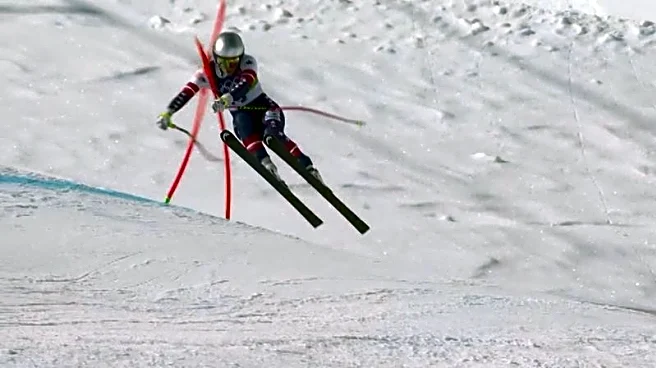
The 41‑year‑old American, who has been in hospital in the northern town of Treviso since Sunday's high‑speed crash in the Milano Cortina Olympics downhill, said in an Instagram post that she had sustained a "complex tibia fracture" and would need multiple surgeries to repair it.
Four Italian medical experts contacted by Reuters on Tuesday said no detailed diagnosis had been released, meaning they could offer only general assessments.
Still, all pointed to the case of 35‑year‑old Federica Brignone, Italy's most successful female skier, who lined up against Vonn in Sunday’s race on Cortina’s Olympia piste just 10 months after suffering multiple leg fractures and a torn anterior cruciate ligament.
"It’s always difficult to give an assessment without seeing the X-rays," Andrea Panzeri, head of the Medical Commission of the Italian Winter Sports Federation (FISI) told Reuters.
"It's a complex fracture that, regardless of age, can limit an athlete's career. But Brignone also had a serious fracture and she recovered," added Panzeri, who was part of the team that operated on the Italian.
RECOVERY TIME OF UNDER A YEAR
Recovery timelines from a complex tibial fracture are well established and, at elite level, supported by specialist medical teams and advanced rehabilitation centres.
"From a displaced tibia fracture, it is possible to return to the ski slopes in eight to 11 months, as Brignone has shown, if there are no complications," said Filippo Pierfrancesco Calanna, an orthopaedic surgeon at Milan’s Gaetano Pini Orthopaedic and Trauma Centre.
Calanna added that the chances of a successful comeback depended heavily on age and motivation.
"It’s obvious that the older you are, the slower the recovery,” he said.
"Even though Vonn has exceptional physical qualities, physical recovery takes longer at her age. But much also depends on motivation, on the mindset."
LONG-TERM HEALTH IMPLICATIONS
When a fracture extends into the joint, it becomes a critical factor for an athlete’s long‑term health.
"There is a risk that arthritis develops earlier which, over time, can lead to reduced joint function, stiffness and pain,” Calanna said.
Vonn has undergone major knee procedures over her career, including a partial implant, and suffered an ACL rupture in the same left leg at the end of January.
Arturo Guarino, former head of the sports traumatology department at Milan's Pini Institute, said the fact that Vonn has had partial replacement surgery on the right knee is another important element.
"It will also be necessary to check whether the prosthesis suffered any consequences from the fall in Cortina. If it did, then the implant will also require intervention, and recovery time could be extended,” said Guarino, who is also a former doctor for Inter Milan soccer team.
Panzeri said Vonn was the only top‑level skier racing with a partial knee prosthesis.
“It’s unclear how long the implant will continue to tolerate the forces generated in competition at this level,” he said.
(Reporting by Giselda Vagnoni and Cristina CarlevaroEditing by Keith Weir and Clare Fallon)