



By Lidia Kelly
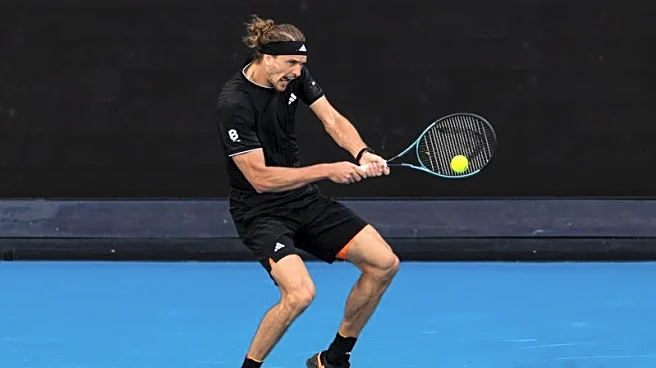
MELBOURNE, Jan 26 (Reuters) - On tennis's biggest stages, Alexander Zverev plays by the arena's timing, the serve clock and the changeover, while a quieter countdown of his blood sugar runs beneath the noise.
"There are definitely two games happening at the same time: there's the match everyone sees and then there's the one only I feel," Zverev told Reuters recently, describing life with type 1 diabetes.
"If I don't manage my diabetes properly, I can't compete at the level I expect."
The German third seed will play Learner Tien on Tuesday for a place in the semi-finals, a year after losing the decider in Melbourne to Jannik Sinner.
The 28-year-old world number three has won an Olympic gold medal, two ATP Finals titles and reached three Grand Slam finals but is still without the major trophy he craves.
Diagnosed with diabetes at four, he says the condition is not a hurdle so much as a second match running under the first, one that punishes haste and rewards routine.
"Most of the time it's preparation that keeps them aligned," he said. "When something unexpected happens, I've learned to stay calm and trust the systems I have in place."
That second match is mostly hidden, he said, managed in the quiet gaps between points and changeovers.
"Probably something as simple as when to take a sip from my bottle or choose to have an energy gel.
"From the outside it just looks like a routine changeover but I'm already planning my next change of ends."
Away from matches, he uses a Medtronic insulin pump, a wearable device that delivers measured insulin to help regulate glucose, but he cannot wear it during competition.
His career has also drawn scrutiny beyond results.
He settled a case last year over allegations he pushed and strangled a former girlfriend, which he denied, and the ATP later dropped another probe citing insufficient evidence.
On court, Zverev's attention turns to seemingly insignificant decisions that fans would never notice, choices tied to managing diabetes alongside the tennis score.
"These are tiny decisions, but they matter," he said.
"You don't need to stop the match or make a big moment out of it. It's about staying one step ahead so the tennis can stay in the focus."
(Reporting by Lidia Kelly in Melbourne; Editing by Peter Rutherford)