
By Field Level Media
Aug 30 (Field Level Media) - The United States Tennis Association has answered player demands for greater compensation with record-breaking prize money at the U.S. Open that starts on Sunday in Flushing, N.Y.
The creation of a new player support program and the Grand Slam Player Advisory Council also has been received positively. One issue at the heart of any upcoming discussions, however -- a larger revenue share from Grand Slam tournaments -- appears to be a non-starter for the USTA.
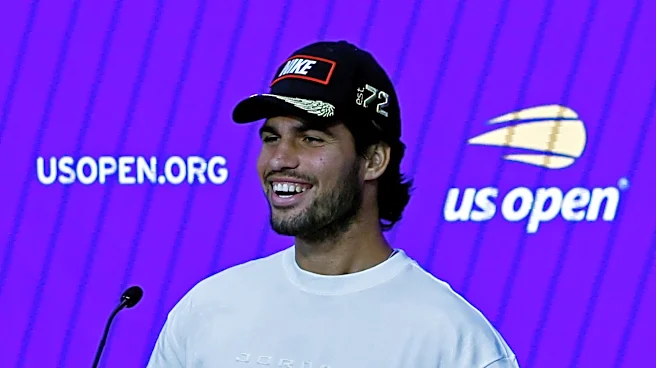
Craig Tiley, who officially became USTA CEO last month, said at a press conference on Saturday that the grand slam tournament does not determine prize money based on revenue.
"We don't use that number as a form of calculating how we compensate, because it can be fairly arbitrary from one event to another," Tiley said, per Front Office Sports. "I believe the tours use profit, so we look at it very differently. We say, what's a fair share that the players need to be compensated on, and what can we do, because even outside of just the compensation package, what other things can we do to help support the players, not just during the event but also year-round."
The U.S. Open has boosted the prize pool by 20%, including a Grand Slam-record $5.5 million to this year's singles champions. The overall compensation is a record $108 million, up from $90 million last year and a whopping 44% jump from $75 million in 2024.
Every player who makes the 128-player main singles draw will earn at least $140,000, the largest in tennis history. Quarterfinalists will earn $780,000 and semifinalists will get $1.45 million, with $2.8 million going to the runners-up.
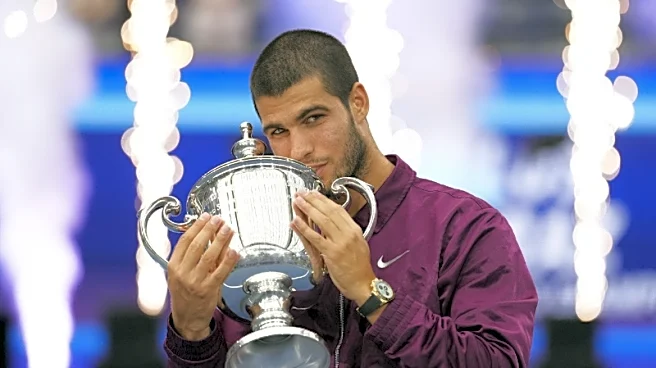
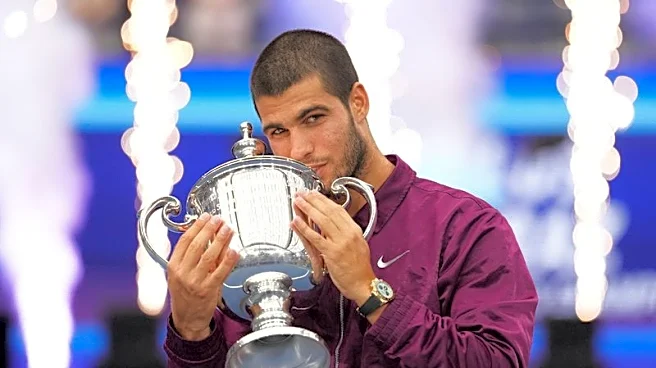
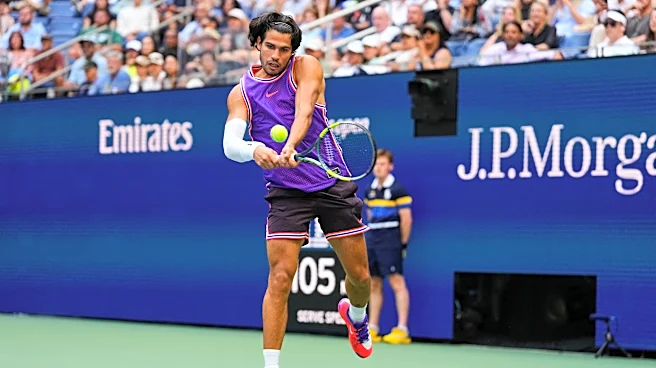
Last year's champions -- Spain's Carlos Alcaraz and Aryna Sabalenka of Belarus -- each earned a winner's check of $5 million.
By comparison, the prize pools for the other 2026 Grand Slam tournaments were: Wimbledon (about $87.5 million), French Open (about $71.7 million) and the Australian Open (about $79.3 million).
According to Front Office Sports, Grand Slam tournaments don't have a fixed share of revenue in place, instead generally paying out about 15% of revenue to players.
The players, however, are targeting a 22% share by 2030. Top players have said that the goal of higher Grand Slam purses is to help lower-ranked players who are trying to start or sustain their careers.
Also among the players' demands are improved retirement benefits and a better focus on player welfare during the two-week Grand Slams.
"You will see the U.S. Open continue to be a very player-friendly event," Tiley said Saturday, per Front Office Sports. "I think our desire to increase the amount that we put on the table was driven really within the organization, the sense that we need to give the players a fair share."
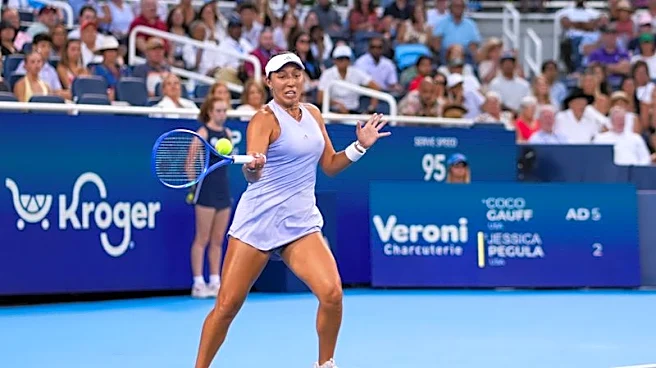
Jessica Pegula, the No. 3 women's singles player in the world, told Front Office Sports on Friday that revenue sharing will be a key topic for the Grand Slam Advisory Council.
"That's something we're still pushing for, and so I think hopefully with this council, that we'll be able to continue those discussions because I know from our side, we still do believe that a revenue share is the best way, and now we'll just have much more open communication," said Pegula, a member of the WTA Players' Council.
She lauded the USTA for creating the new council but said Friday that more information is needed. Tiley said on Saturday that about 10 players have expressed interest in joining the council.
"We think, again, the voice of the players, we believe, is important," Tiley said, per Front Office Sports. "Many of us have been spending a lot of time and energy individually talking to the players. Not just the last week -- it's been going on for years. The Slams having a close player relationship is critical to the success of the Slams and the success of the relationship that we have with the fans, as well."
(--Field Level Media)