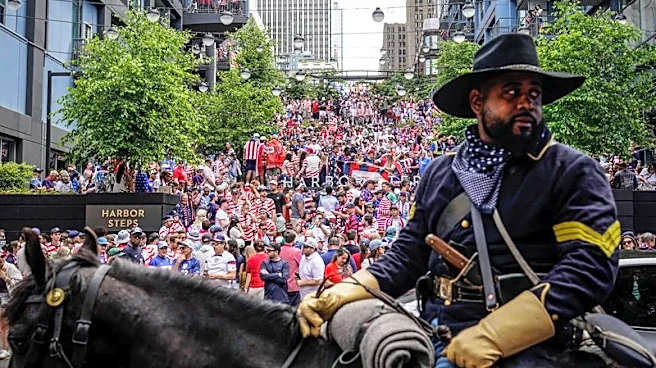






July 2 (Reuters) - Sixteen cities scattered across North America have been hosting the 2026 World Cup, welcoming fans from around the world and transforming stadiums to play the beautiful game.
Reuters has had photographers stationed at every training camp and match, capturing the action on and off the pitch.
Here's a selection of their photos from each host city and some of their comments on the experience so far.
Mexico City
Raquel Cunha has been struck by how ubiquitous soccer is in Mexico's capital.
The focus of the World Cup has been on the famous Estadio Azteca, which has hosted some of the tournament's most noted games over the years, including two finals. But Cunha also found "la pasion" in local neighbourhoods, with many communities adapting their geography to accommodate a soccer pitch.
Guadalajara
Guadalajara also has a special connection with the World Cup. Many locals in this western Mexican city still recall Pele playing here in 1970, and a statue of the Brazilian legend was unveiled there this year. Ivan Arias was particularly struck by how fans of visiting teams were welcomed. "One of my favourite things to witness was the friendship that grew between Mexican and Colombian fans. They ended up attending each other's gatherings, matches and celebrations, and by the end it felt like they were supporting each other as much as their own teams," he said.
Monterrey
Most Mexican cities have a well-established soccer tradition. Locals in Monterrey may gather in their backyards to enjoy the game alongside a barbecue and some beers, or perhaps congregate in bars, says Daniel Becerril.
Miami
Miami already has a strong Latin American presence, so the World Cup has felt less like a new event and more like an extension of the existing city, according to Amanda Perobelli. The heat and humidity in this Florida location have been a challenge, which can be exhausting when you are spending long days outside. But the fans so far don't seem fazed, she adds.
Houston
"The saying goes that everything is bigger in Texas, and that’s pretty much been my experience, from the huge servings of delicious Texas barbecue and the enormous six-lane highways to the massive welcome that has been given to all the visiting supporters by everyone in this city," says Phil Noble. Mexican-shirted fans have been everywhere, he says, and will often support visiting nations when their own country isn't playing.
Dallas
Like Noble, Hannah McKay has been struck by the scale of everything in Texas, from stadium size and venue distance to the range of merchandise to the openness and friendliness of the locals. Two Argentina matches have been played in front of packed and enthusiastic crowds. "Being in the stadium to see Lionel Messi break the record for most goals scored at a men’s World Cup — the atmosphere was incredible," she says.
Atlanta
Although the Atlanta stadium's retractable roof and set-back seating are a little unconventional by soccer norms, the atmosphere in this Southern U.S. city has been palpable, says Claudia Greco. The fan zone has been crowded, restaurants are showing matches on TV, and business is booming, one restaurant employee told her.
Los Angeles
LA is a city that often feels like many neighbourhoods stitched together, says Daniel Cole. "We are often cocooned away in our cars in LA, and I think that the World Cup has certainly brought residents and visitors alike out into the streets in a more communal way," he adds. Seeing the various diasporas cheer on their teams — including those of Iran, South Korea and Mexico — has been a unique experience for LA-based Cole.
San Francisco
Like Cole, Carlos Barria has been struck by how San Francisco's diasporas have embraced their countries of ancestry — the flags, culture, food and language — and how that contrasts with the sometimes uneasy atmosphere in immigrant communities recently as migration policies in the U.S. have shifted. "At the same time, many Americans are being introduced to cultures they might not otherwise encounter. That exchange, in many ways, is what the 'beautiful game' is truly about," says Barria.
Kansas City
Sport is deep in the fabric of this city that straddles the Kansas and Missouri border, Kai Pfaffenbach found. Baseball, American football and soccer — all are welcome, and all find a well of support in Kansas City. The atmosphere has been overwhelmingly positive, he says. "People are enjoying getting together, having fun, celebrating the game."
Philadelphia
Siphiwe Sibeko notes the difference between the atmosphere in Philly at the World Cup and that of other major sporting tournaments. "It is often only on match day, and particularly when you are close to the stadium, that you are reminded the FIFA World Cup is taking place," says Sibeko, who is usually based in South Africa. "Coming from countries where football tournaments tend to dominate the atmosphere and conversations, this has been an interesting contrast."
New York
The World Cup party in New York has been the site of Norwegian fans doing their "Viking row" and supporters of Latin American teams flooding Times Square for their pre-match "banderazos." The tournament has coincided with another major sporting event: the New York Knicks winning the NBA championship for the first time in more than 50 years. For Dylan Martinez, it shows New York really is the "city that never sleeps."
Boston
For Brian Snyder, the experience of covering the World Cup has been different to many of the other photographers because Boston is his home. Snyder was working here back in 1994, the last time the U.S. hosted the World Cup, and he can tell the difference. "I don’t remember the outpouring of fans in 1994 the way they have come out this time," he said. As well as the well-documented embrace by Bostonians of Scotland's Tartan Army, he has noticed local communities of Haitians, Moroccans and Cape Verdeans coming out to support their teams.
Toronto
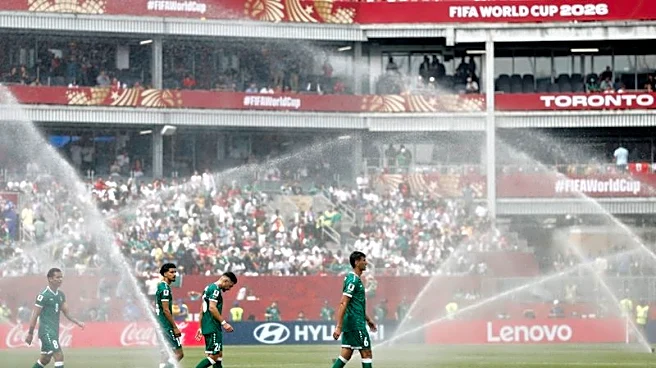
Bernadett Szabo said she had a unique experience at the World Cup in Toronto, one that had nothing to do with football. Near the stadium, a falcon flew just inches from her face, and she narrowly avoided colliding with it. "That’s when I learned that a family of falcons lives at the stadium: mama, papa and their four chicks. It was one of the four and was surprisingly large," said Szabo of this unexpected encounter.
Vancouver
Vancouver has not obviously given itself over to the World Cup as much as other host cities, Agustin Marcarian discovered. For Marcarian, who is normally based in Buenos Aires, the atmosphere has felt subdued and he has had to seek out visible signs of the tournament in the Canadian West Coast city.
Seattle
In contrast, Albert Gea has been impressed with the festive atmosphere in the streets near the stadium in Seattle, in the Pacific Northwest. Almost everyone in the crowd made the effort to dress up in red, white and blue when the U.S. played, Gea said, and there were plenty of concession stands to feed the hungry fans. "It probably reflects the American approach to sport — as a complete entertainment experience," he added.
(Reporting by Reuters photographers, Writing by Rosalba O'Brien; editing by Padraic Cassidy)