
By Julien Pretot
CORTINA D'AMPEZZO, Italy, Feb 3 (Reuters) - Lindsey Vonn’s bid to race downhill at the Milano Cortina Olympics days after rupturing her anterior cruciate ligament (ACL) would be extraordinary
but not impossible, according to a U.S. musculoskeletal scientist who said elite conditioning and external knee support could allow her to compete.
Douglas Van Citters, a scientist and expert on artificial joints at Dartmouth College in New Hampshire, said athletes were capable of functioning without an ACL if surrounding structures are strong enough to stabilise the knee.
“There are some individuals who are capable of using their knee in the absence of the ACL,” Van Citters told Reuters on Tuesday, adding that Vonn’s ability to attempt a return so quickly was truly remarkable.
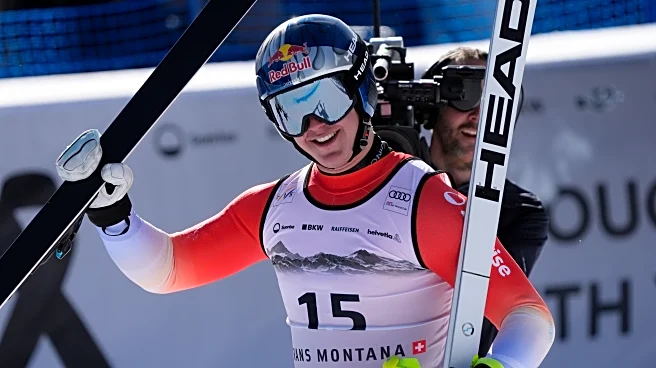
The 41-year-old American revealed on Tuesday that she had completely ruptured her ACL in a crash at Crans Montana last Friday, along with bone bruising and meniscal damage, but said she felt stable and strong after treatment and planned to ski with a brace.
Van Citters said Vonn’s chances would depend on whether the remaining musculature and ligaments could compensate during the extreme forces of downhill racing.
“It all depends on whether or not she has the structure in her knee — the rest of the musculature and ligaments — in good enough shape to stabilise the knee during her runs,” he said. “She is incredibly fit, and those structures may still be sufficiently intact to stabilise the knee throughout not only her training day, but then also the competition day that follows.”
TORN ACL USUALLY SEASON-ENDING
A torn ACL is typically a season-ending injury requiring surgery and six to nine months of rehabilitation.
Van Citters said skiing offered no particular biomechanical advantage over other sports when racing without an ACL, noting that the knee remained heavily loaded throughout a downhill run.
“I don’t know that there’s anything very specific to skiing that makes it more forgiving if you have a ruptured ACL,” he said. “The knee is required so much during a downhill run.”
Vonn’s case is further complicated by her medical history. She returned to elite racing last year after right knee replacement surgery, and injured her left knee in the latest crash.
Van Citters said her recovery from the replacement — which used modern implant materials and robotic surgery — suggested a capacity to adapt physically.
“To be able to watch her recovery from that other surgery, I think it bodes well for her recovery from this particular injury,” he said.
Racing with a brace could also help limit instability, Van Citters added, explaining that external support can partially replicate the stabilising role of the ACL by restricting forward movement of the tibia relative to the femur.
“There’s always the risk of additional injury,” he said, “but she’s been trained to listen to her body… and I’m certain that she and her physicians are discussing when is enough.”
Vonn is scheduled to begin downhill training on Thursday, with Sunday’s downhill her immediate target. She has yet to decide if she will race beyond that event.
“Whether she can do it safely comes down to stability, not pain,” Van Citters said.
(Reporting by Julien Pretot, editing by Ed Osmond)