



By Julien Pretot
NEW YORK, June 27 (Reuters) - France's attacking riches are beginning to look frightening — and perhaps the most ominous sign for the rest of the World Cup is that Didier Deschamps' magic triangle has yet to produce a game in which all three are at their devastating best.
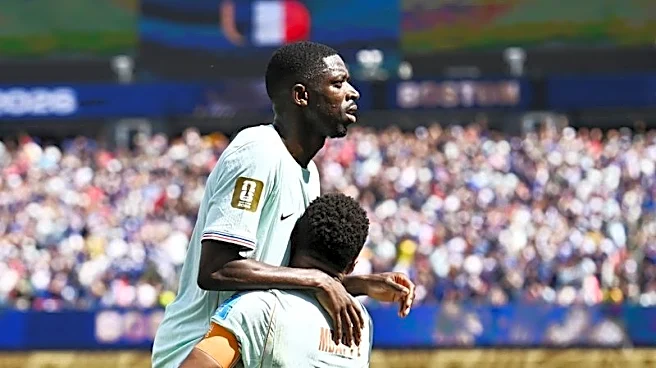
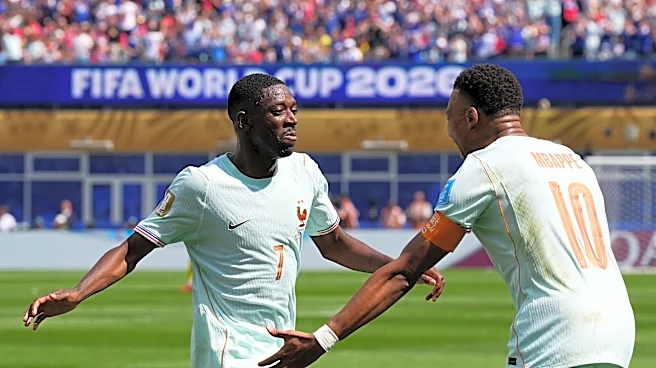
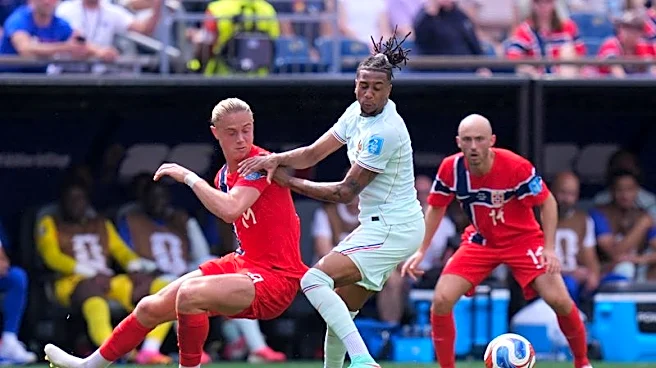
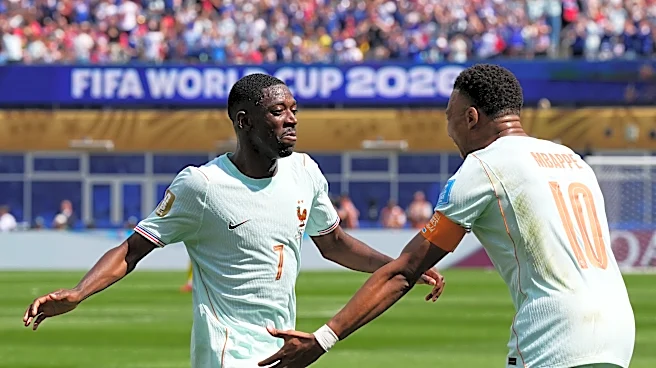
Against Norway, Michael Olise was quieter than in his previous outings as Ousmane Dembele stole the spotlight with a breathtaking first-half hat-trick.
It was a notable shift from France's previous two matches. Against
Senegal, Olise had been the catalyst, striking up an instant understanding with Kylian Mbappe while Dembele struggled to impose himself.
Four days later against Iraq, Dembele got on the scoresheet and delivered an improved display, but questions lingered over where he fit best in France's attacking set-up as Olise and Mbappe again looked the more established partnership.
That is what makes France so dangerous. Through three group matches, Deschamps has never had all three forwards firing at full capacity simultaneously, yet Les Bleus have still scored 10 goals and won every game comfortably.
One member of the trio has always been slightly below his usual standards, but another has invariably stepped forward to ensure the attack loses none of its potency.
It leaves an unsettling question for France's rivals: what happens when all three click simultaneously?
On paper, their qualities complement each other almost perfectly.
Mbappe stretches defences with relentless runs in behind, Dembele attacks spaces at frightening speed and unpredictability, while Olise offers composure, creativity and the final pass between the lines.
On the left, Desire Doue and Bradley Barcola have shared the starting role, leaving whichever one is rested, along with Rayan Cherki and Marcus Thuram, among others, to provide formidable attacking reinforcements.
Speaking on Fox after France dismantled Norway, former Sweden striker Zlatan Ibrahimovic described France as a "complete team" and conceded their collective understanding in attack was "a little scary".
He highlighted not only the individual brilliance of Mbappe, Dembele, Olise and Doue but also the way they combine.
There remains, however, one obvious caveat.
France's attacking ambition inevitably leaves room for opponents to counter. With full backs pushing high and so much freedom granted to the front players, the burden on the two central midfielders becomes immense.
Aurelien Tchouameni, Manu Kone or Adrien Rabiot - depending on who starts - are often left covering vast areas of the pitch, breaking up transitions before they expose a defence that has occasionally looked vulnerable when isolated.
It is a risk Deschamps has been willing to accept so far.
With an attack capable of deciding matches in a matter of minutes, France increasingly look like a side prepared to trade a little defensive security for overwhelming firepower.
If their three leading men ever produce a complete performance together, they may become almost impossible to stop as they prepare to face Sweden in the last 32 with a potential clash against Germany in the following round.
(Reporting by Julien PretotEditing by Christian Radnedge)