
By Rory Carroll
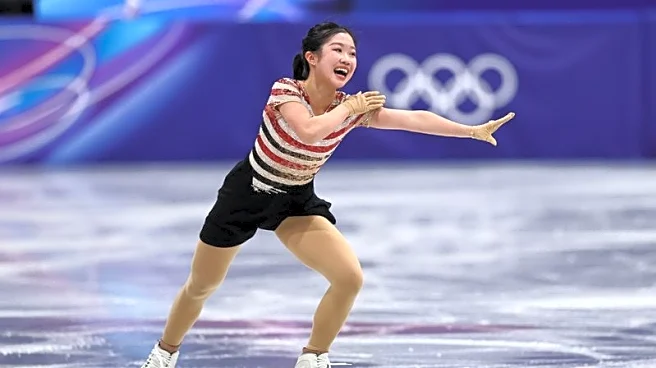
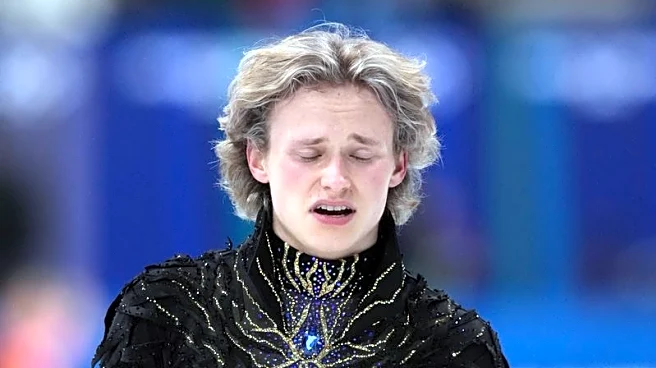
MILAN, Feb 19 (Reuters) - When figure skaters finish Olympic routines the most private seconds often come next - the deep breath after the music stops, quick look to the boards, a sense of relief or disappointment before facing their coaches in the kiss-and-cry area.
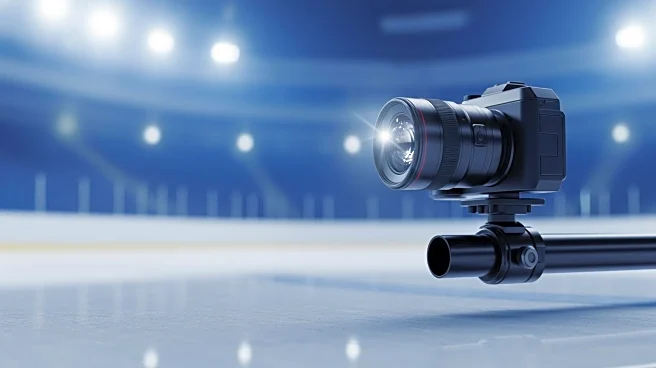
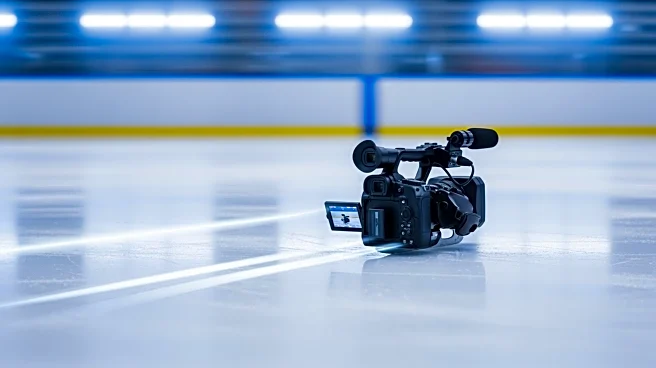
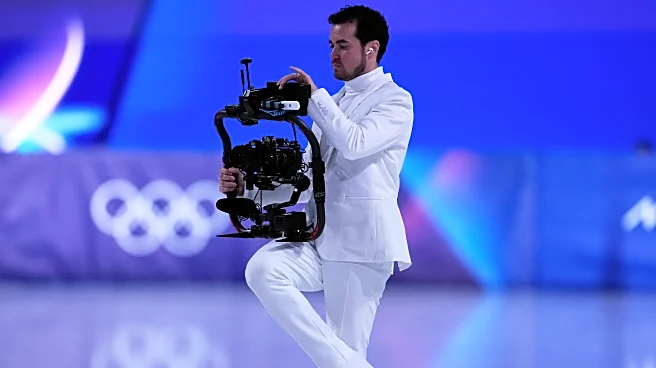
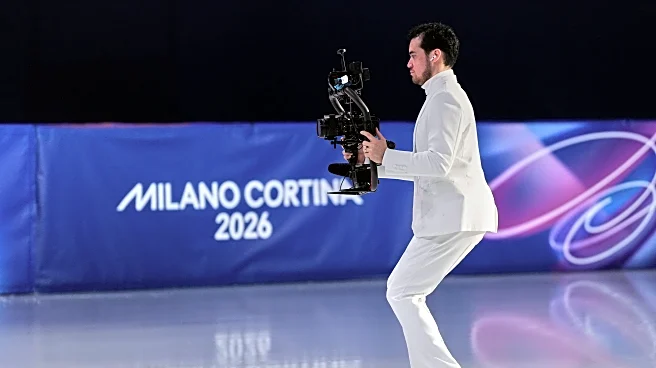
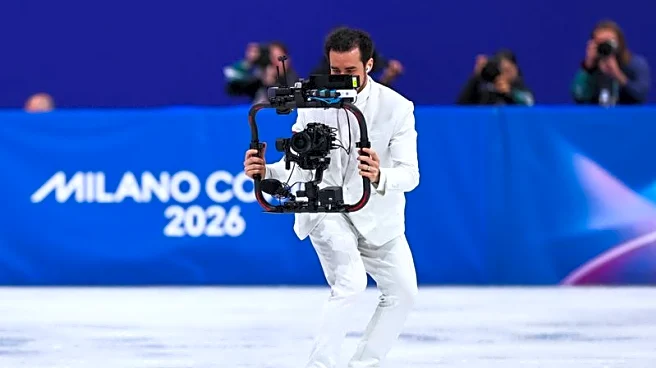
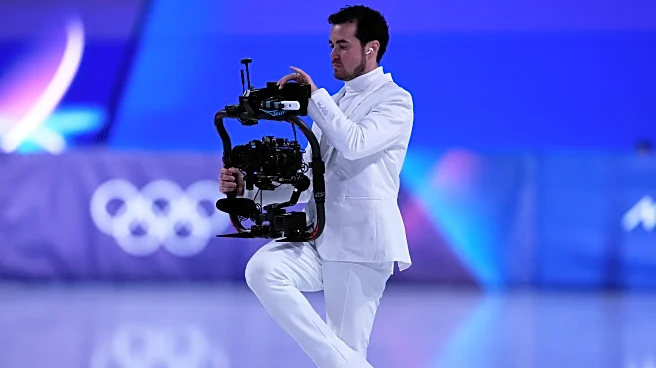
At the Milano Cortina Games, those moments are being captured in a way audiences have rarely seen - by a former competitive ice dancer skating alongside the athletes with a camera rig he designed himself.
Jordan Cowan, who
grew up in Los Angeles and has competed for the U.S., works on the ice as a roaming camera operator, filming skaters from the end of routines through their exit, a gap in coverage he calls "unexplored territory" in broadcasts.
"It's special," Cowan told Reuters. "This is the first time it's been done and I couldn't have asked for a better experience."
COMBINING PASSIONS
Cowan said he began skating as a child partly because an ice rink felt exotic in Southern California.
"It had air conditioning and my house didn't even have air conditioning," he said, smiling.
Cowan approached the sport like an experiment, determined to understand how it worked. His training eventually took him to Michigan, where he pursued ice dance at an elite level before retiring.
After competition, he said he struggled to choose between long-time interests in film and science, until he realised he could combine them.
His entry point came almost by accident during an ice show filmed for a PBS special in Sun Valley, where he recorded behind-the-scenes footage on a phone and a small gimbal.
Producers later used some of the shots in a documentary, impressed by the sensation of a camera "floating around the ice," he said.
Since then, Cowan has steadily evolved his equipment - moving from an iPhone to action cameras and then to heavier, cinema-style setups - while refining an approach that borrows from traditional filmmaking.
He now works with manual focus and zoom, arguing that live broadcast can benefit from techniques more associated with movie sets, where focus itself becomes a storytelling tool.
Autofocus, he said, cannot anticipate movement the way a skater can.
"I, as a skater, can do that," he said, describing how he can shift focus between athletes and their surroundings to guide viewers' attention without breaking the flow of a performance.
EMOTIONAL DYNAMIC
Cowan said his presence on the ice can also change the emotional dynamic for athletes in difficult moments. Some skaters, he said, have told him that having a fellow skater nearby makes the experience feel less isolating.
"I think it's important to give them their distance, to let them process things the way they need to," he said the day after American Amber Glenn skated off the ice in tears after a disappointing performance.
Rather than using a long lens that separates an athlete from the crowd, Cowan said he tries to show the arena's support, including the standing ovations even after mistakes, while keeping enough distance to avoid intruding.
The approach, he added, rests on trust: skaters recognise him as someone who understands their world and aims to show them "in their best light."
NEW ERA OF CAMERAWORK
Olympic Broadcasting Services (OBS), which provides the Games' host coverage, has pushed to expand visual options at these Olympics, Cowan said, pointing to drones and overhead systems that have become increasingly common.
He said lighter cameras and improved batteries are reshaping sports production, but argued that there will remain a place for larger rigs and classic cinematic techniques.
For Cowan, who never competed at a Winter Games, the work represents an unexpected path onto Olympic ice and a chance to help build what he hopes will be an enduring archive of the sport.
"It's going to be in the archives forever," he said. "I hope that people watch my videos 30, 40 years from now."
(Reporting by Rory Carroll and Irene Wang in Milan; Editing by Ken Ferris)