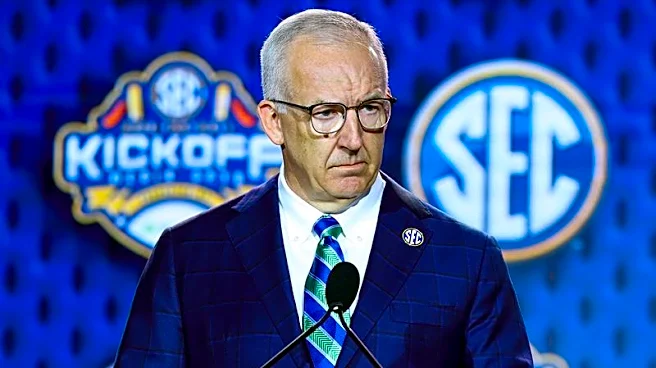










SEC commissioner Greg Sankey kicked off conference media days in Tampa on Monday with a clarification for anyone doubting the seriousness of internal conversations about splitting from the NCAA.
"So they're real. People have talked about that," Sankey said. "They've opined about the frustrations that bring them to the point of saying we should look at something significantly different. I do not believe that is a leverage point. I think that's just honest communication.
"I would prefer that stay in
a meeting room or on a videoconference, not be part of the D1.ticker the next morning, but I don't control all of that. What I think is important is those comments represent a high level of frustration with the circumstance in which we find ourselves. We have regulated ourselves more progressively than other colleagues by choice, across our league. We've had different academic eligibility restrictions in the past. So we have different transfer restrictions in the past. Some of what you hear comes out of a culture that we can regulate ourselves."
Sankey said the NCAA must function "in a healthy manner" or risk simmering frustrations becoming more significant.
As the top official in one of the most consistently successful sports conferences, Sankey openly shared the SEC is at odds with portions of the NCAA membership on several matters. Those include possibly discontinuing conference championship games -- Sankey wants the SEC to keep the league title game -- the size of the College Football Playoff and how other leagues handle scheduling.
"We had what I'll call an unsatisfactory conversation with members of the College Football Playoff staff and some of their advisers in Destin," Sankey said of the challenging nine-game SEC schedule compared to less-challenging paths to the playoff for some peers. "That's rehashing from a couple months ago, that's not a secret. That's a reminder of that process needing to continually improve.
"My confidence is that people will act with integrity. I do think we have questions about the understanding of the strength and rigor associated with competing in the Southeastern Conference."
Legislative discussions are part of Sankey's new reality, with visits to Capitol Hill and video calls to maintain a voice at the table around the Protect College Sports Act.
Introduced with support from former Alabama head coach Nick Saban and others with direct or indirect college sports ties, the bipartisan bill drew immediate opposition from the SEC and Big Ten in June before Congressional hearings were held.
Among the passionate pleas from Sankey on behalf of the SEC to Congress are national standards for eligibility and transfer limits, expectations for student-athlete health and safety, supporting educational opportunities, providing scholarship protections and overseeing agent activity. Provisions to the proposed bill remain under discussion, and Sankey believes the current framework of the legislative measure is far from perfect.
"We support the effort behind the Protect College Sports Act. However, we believe changes to the act are necessary to make it most effective," he said. "If Congress is going to act, and again I believe it should for the reasons identified, we have one opportunity to get this legislation right. If Congress passes a bill and it's signed into law, we won't be returning to DC in a year or two asking and receiving help to correct the gaps that exist. That's why it's important that these commonsense areas be addressed now before the bill becomes law."
--Field Level Media