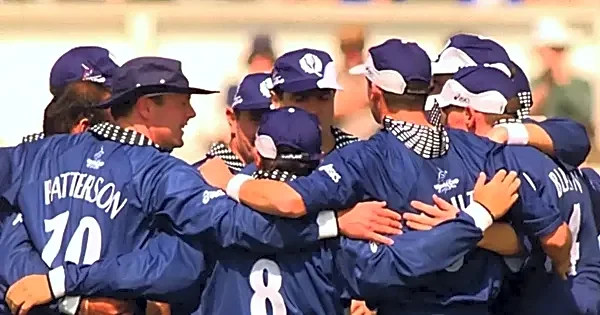

The International Cricket Council (ICC) has officially removed Bangladesh from the upcoming ICC Men’s T20 World Cup and confirmed Scotland as their replacement after the Bangladesh Cricket Board (BCB)
refused to send its team to play matches in India.
The tournament, scheduled to begin on February 7 across India and Sri Lanka, has been hit by controversy over Bangladesh’s stance, with the BCB citing security concerns and broader political tensions as the reason behind its decision not to play in India. Despite multiple rounds of discussions and assurances provided by the ICC, Bangladesh remained firm on its position.
With the tournament fast approaching, the ICC issued a final ultimatum to the BCB earlier this week, seeking a clear commitment to participate as per the original schedule. When no such confirmation was received within the stipulated timeframe, the governing body moved swiftly to safeguard the tournament’s integrity and logistics.
As a result, Scotland has been drafted into the competition based on ICC qualification and ranking criteria. The Scottish side will now feature in Group C, where they are set to compete against England, West Indies, Italy and Nepal.
Also Read | Bangladesh boycott T20 World Cup 2026
The decision marks one of the rare occasions where a full member nation has been dropped from a major ICC tournament due to participation disputes. ICC officials maintained that altering venues or rescheduling matches at such a late stage would have set an unsustainable precedent for future global events.
Meanwhile, BCB officials have reiterated that their decision was taken in the interest of player safety and well-being. However, the move has sparked widespread debate within the cricketing fraternity, with opinions divided over governance, security assessments and the responsibilities of member boards in global tournaments.
With Scotland stepping onto the world stage once again, attention will now shift back to cricket as the T20 World Cup edges closer, even as the Bangladesh episode is expected to have long-term implications for ICC policies and international cricket diplomacy.

/images/ppid_a911dc6a-image-177086843137395252.webp)

/images/ppid_59c68470-image-177086764282223684.webp)

/images/ppid_59c68470-image-177086759373551157.webp)
/images/ppid_59c68470-image-177086765360591863.webp)
/images/ppid_59c68470-image-177086752613988666.webp)
/images/ppid_59c68470-image-177086755389791037.webp)
/images/ppid_59c68470-image-177086754180562210.webp)
/images/ppid_a911dc6a-image-177086565159830523.webp)