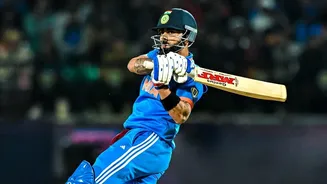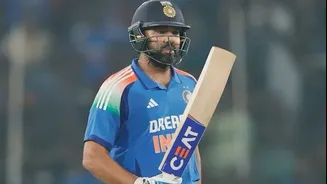




Rohit Sharma had already made 209 in an ODI by the time he walked out at Eden Gardens on November 13, 2014. So there was little doubt that he could produce a big score but what happened against Sri Lanka
was on another level. Playing his first international match after recovering from a finger injury, Rohit was given an early life when Thisara Perera dropped him at third man. He was on four runs at the time and Sri Lanka would have no idea how costly that mistake would become.
Rohit took his time initially. He reached his fifty from 72 balls and brought up his hundred from 100 balls. India were in a comfortable position, but there was nothing extraordinary about the scoring rate. Then the innings changed all of a sudden. Rohit moved from 100 to 150 in only 25 balls. His next fifty took another 26 deliveries, and he reached 200 from 151 balls. By the time he crossed 250, he was simply hitting almost everything in his range. He eventually finished with 264 from 173 balls, including 33 fours and nine sixes. It remains the highest individual score in men’s ODI cricket.
An innings that kept getting bigger
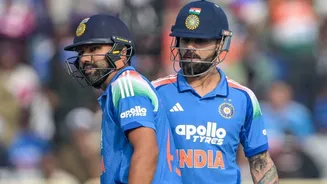
Rohit’s acceleration becomes clearer when the partnerships are considered. He put on 202 runs for the third wicket with Virat Kohli, who made 66 from 64 balls. After Kohli was run out, Robin Uthappa joined Rohit and the pair put on another 128. Uthappa scored only 16 out of those.
That meant Rohit was responsible for the vast majority of the runs in both partnerships. He went past Virender Sehwag’s previous ODI high of 219, scored against West Indies in 2011. He was already the first player to make two ODI double-centuries having scored 209 against Australia in Bengaluru the previous year.
But the most remarkable part came late when Rohit scored his final 64 runs from only 22 balls. He was eventually dismissed from the final delivery of India’s innings after being caught at long-off while trying to clear the boundary. India finished on 404/5, with the former Indian captain accounting for more than 65 per cent of the team’s runs.
Sri Lanka never got close in the chase as Dhawal Kulkarni took four wickets for 34 runs as the visitors were bowled out for 251 in 43.1 overs. India won by 153 runs and took a 4-0 lead in the five-match series.
• 264 – Rohit Power House Sharma 🔥
13 Nov 2014 – The Rohit Sharma Day in ODIs 💫🫠❤️
264 runs from 173 balls including 33 fours & 9 sixes.
A Knock Cricket Will Never Forget.♾️👑💓 pic.twitter.com/C7N6PT3Z2Y
— Mamta Jaipal (@ImMD45) November 13, 2025
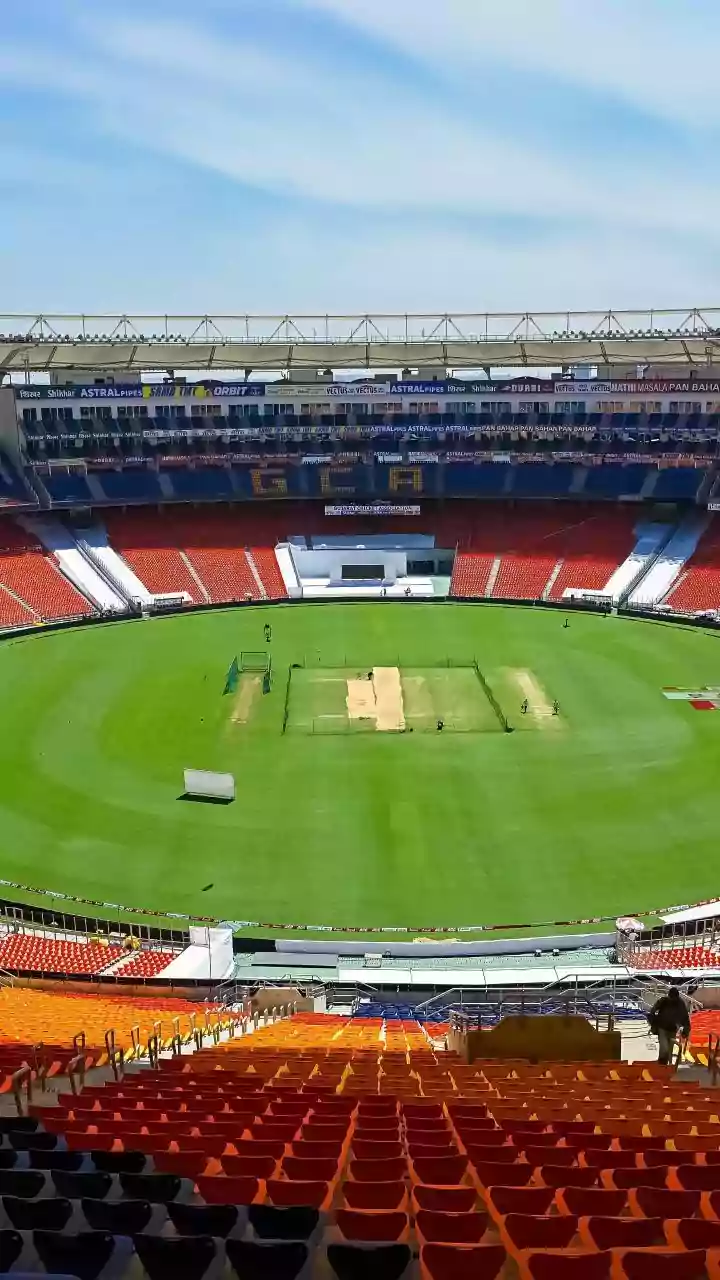
For Rohit, this match had become something much bigger than another series victory. The innings had started with a dropped catch and a cautious fifty. It ended with him becoming the first batter to reach 250 in an ODI. There was also a personal connection with the venue. Eden Gardens was where Rohit had made his first-class debut, and he had already scored his first Test century at the ground. On a day when the stadium was celebrating its 150th anniversary, he produced one of the most extraordinary individual performances seen there.
Why the innings stands out
The score alone does not explain what made the knock so memorable. Rohit scored 186 runs in boundaries but he also ran hard enough to collect another 78. He did not simply swing from the first ball. The first 100 came from 100 deliveries and the final 64 needed just 22. That change in tempo was classic Rohit as once he settled in, his timing allowed him to score without appearing rushed. Pulls, drives and lofted shots kept finding gaps or clearing the ropes, and Sri Lanka gradually ran out of ways to contain him.
Three years later, Rohit produced another double-century against Sri Lanka, scoring 208 not out in Mohali. He now has three ODI double-centuries, more than any other batter. Yet the Kolkata innings remains the best even among those huge scores.
Modern ODI cricket has produced more 200-plus scores, with batters taking greater risks and boundaries becoming increasingly common. But turning a start of 4 into 264 requires more than aggressive batting. It needs time, stamina, concentration and, on this occasion, an almost perfect second half and Rohit had all of it that day.