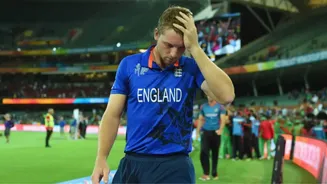






England entered the 2015 World Cup hoping to finally make a good attempt at winning the trophy. Instead, their campaign ended in the group stage, with a heavy defeat to Australia followed by losses to New
Zealand, Sri Lanka and Bangladesh. The defeat to Bangladesh in Adelaide proved decisive as England were bowled out for 260 while chasing 276, ending their World Cup campaign before the knockout stage.
What followed was more important than the failure itself. England decided that their approach to ODI cricket had to change. They realised their old approach was not enough. The 2015 team was built around players such as Alastair Cook, Ian Bell, Joe Root and Eoin Morgan, but England’s batting often lacked the aggression that had become increasingly important in modern ODI cricket.
In the 2014-15 period, England won only seven of 25 ODIs against other Full Members. Their World Cup campaign exposed the problem even more clearly. Morgan, who had taken over as ODI captain from Cook shortly before the tournament, later described the 2015 experience as a major reason behind the transformation.
The response was dramatic
Andrew Strauss became the ECB’s director of cricket, Trevor Bayliss replaced Peter Moores as head coach, and England began selecting players specifically suited to an aggressive white-ball style. Jason Roy emerged at the top of the order, Jos Buttler was given greater responsibility, while players such as Jonny Bairstow and Ben Stokes became central to the new setup.
From caution to attacking from ball one, the biggest change was philosophical. England wanted to bat deeper and attack from the beginning rather than spending the first 10-15 overs simply protecting wickets and the results arrived quickly.
In June 2015, just months after their World Cup exit, England scored 408/9 against New Zealand at Birmingham. It was their first ODI total above 400. They then chased New Zealand’s 349/5 at Nottingham, reaching the target with six overs remaining. Morgan and Joe Root both scored centuries, sharing a 198-run partnership.
England redefined their ODI batting
From June 2015 to May 2018, England scored at 6.21 runs per over and recorded nine ODI totals of 350 or more. Before that period, they had reached 350 only twice. The transformation was not simply about hitting more boundaries. England also developed greater confidence in run chases and built a batting order capable of extending deep into the lineup.
By the barest of margins… 😍
Six years ago today, England won the 2019 World Cup on home soil 🏆
https://t.co/xjEJZrsDs7
— England’s Barmy Army 🏴🎺 (@TheBarmyArmy) July 14, 2025
Read More: England announce squad for ODI tri-series in Pakistan, Harry Brook named captain
Morgan gave his players permission to take risks. Failure in an individual match was accepted if the overall method remained intact. That mentality helped players such as Roy, Bairstow, Buttler and Stokes play with far greater freedom. By the time England prepared for the 2019 World Cup, the contrast with 2015 was massive.
Since the previous World Cup, England had won 41 of 63 ODIs, compared with just seven wins in 25 against Full Members during the 2014-15 period. Their scoring rate since the 2015 tournament was close to six runs per over, while they had twice broken the world record for the highest ODI team score.
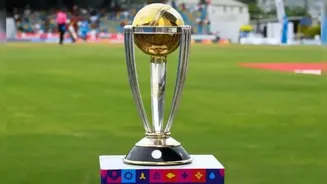
They also climbed to No.1 in the ICC ODI rankings. Most importantly, England were no longer simply trying to avoid another World Cup failure. They had developed a clear identity. Morgan later called the 2015 experience a cornerstone of the thinking behind the change. Four years after being eliminated in the group stage, England entered the 2019 World Cup as one of the favourites. At Lord’s, England tied the 2019 World Cup final against New Zealand after 100 overs and won the Super Over on boundary count and lifted the 2019 World Cup.