



The West Indies did not lose their World Cup dominance overnight. The declining signs appeared after the 1983 final, when India defeated Clive Lloyd’s team by 43 runs at Lord’s, ending their run of three
consecutive World Cup final appearances. The West Indies had won the first two tournaments in 1975 and 1979 and looked almost untouchable in ODI cricket. But as Lloyd’s great team began to break up, replacing players such as Viv Richards, Gordon Greenidge, Desmond Haynes and their battery of fast bowlers proved difficult.
The 1983 defeat was followed by group-stage exits in 1987 and 1992. West Indies did reach the semi-final in 1996, but lost to Australia in Mohali. That was a dramatic change from their record in the first two World Cups. They had won all 14 of their matches across the 1975 and 1979 tournaments, including both finals.
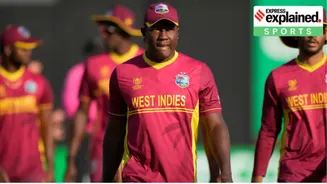
West Indies to play qualifiers as they miss out on the direct qualification for the 2027 World Cup. https://t.co/zxqWnCdarZ
— Mufaddal Vohra (@mufaddal_vohra) August 11, 2026
Their strength had been built around more than individual stars. The team had depth in batting, several world-class fast bowlers and a settled leadership group under Lloyd. When that generation began to retire, the West Indies could still produce exceptional players, but maintaining the same overall strength became increasingly difficult. Brian Lara, Curtly Ambrose and Courtney Walsh carried much of the team’s quality into the 1990s, but the West Indies were no longer consistently dominant.
Read More: England announce squad for ODI tri-series in Pakistan, Harry Brook named captain
From World Cup power to inconsistency
After reaching the semi-final in 1996, West Indies failed to progress beyond the group stage in 1999 and 2003. At the 2007 World Cup on home soil, they reached the Super Eight stage but missed the semi-finals. They made the quarter-finals in 2011 and 2015, but the team that had once been almost guaranteed a place in the latter stages was now struggling to maintain consistency.
There was also a wider change in Caribbean cricket. The region continued to produce naturally gifted players, particularly for the growing T20 game, but keeping the strongest players together for international cricket became increasingly challenging. The West Indies eventually found major success in T20 cricket, winning the World T20 in 2012 and 2016.
Their ODI fortunes never returned to the heights of the Lloyd era. The numbers tell the story with two World Cup titles and three straight finals in the first three tournaments, followed by no final appearance after 1983. Windies had simply lost the extraordinary combination of talent, depth and stability that had made them the dominant team of the first World Cup era. They did not qualify for the 2023 World Cup and will be playing the qualifiers to make it to the 2027 World Cup.