


Australia arrived in Kolkata in March 2001 looking almost impossible to beat as they had won 16 Tests in a row, including the opening match of the series in Mumbai where they beat India by 10 wickets.
Steve Waugh’s team had Ricky Ponting, Matthew Hayden, Adam Gilchrist, Shane Warne and Glenn McGrath. India were already under pressure but Harbhajan Singh changed the series. The off-spinner had been one of the few positives for India in Mumbai, taking four wickets in Australia’s first innings. At Eden Gardens, he went much further and helped India create history.
First test hat-trick for India – @harbhajan_singh against Australia at Eden Gardens, Kolkata in 2001.
Ponting lbw b Harbhajan 6
Gilchrist lbw b Harbhajan 0
Warne c Ramesh b Harbhajan 0The reaction of Rahul Dravid 😍
Tony Greig’s commentary 👌#OnThisDaypic.twitter.com/EOfLegHhgi— Cricketopia (@CricketopiaCom) March 11, 2020
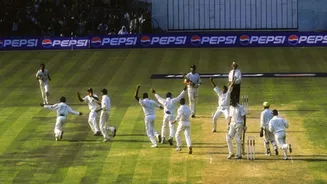
Australia won the toss and batted first and Harbhajan’s first innings began with a wicket that would set the tone. He dismissed Ricky Ponting for 3 before removing Adam Gilchrist and Shane Warne off consecutive balls. Suddenly, he had a hat-trick chance and the Eden Gardens crowd knew what was coming. Harbhajan bowled to Justin Langer but the Australian opener survived. India eventually bowled Australia out for 445, with Steve Waugh making 110 and Hayden scoring 97. Harbhajan finished with 7/123, the first seven-wicket haul of his Test career.
India follow on after conceding 274 run lead
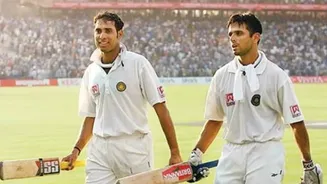
India’s reply was nowhere near enough as they were bowled out for 171 with VVS Laxman top-scoring with 59. Australia had a first-innings lead of 274 and, with India following on, the match appeared to be heading towards another Australian victory. At that point, there was little reason to think the Test would become one of India’s most famous as VVS Laxman and Dravid changed the game. India were 232/4 when Laxman walked out for the second time in the match. The situation was still tough, but what followed was extraordinary.
Laxman batted through the third day and into the fourth, with Rahul Dravid eventually joining him in one of the great partnerships in Test history. The two put on 376 runs, with Laxman scoring 281 and Dravid making 180. The right-hander’s innings was a mixture of timing and patience. He repeatedly found the gaps on the leg side, while Dravid settled into the role India desperately needed from him. Australia kept looking for the wicket that would bring the innings back under control. It never came.
India eventually declared at 657/7 and set Australia 384 to win. For a team that had been unbeaten for so long, Australia suddenly had a very different problem. They had to bat again against a very confident Indian attack, with Harbhajan back at the centre of it.
Harbhajan Singh bowls India to victory
Australia started badly. Michael Slater was dismissed for 2 and Mark Waugh followed for 5. Matthew Hayden made 30, but Harbhajan kept finding ways through the batting order. Steve Waugh was out for 24. Then came the wicket India needed most as Sachin Tendulkar dismissed Gilchrist for 91 with a catch off Harbhajan, and Australia were suddenly 166/5. Harbhajan then removed Shane Warne, completing a match haul that had grown to 13 wickets.
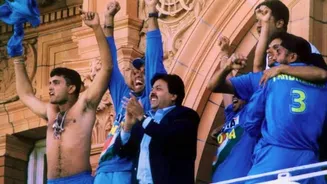
Australia were eventually bowled out for 212 and India had won by 171 runs. The collapse was remarkable because Australia had started the match in complete control. They had led by 274 after the first innings and had enforced the follow-on. Two days later, they were walking off as the losing side.
Harbhajan finished with 13 wickets for 196 runs across the match. The result also ended Australia’s run of 16 consecutive Test victories. The off-spinner had entered the series as a talented spinner trying to establish himself. He left it as one of the central figures in one of India’s greatest Test victories.