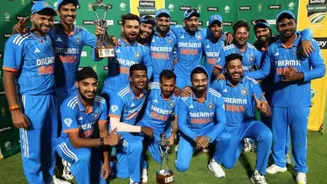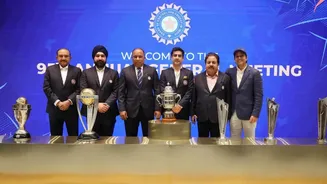


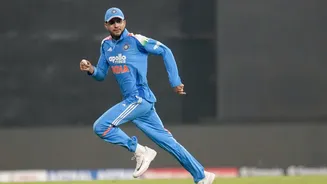
The Board of Control for Cricket in India stands tall as one of the richest cricket boards in the world, and its growth over the years cannot be understated. The biggest boost that the cricket board had
in its growth was the introduction of the Indian Premier League, and it has fuelled its colossal development. The formation of the BCCI occurred on December 4th, 1928, with R.E. Grant Govan serving as the first president, and the growth was rather passive initially. However, the unified vision in 1928 brought Indian cricket under one umbrella, and it paved the way for India’s entry into Test Cricket in 1932.
Modern Cricket was initially introduced by the British colonialists in India, and it was considered to be a sport only played by their army officers. The establishment of Parsee Cricket Club in Bombay in 1848 was a revolutionary start as it ignored all the racial barriers regarding the players of the sport. The culture of communal cricket began to grow in various places in India, and the start of the BCCI united cricket across various places. Ranji Trophy was introduced in 1934, initially with the inclusion of all princely states and provinces. Later, cricket’s development in India grew with the addition of new tournaments and the expansion of the board.
Also Read: “Looking at this squad, definitely believe India have the potential to win the World Cup”: Yuvraj Singh
Indian cricket’s modern structure and continued expansion
The introduction of the BCCI not only resulted in nationalising the sport, but it also led to the introduction of regional associations in the country. Following a pivotal visit by the Marylebone Cricket Club (MCC) team in 1926, representatives from various regional associations met in Calcutta. Their shared goal was to create an autonomous body capable of managing domestic competitions and representing India on the global stage
The regional associations form the backbone of the national cricket board and its administrative pyramid. State and institutional bodies—such as the Mumbai Cricket Association or Railways—manage local leagues and handle the processes related to grassroots development. They play a pivotal role in grooming players to represent the country as the growth hierarchy is fairly rigid. These affiliated units elect the national board’s leadership, host domestic fixtures, and ensure structured development across India, driving the sport’s massive reach.
Tournaments hosted by the BCCI are another integral part of the sport, as the selectors keep a keen eye on the performance of players in the sport. First-class cricket tournaments such as the Ranji Trophy and Duleep Trophy remain the ultimate test for selecting Test cricketers. The Irani Cup is another championship in which the match is played between the reigning Ranji Trophy Champions and a Rest of India side. The Vijay Hazare Trophy and the Syed Mushtaq Ali Trophy are the white-ball tournaments which serve as a key test for national white-ball selection. The Indian Premier League and the Women’s Premier League are two of the premier franchise leagues in the country with exorbitant remunerations for the players.
Under the authority of the BCCI, Indian cricket has been in safe hands over the years, and the growth has been evident. Jay Shah’s initiatives to promote women’s cricket have also enabled gender empowerment in the sport as well. Currently, Mithun Manhas serves as the President of the board, along with Rajeev Shukla as the Vice-President.