

Aryna Sabalenka’s 2026 season began with plenty of promise, but it has ended with more questions than answers. The Belarusian was one of the most consistent players on the WTA Tour throughout the year,
winning three titles and reaching two Grand Slam finals. However, her disappointing exit from the WTA Finals has brought attention to a worrying dip in her performances over the final stretch of the season.
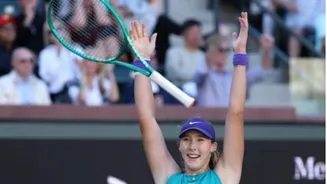
Sabalenka’s campaign came to an end after a 3-6, 6-3, 1-6 defeat to Elina Svitolina in the group stage. The loss followed an equally difficult outing against Mirra Andreeva, where she surrendered 11 consecutive games in a heavy defeat. It was the first time since 2021 that the four-time Grand Slam champion failed to reach the semi-finals of the season-ending tournament.
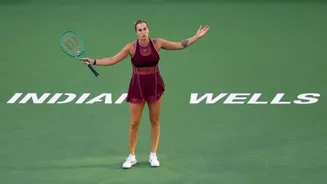
The numbers make her overall season look considerably better than its ending. Sabalenka finished with 47 wins from 58 matches, giving her an 81 per cent winning record. She collected three titles, including the Indian Wells and Miami Open trophies, becoming one of the few players to complete the Sunshine Double. However, she could not convert her strong form into another Grand Slam title, finishing runner-up at both the Australian Open and US Open.
Unforced errors and emotional frustration prove costly for Aryna Sabalenka
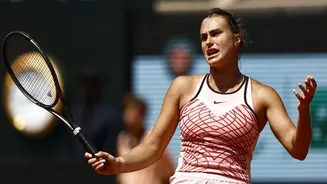
One of the biggest concerns surrounding Sabalenka’s recent performances has been her inability to control the number of unforced errors when matches become difficult. Her aggressive approach is built around powerful groundstrokes, particularly her forehand, but it can also become a problem when her timing goes off. Against Svitolina, Sabalenka committed 35 errors and struggled to maintain her level after winning the second set. She had taken an early break in the deciding set but could not build on that advantage, losing the final six games of the match. Svitolina, meanwhile, remained composed and converted six of her eight break-point opportunities.
Her defeat to Andreeva was even more concerning. Sabalenka lost the final 11 games of the match, struggling to find answers against the teenager’s consistency and ability to redirect the ball. Two consecutive defeats exposed how quickly her game can unravel when opponents manage to take control of rallies. Her on-court frustration has also become increasingly noticeable. Against Svitolina, she repeatedly spoke to herself, shook her head and showed visible disappointment after losing points. While such reactions are not unusual in competitive tennis, they can make it harder to regain concentration when a match starts slipping away.
A Difficult End to an Otherwise Strong Season
Sabalenka’s late-season struggles should not overshadow what she achieved earlier in 2026. Her victories at Indian Wells and Miami demonstrated her ability to dominate on hard courts, while her performances throughout the Grand Slams showed that she remained a major contender. However, losing both major finals proved costly, particularly as Elena Rybakina eventually overtook her to become world No. 1 after the US Open. Sabalenka had held the top position for 99 consecutive weeks, making the change another disappointment in an otherwise successful year. There is no doubt that Sabalenka remains one of the top players in women’s tennis. The challenge now is to bring greater consistency to her aggressive game and maintain her composure during difficult moments.