









The 2026 World Cup heads to North America with 48 teams, 104 matches and heavy statistical focus. Opta’s supercomputer has run 10,000 simulations to project
winners, surprise packages and group-stage exits. Holders Argentina aim for a rare title defence, while Spain, France and England enter as leading contenders in a tournament shared by the United States, Canada and Mexico.
The competition begins on 11 June, when Mexico face South Africa in the opening match. For the first time, three host nations share responsibilities, and history suggests that advantage matters. At 20 of the previous 22 World Cups, the hosts progressed beyond the group stage, with only South Africa in 2010 and Qatar in 2022 failing to move on.
According to Opta’s projections, Spain top the list of contenders, winning 16.1% of simulations. France follow on 13%, with England third on 11.2%. Argentina sit fourth at 10.4%, ahead of Portugal on 7% and Brazil on 6.6%. Germany and the Netherlands remain in the chasing group, while Norway emerge as one of the most dangerous lower-ranked teams.
Opta’s numbers also outline realistic ceilings for the three co-hosts. The United States hold a 1.2% chance of lifting the World Cup, the same probability assigned to Japan. Belgium’s estimated title chance stands at 2.4%, reflecting regular qualification without a trophy. Morocco lead African contenders with a 1.9% chance, supported by their strong 2022 campaign.
Spain enter 2026 on an extended run of form that stretches back to March 2023. Since losing 2-0 to Scotland that month, Spain remain unbeaten in 31 competitive fixtures, winning 25 and drawing six. It is the longest streak without defeat in non-friendly matches in the nation’s history, reinforcing their status as leading favourites.
That sequence includes a successful Euro 2024 campaign, leaving Spain chasing another era of dual supremacy. The goal is to repeat the 2008 to 2012 cycle, when Euro 2008, World Cup 2010 and Euro 2012 cemented their global position. Only West Germany and France have previously held the European Championship and World Cup at the same time.
Lamine Yamal’s availability further strengthens Spain’s prospects for the 2026 World Cup group stage. Yamal is the youngest player ever to appear for Spain, debuting at 16 years and 57 days, and also the youngest to score a brace for La Roja. A hamstring issue is expected to clear before group games against Cape Verde, Saudi Arabia and Uruguay.
At Euro 2024, Yamal, who was only 16 years old when he netted against France, overhauled the great Pele to become the youngest player to ever score at a Euros or a World Cup. Spain’s technical style, combined with emerging talent, has persuaded Opta’s model that another global title is more likely than for any other nation.
France, England and defensive strength at the 2026 World Cup
France arrive with vast tournament experience and a consistent record on the biggest stage. Since 1998, France have reached four World Cup finals in seven editions, appearing in showpiece matches in 1998, 2006, 2018 and 2022. No other country has contested the final as many times during that period, underlining their repeated presence near the summit.
Didier Deschamps aims to guide France to a third straight World Cup final, something achieved only by West Germany between 1982 and 1990 and Brazil between 1994 and 2002. Kylian Mbappe has already become a leading figure at World Cups, recording 14 goal involvements across the last two tournaments, including a hat-trick in the 2022 decider.
France also bring one of the deepest attacks to the 2026 World Cup. Ousmane Dembele, Michael Olise, Rayan Cherki and Desire Doue join Mbappe to form a highly talented forward group. That quality across several positions supports Opta’s projection that France are Spain’s closest rivals in the race for the trophy.
England’s challenge is built more on defensive reliability than pure attacking glamour. The team won all eight UEFA qualifiers for the 2026 World Cup, keeping a clean sheet in every match. They became only the second European side to win every qualifier while conceding no goals, matching Yugoslavia’s defensive achievement from the 1954 qualification cycle.
Under Thomas Tuchel, England recorded nine clean sheets in 10 matches during 2025, including all eight qualifiers. That made them the only European team not to concede during the entire qualification process. Attack is still strong, though, with captain Harry Kane entering 2026 on eight goals from 11 World Cup matches.
Messi, Ronaldo, Neymar and legends targeting the 2026 World Cup
The 2026 World Cup could represent a final global appearance for several leading figures. Lionel Messi continues with Argentina after guiding the team to the 2022 title, despite some expectation of international retirement. Messi already holds the record for most World Cup appearances, playing 26 times, with 13 goals and eight assists across those games.
During Argentina’s triumphant 2022 run, Messi scored or assisted 10 of Argentina’s 15 goals, contributing seven goals and three assists. Argentina now attempt to become the third country to retain the World Cup. Only Italy between 1934 and 1938 and Brazil between 1958 and 1962 have previously won consecutive tournaments.
If Messi and Cristiano Ronaldo play in the United States, Canada and Mexico, both will reach six World Cup appearances. That would be a first in tournament history, a milestone also within reach for Mexico goalkeeper Guillermo Ochoa. Portugal’s high point remains third place in 1966, with another semi-final appearance delivered in 2006 before defeat to France.
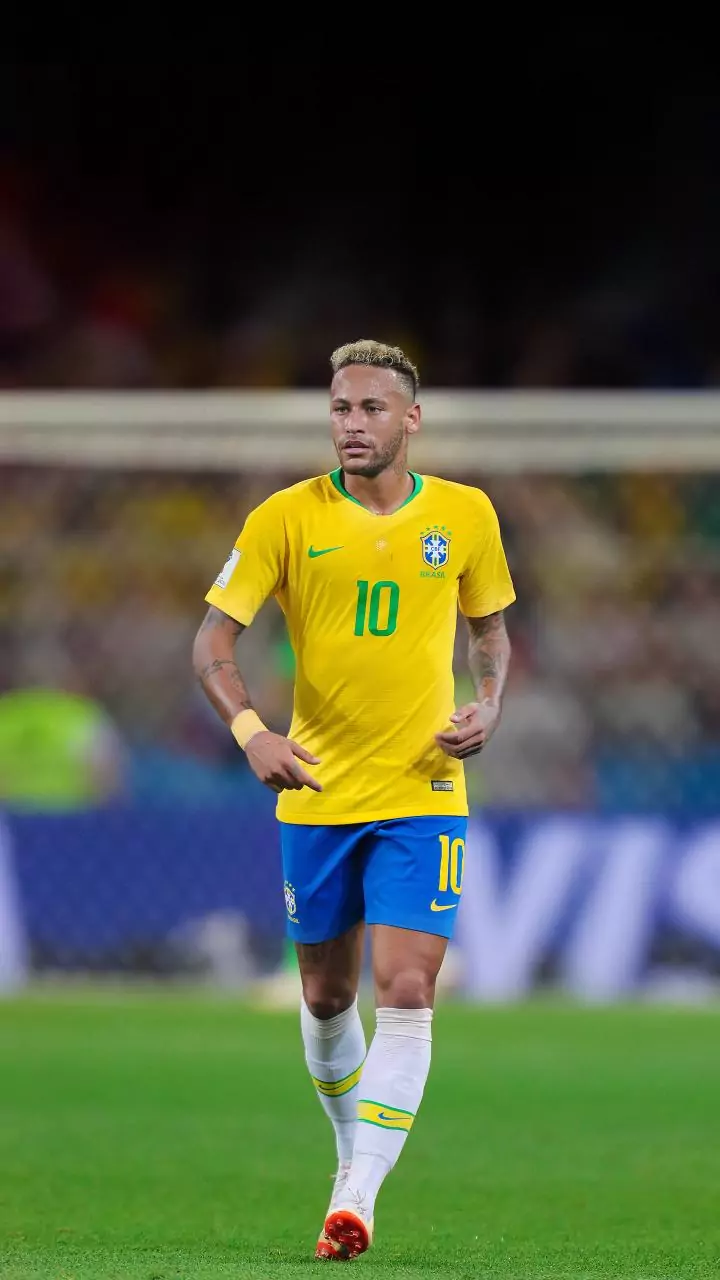
Portugal’s current coach Roberto Martinez has even suggested Ronaldo might aim for the 2030 edition, though that remains uncertain. For Neymar, 2026 could be the last shot at a World Cup trophy with Brazil. Neymar is one of three players, alongside Messi and Ivan Perisic, to score and assist in each of the last three tournaments.
Brazil’s record of five titles gives them the most World Cup wins of any nation, and 2026 features a new coaching figure. Carlo Ancelotti becomes the first non-Brazilian to lead Brazil at a World Cup. Ancelotti, managing at this tournament for the first time, could join Marcello Lippi and Vicente del Bosque as coaches who have won both the World Cup and the Champions League or European Cup.
Germany, Netherlands and Norway in the 2026 World Cup picture
Germany’s history at World Cups contrasts sharply with recent disappointments. Germany have four titles, level with Italy as Europe’s most successful nation. However, the last two tournaments brought group-stage exits in 2018 and 2022, and the team now seek to avoid a third straight early elimination at the 2026 World Cup.
Germany’s previous trip to the Americas brought success, with victory over Argentina in the 2014 final. That triumph is the only time a European team have won a World Cup staged in the Americas. Seven of the eight tournaments hosted there have otherwise gone to CONMEBOL nations. Opta’s model gives Germany a 5.1% chance of another title.
The Netherlands remain one of the strongest sides never to win the event. The Dutch have reached three finals, in 1974, 1978 and 2010, losing each time. Even so, recent World Cup results are solid. Discounting penalty shoot-outs, the Netherlands have lost only one of their last 19 matches at the tournament, winning 14 and drawing four.
That single defeat came in the 2010 final against Spain, which ended 1-0 after extra time. The Netherlands’ last group-stage loss dates back to 1994, a 1-0 reverse against Belgium. The Opta supercomputer lists the Netherlands as eighth favourites for the 2026 World Cup, assigning a 3.6% probability of finally lifting the trophy.
Norway sit just behind with a 3.5% chance, marking them as potential dark horses. This will be Norway’s fourth World Cup appearance and the first since 1998. That tournament brought their best finish, as Norway reached the last 16 before exiting against Italy. With a new generation of talent, expectations now extend beyond merely qualifying.
Norway’s attack delivered powerful numbers in qualifying for the 2026 World Cup. The team scored 37 goals in eight matches, averaging 4.6 goals per game. That is the best scoring rate ever posted by a European side in a World Cup qualifying campaign of more than four matches. Erling Haaland, Martin Odegaard and Alexander Sorloth lead this ambitious front line.
Norway share Group I with France, Senegal and Iraq, a section where upsets appear possible. Strong finishing and efficient use of chances could push Norway beyond expectations. Their combination of star forwards and high-scoring qualification form explains why Opta’s projections place them so close to established European contenders.
Hosts, outsiders and debutants at the 2026 World Cup
The three hosts aim first to progress from their groups, where home conditions could help. Mexico, drawn with Czechia, South Africa and South Korea in Group A, hold an 87.6% chance of reaching the last 32 according to Opta. The United States, in Group D with Turkiye, Australia and Paraguay, are given a 76.8% chance of advancing.
Canada appear in Group B alongside Switzerland, Bosnia-Herzegovina and Qatar, with a 79.3% probability of qualifying for the knockouts. Despite lower title chances, all three hosts can expect strong local backing and familiar surroundings. Among them, the United States earn the highest overall winning probability, though the figure remains modest at 1.2%.
Belgium enter their 15th World Cup, the most appearances by a European team without winning the trophy. Croatia, by contrast, have only six previous participations but often go deep in the tournament. Croatia either drop out in the group stage or reach the semi-finals, having done each three times. Their best runs came with a final in 2018 and third place in 2022.
Morocco stand out among African teams after finishing fourth in 2022, the best performance by a side from the continent. That history supports their 1.9% title chance for the 2026 World Cup. Japan rank as Asia’s top side in Opta’s model, placed 17th overall with a 1.2% probability of winning, but have never gone beyond the round of 16.
Japan hold an unwanted record, having played 25 World Cup matches without ever reaching the quarter-finals. The 2026 tournament will also welcome four debutants: Cape Verde, Curacao, Jordan and Uzbekistan. It is the highest number of new qualifiers since 2006, when six nations appeared for the first time. The most recent debutant to reach the knockouts was Slovakia in 2010.
The 2026 World Cup therefore combines established powers, ambitious challengers and nations experiencing the stage for the first time. Opta’s supercomputer leans towards Spain, France and England, with Argentina, Portugal and Brazil not far behind. Yet hosting advantages, rising sides like Norway and stories from previous tournaments suggest that several teams could shape the tournament beyond the early favourites.