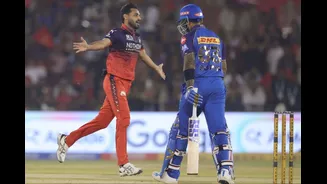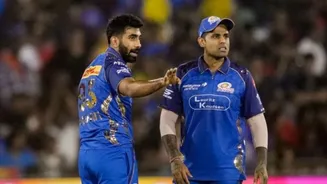




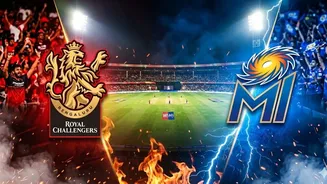
For the first time in years, Mumbai Indians no longer look like a team temporarily underperforming.They look like a franchise that has lost its identity.
MI's disastrous IPL 2026 campaign - which ended with early elimination and a bottom-half finish after winning just three of their first 11 completed matches - has triggered serious questions around leadership, squad planning, culture and whether the five-time champions have completely failed to evolve with modern T20 cricket.
This was not simply a bad season. It was the kind of season that forces franchises into uncomfortable decisions.
The Hardik Pandya captaincy experiment has failed badly
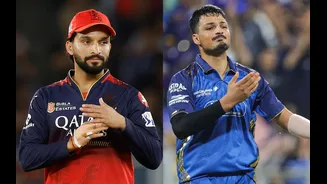
The biggest talking point remains the leadership transition from Rohit Sharma to Hardik Pandya.
Mumbai Indians entered IPL 2026 still carrying visible scars from the chaotic captaincy handover that began a season earlier. Instead of moving forward confidently under a new leader, MI spent most of this season looking tactically confused and emotionally disconnected.
Hardik's own performances fluctuated wildly, but the larger issue was how directionless the side looked under pressure.
Field placements often appeared reactive. Bowling rotations lacked clarity. Team selections changed repeatedly. Most importantly, MI no longer played with the ruthless control that once defined their dynasty years.
There is now a growing feeling that the franchise may need to seriously reconsider whether Hardik remains the long-term captaincy answer.
Mumbai Indians struggling with too many voices and no clear identity
One of the stranger problems around MI this season was the feeling that there were "too many leaders" inside the setup.
With Rohit Sharma still around, Hardik Pandya captaining, senior overseas players involved heavily in tactical discussions and an experienced coaching staff led by Mahela Jayawardene, the dressing room often looked crowded with opinions but short on clarity.
Mumbai Indians historically succeeded when their environment felt stable and simple. This season felt the exact opposite.
That confusion showed repeatedly during crunch moments.
The bowling collapse around Jasprit Bumrah
For years, MI could survive almost anything because their bowling attack remained elite.
That is no longer true.
Outside Jasprit Bumrah, the bowling unit looked inconsistent, expensive and outdated for large parts of IPL 2026. Death overs became a recurring disaster zone, while the attack lacked reliable wicket-taking options through the middle overs.
Even experienced names struggled badly at times.
The larger issue is structural: Mumbai Indians now appear overly dependent on Bumrah covering flaws across the entire bowling attack.
If MI want to rebuild successfully, the next auction cycle almost certainly needs to revolve around constructing a completely fresh bowling core around Bumrah rather than trying to patch holes season after season.
Mumbai Indians have drifted away from what made them successful
Perhaps the most worrying development is how far MI have moved away from the formula that once made them dominant.
The franchise that built dynasties by identifying fearless young Indian talent now increasingly appears obsessed with reputation, experience and familiar names.
Meanwhile, the IPL itself has evolved dramatically.
Teams like Sunrisers Hyderabad, Punjab Kings and Rajasthan Royals have embraced ultra-aggressive batting, fearless intent and modern T20 scoring patterns. Mumbai Indians often looked stuck between eras - neither explosive enough to dominate nor disciplined enough to control games conventionally.
Several matches exposed this brutally, with MI regularly posting or conceding below-par totals in games where other teams comfortably crossed 200.
Unavoidable tough conversations around Rohit Sharma
One of the most delicate issues MI now face involves Rohit Sharma's future role.
Rohit still remains the emotional centre of the franchise and continues to possess enormous value commercially and culturally. But IPL 2026 also reinforced that Mumbai Indians can no longer avoid long-term planning decisions simply because of legacy.
Management may now need honest conversations about how Rohit fits into the next phase of the franchise - whether as a guaranteed starter, mentor figure or transitional senior player.
The same applies to several other experienced names within the squad.
Mumbai Indians now need a cultural reset, not just new players
The biggest concern from IPL 2026 was not simply results. It was the lack of fight.
Mumbai Indians teams of the past were feared because they always looked emotionally resilient, especially under pressure. This version often appeared flat, fragmented and strangely passive once games started slipping away.
That mentality shift may be the clearest sign that a deeper rebuild is now necessary.
Because for perhaps the first time in the IPL era, Mumbai Indians no longer look like a champion side temporarily struggling. They look like a franchise searching for itself again.