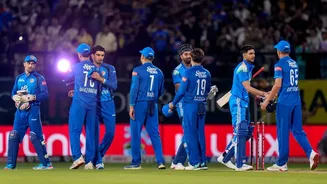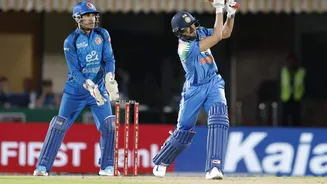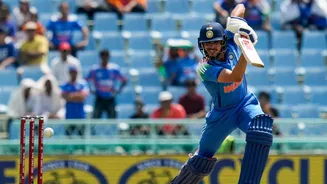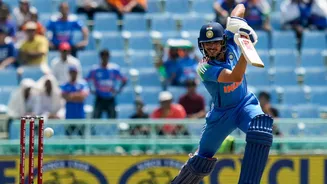

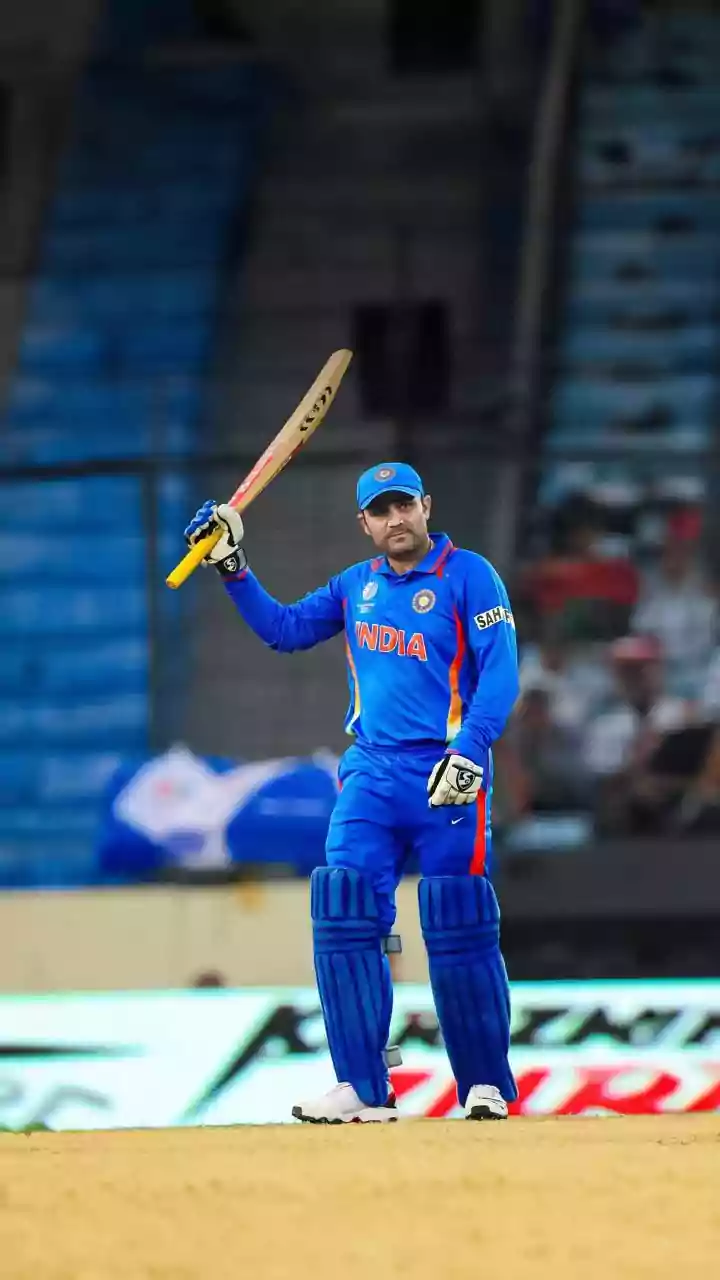




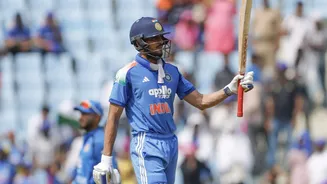


India captain Shubman Gill delivered a commanding statement of authority with the bat, smashing a breathtaking 77-ball century against Afghanistan in the second
ODI at the Ekana International Cricket Stadium in Lucknow. Leading from the front, Gill's ninth ODI hundred was a blend of composure, tactical awareness, and calculated aggression, placing India firmly in control of the contest.
The young skipper's innings not only underlined his growing stature as a leader but also showcased his adaptability under pressure. Coming in at No. 3 to accommodate the returning Yashasvi Jaiswal, Gill adjusted seamlessly after an early setback and constructed a knock that dismantled Afghanistan's bowling plans. It marked his first ODI century as captain and the second-fastest ton of his career in the format.
Breakdown Of Shubman Gill Innings
Gill's innings began with a notable tactical decision. Opting to shift down the order, he walked in as early as the third over after Jaiswal's dismissal for 4. Facing a fresh white ball and a probing spell from Afghanistan's pacers, including Bilal Sami and Mohammad Saleem, Gill chose caution over flair in the opening phase. His approach was rooted in traditional technique-solid front-foot presses, compact defense, and controlled strokeplay. This ensured India avoided further early damage as he stitched together a steady 87-run partnership with Rohit Sharma.
As the innings progressed into the middle overs, Gill's tactical acumen came to the fore against spin. Afghanistan introduced their trump card, Rashid Khan, alongside Nangeyalia Kharote, hoping to apply pressure. However, Gill countered effectively by using his feet and adjusting his depth in the crease. Rather than relying on high-risk sweep shots, he targeted short-of-length deliveries, executing precise back-foot punches into the gaps. This strategy disrupted Afghanistan's field placements, forcing them to spread out and allowing easy rotation of strike.
The defining phase of Gill's innings came after the drinks break, where he shifted gears dramatically. Transforming from an anchor into an aggressor, he began to dictate terms with authority. His boundary-hitting was clinical-17 fours and two sixes highlighted his dominance. Particularly effective was his play on the leg side, where he punished anything on middle and leg with effortless flicks through square leg and fine leg.
Gill's acceleration coincided with a destructive partnership alongside Ishan Kishan, who matched his captain's intent with a rapid 71-ball century of his own. The duo's partnership completely dismantled Afghanistan's bowling plans, as they combined power-hitting with intelligent strike rotation. Their stand turned the game decisively in India's favor, leaving the opposition searching for answers.
Fastest Batter To 1,000 Runs In ODIs
Amid this blistering knock, Gill also etched his name into the record books. He surpassed Virat Kohli to become the fastest batter to reach 1,000 ODI runs on Indian soil, further cementing his reputation as one of the most consistent performers in modern cricket.
This ODI masterclass follows Gill's remarkable performance in the longer format earlier in the month. On June 6, 2026, he struck a commanding 126 off 177 balls in a one-off Test against Afghanistan in Chandigarh. That innings laid the foundation for India's historic victory by an innings and 300 runs-the largest margin of victory in the country's Test history.
Gill's recent performances highlight not just his run-scoring ability but also his evolving cricketing intelligence. His innings in Lucknow was a perfect example of modern ODI batting-starting with risk mitigation, followed by calculated middle-over control, and culminating in explosive acceleration.
As India continues to build towards major international tournaments, Gill's form as both a batter and captain will be crucial. With his ability to adapt across formats and situations, he appears poised to lead India into a new era with confidence and consistency.