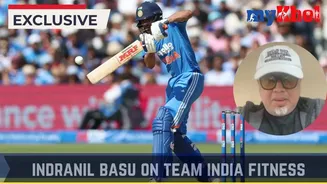


India's injury management system has come under fresh scrutiny after a series of fitness setbacks involving key players, with a report claiming gaps in communication
between the BCCI's Centre of Excellence (CoE), medical staff and the national team management.
The concerns come after ODI and Test captain Shubman Gill publicly questioned India's fitness standards following the recent ODI series defeat in England, where multiple players struggled with injuries.
Why are questions being raised now?
According to a, the recurrence of hamstring injuries and repeated breakdowns among India's fast bowlers and all-rounders have exposed weaknesses in the current injury management structure.
The report claims the system that successfully kept India's core group fit through the 2023, 2024 and 2025 ICC tournaments has lost some of its effectiveness following changes in BCCI medical personnel last year.
A BCCI source told the publication:
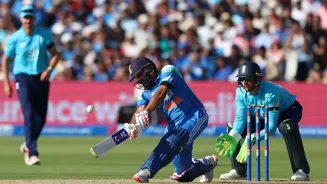
"The flurry of recent hamstring injuries suggests that the players may not have been absolutely fit before taking the field. "
The report also claims the Centre of Excellence has not appointed a permanent head of medical services since Nitin Patel's departure and that standard operating procedures (SOPs) introduced in 2023 have not been updated.
Which players are reportedly at the centre of the concerns?
Several recent injuries have reportedly prompted internal discussions.
Nitish Kumar Reddy
According to the report, Reddy was encouraged to gradually increase his bowling pace to around 140 kmph as India looked to develop another pace-bowling all-rounder alongside Hardik Pandya.
However, sources suggested the workload may have increased too quickly.
"Reddy worked with English bowling coach Stefan Jones to increase his pace. But that needs to be a gradual process. "
Harshit Rana
The report alleges Rana was cleared to return before regaining his pre-injury playing weight following knee rehabilitation.
A BCCI source claimed:
"These things need more care. "
Washington Sundar
The report also claims Sundar may have been rushed into India's T20 World Cup squad earlier this year.
According to the source, the all-rounder required around ten days after joining the squad before he was match-ready.
Akash Deep
Akash Deep's case has also reportedly raised concerns.
After returning from injury, he featured extensively for Bengal before suffering another setback following India's Test tour of England.
The report suggests the CoE should examine whether injury-prevention protocols were fully implemented.
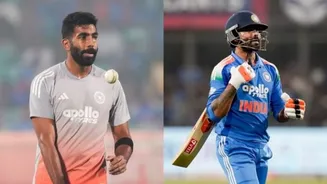
Why is Jasprit Bumrah viewed differently?
The report highlights Bumrah as the benchmark for workload management.
Unlike several younger bowlers, Bumrah reportedly follows a carefully monitored programme where bowling intensity is increased gradually before major tournaments rather than being asked to consistently bowl at maximum pace.
Given his injury history, the BCCI has adopted a more cautious approach with India's pace spearhead.
Communication gaps also highlighted
One of the biggest concerns raised in the report is the alleged lack of communication between the BCCI medical department and players when they are away from the national team.
With fewer all-format cricketers than before, many players spend extended periods with state teams, IPL franchises or training independently.
According to the report, some players feel there is limited medical guidance during those periods unless they are undergoing rehabilitation at the Centre of Excellence.
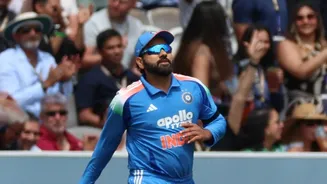
The report cites Rohit Sharma's IPL hamstring issue as an example, claiming the former captain personally accessed his historical workload data from the BCCI database after his IPL franchise struggled to identify the cause of the problem.
Why are senior players reportedly avoiding the Centre of Excellence?
Perhaps the most striking claim is that several senior India players now reportedly prefer managing their rehabilitation outside the Centre of Excellence.
According to the report, experienced internationals increasingly choose their own trainers and medical support rather than relying exclusively on BCCI facilities.
A source told *The Times of India*:
"Most seasoned international cricketers are reluctant to seek CoE's intervention. They prefer to train at their own arrangements elsewhere. "
The report adds that rebuilding trust between players, the medical staff and team management could become a priority.
Has the BCCI responded?
As of now, the BCCI has not publicly responded to the claims made in the report.
The allegations remain based on anonymous sources, and there has been no official confirmation regarding the reported communication gaps, return-to-play protocols or internal reviews.
However, with India's packed international schedule continuing and major ICC tournaments on the horizon, player fitness and workload management are expected to remain a key focus in the coming months.