




India may have secured a commanding 93-run victory over Namibia in Match 18 of the ICC Men's T20 World Cup, but the comprehensive margin masks a worrying
trend that could hurt them in bigger battles ahead.
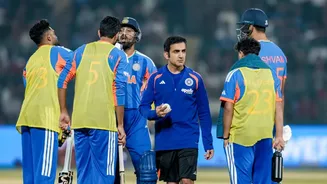
At the Arun Jaitley Stadium, the India national cricket team piled up 209/9 before bowling Namibia out for 116. Yet the manner in which India's innings unraveled in the death overs has raised serious concerns before their high-voltage clash against Pakistan national cricket team.
T20 World Cup 2026: Explosive Start, Troubling Finish for India
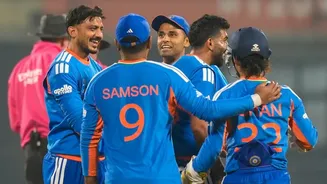
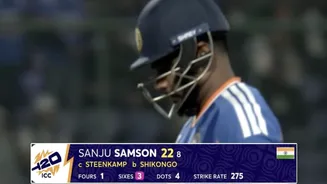
After Namibia skipper Gerhard Erasmus opted to bowl first, India launched an early assault. Ishan Kishan was sensational, smashing 61 off just 24 balls, while Sanju Samson (22 off 8) and Tilak Varma (25 off 21) kept the tempo high. India raced past 100 inside eight overs, with projections briefly touching the 290-mark.
However, once Kishan departed, the innings lost direction. Despite a strong counterattack from Hardik Pandya, who struck a 28-ball 52, the final phase collapsed dramatically.
Erasmus turned the game on its head with a brilliant 4/20, exposing India's middle-order vulnerability against disciplined spin. In a shocking sequence, five wickets fell for just four runs - a meltdown that could have cost dearly against a stronger bowling unit.
Spin Concerns Ahead of Pakistan Clash
The collapse will not go unnoticed by Pakistan, especially with the next fixture scheduled at the spin-friendly R Premadasa Stadium in Colombo on Sunday (February 15).
If Erasmus could disrupt India's middle order on a batting-friendly Delhi surface, Pakistan's quality spin arsenal - including the much-discussed Usman Tariq - could pose an even sterner examination. Pakistan have also enjoyed recent familiarity with Sri Lankan conditions, giving them a tactical edge.
The biggest concern remains India's inability to close out innings clinically after dominating the first half. Against elite teams, momentum swings can define outcomes - and India briefly surrendered theirs.
Bowling Unit Masks Batting Fragility
In response, Namibia showed early promise. Louren Steenkamp (29) and Jan Frylinck (22) attacked the Indian seamers during the Powerplay. Arshdeep Singh and Hardik Pandya - who shared the new ball duties - looked ineffective in the powerplay, though Namibia lost a wicket early inside the powerplay.
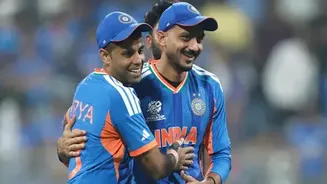
But once spin was introduced, the tide turned decisively. Varun Chakaravarthy was outstanding with 3/7 in two overs, while Axar Patel (2/20) and Hardik Pandya (2/21) ensured Namibia were bowled out in 18.2 overs.
India's bowling depth once again proved decisive - but the batting lapse remains the bigger talking point. Axar Patel (0), Rinku Singh (1), and Shivam Dube (23) gifted their wickets away once set Hardik was dismissed while trying to hammer the opposition bowlers further.
While a 93-run win reflects dominance, tournament-defining matches are rarely forgiving. The death-over implosion against Namibia serves as a timely wake-up call.
Against Pakistan, where pressure multiplies and margins shrink, a similar batting collapse could prove far more damaging. India will need sharper game awareness, better strike rotation against spin, and composure at the back end of the innings if they are to maintain momentum in the tournament.
The victory was emphatic - but the lessons may be even more significant.