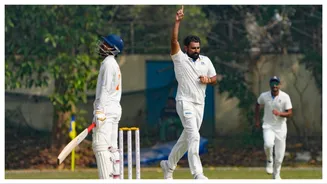








In the misty winter of February 2026, at the Bengal Cricket Academy ground in Kalyani, a quiet revolution unfolded in Indian domestic cricket.
Jammu and
Kashmir, a team long overshadowed by the giants of the Ranji Trophy, stood on the cusp of history against the formidable Bengal, two-time champions with a legacy steeped in stars like Mohammed Shami.The match began under overcast skies.
How Jammu and Kashmir created History
Bengal batted first and posted a respectable 328, thanks to steady contributions throughout their lineup. Jammu and Kashmir responded with grit. Their bowlers, led by the tireless Auqib Nabi, chipped away relentlessly. Nabi, a local hero from the valleys, claimed crucial wickets and then stunned everyone with a blazing 42 off just 54 balls in the first innings. J&K fought to 302, trailing by only 26 runs, a deficit that felt conquerable.
Day Three turned dramatic. Mohammed Shami, Bengal's pride and India's pace spearhead, unleashed fury. He ripped through J&K's tail with a career-best 8/90, bundling them out and giving his side a slender lead. But Bengal's batsmen crumbled under pressure from J&K's disciplined pacers. Sunil Kumar and Auqib Nabi combined to devastating effect, dismissing the hosts for a shocking 99, their lowest against J&K in first-class cricket.
A batting collapse saw wickets tumble in clusters: top order gone before lunch, middle order shattered by tea. The target for victory? Just 126. On the final morning, nerves tested every soul in the J&K camp. Early wickets fell, but Vanshaj Sharma anchored with calm resolve, while Abdul Samad provided fireworks. The chase unfolded steadily-43/2 overnight became a march forward. Vanshaj Sharma hit the winning runs with a massive six.
Auqib Nabi stars for J&K Again
Auqib Nabi's all-round masterclass, nine wickets across the match, echoed in every cheer from the small but fervent crowd of supporters who had traveled from the mountains.
Hugs, tears, and disbelief. Jammu and Kashmir had scripted the impossible: their maiden Ranji Trophy final berth, toppling Bengal by six wickets. For a region often defined by conflict and resilience, this victory carried deeper meaning, proof that talent from the Himalayas could conquer the cricketing heartland.