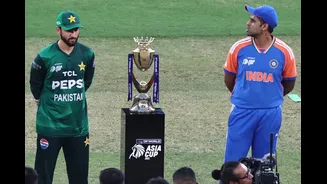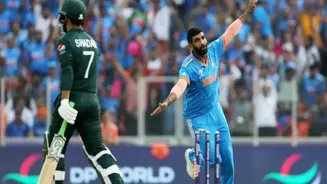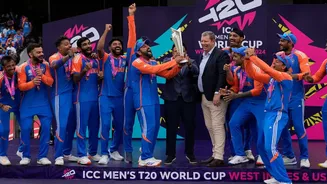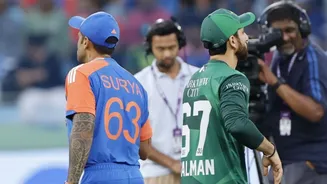

Pakistan's decision to participate in the T20 World Cup 2026 but boycott the marquee clash against India has sent tremors through the International Cricket
Council (ICC), prompting one of its sternest warnings in recent times. The governing body made it clear that the issue extends far beyond diplomacy or sporting rivalry.
The ICC noted that it "hopes that the PCB will consider the significant and long-term implications for cricket in its own country," while warning that such a move could disrupt the global cricket ecosystem. That language is telling-because at the heart of the standoff lies money, and a staggering amount of it.
The India-Pakistan T20 fixture is widely regarded as the most valuable single match in world cricket. Conservative estimates place its total commercial value at nearly USD 500 million, or roughly ₹4,500 crore. This figure encompasses broadcast rights, premium advertising slots, sponsorship integrations, ticket sales, hospitality, and associated commercial activity.
No other cricket match comes close. During an India-Pakistan T20, advertisers routinely pay between ₹25-40 lakh for just ten seconds of airtime-rates that surpass even most knockout matches involving India. Removing this fixture significantly alters the financial structure of the entire tournament.
The first major impact is felt by the broadcaster. Advertising revenue from this one game alone is estimated at around ₹300 crore. JioStar has reportedly already sought financial adjustments from the ICC, and the absence of the tournament's biggest draw would only amplify those claims. While each World Cup match carries an internal valuation, this one sits in a league of its own.
The shockwaves do not stop there. Reduced central revenue directly affects ICC payouts, meaning smaller and associate nations-heavily dependent on these distributions-could feel the pinch almost immediately.
Reports suggest both the BCCI and PCB stand to lose close to ₹200 crore each. For India, it is a manageable setback. For Pakistan, the risk is far greater. The PCB's annual ICC share-around USD 34.5 million-is tied to participation and compliance. Any breach of agreements could lead to withheld payments, penalties, and legal complications, potentially turning a single boycott into a long-term financial crisis.
In world cricket, few fixtures are bigger than India versus Pakistan. Losing it isn't symbolic-it's seismic.