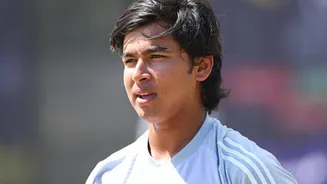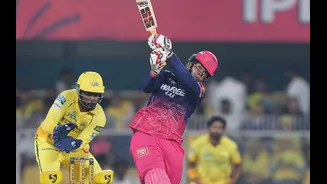



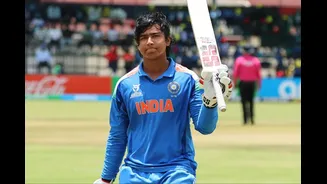
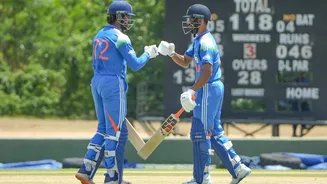
New Delhi, June 9: For the first time since his record-shattering IPL 2026 campaign, walked out to bat in a representative India jersey on Tuesday (June
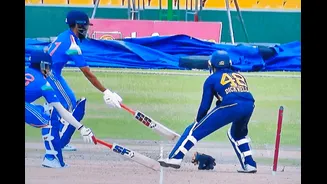
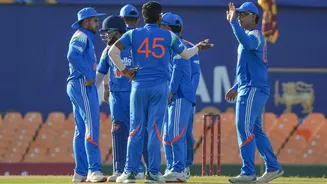
9) as India A began their tri-nation ODI series against Sri Lanka A in Dambulla.
The spotlight, unsurprisingly, followed him as thousands tuned in online to watch the 15-year-old sensation who had taken the IPL by storm just weeks earlier. The innings itself, however, was brief. Sooryavanshi managed 12 runs from 14 deliveries before his stay at the crease came to an end.
Predictably, opinions followed almost immediately. Some questioned whether the teenager was ready for the next level, while others dismissed the innings as an insignificant blip. The truth lies somewhere in between.
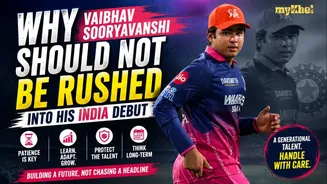
Judging Vaibhav Sooryavanshi on the basis of one innings would be as foolish as selecting him for India's senior team solely because of a remarkable IPL season. What his India A debut should remind Indian cricket is that talent development is rarely linear and that patience, rather than haste, may prove to be the most valuable gift the system can offer its newest prodigy.
India has identified a generational talent. The challenge now is ensuring that the excitement surrounding him does not become a burden that ultimately slows his growth.
India's Depth Allows Patience
Unlike previous eras, India are not operating from a position of desperation. When Sachin Tendulkar made his international debut in Pakistan in 1989 at the age of 16, Indian cricket was looking for batting solutions. The circumstances were vastly different. Tendulkar was thrown into the deep end because India believed he possessed the temperament to survive and because opportunities at the highest level were available.
Today's Indian team presents a completely different picture. The batting line-up already includes established stars such as Abhishek Sharma, Sanju Samson, Ishan Kishan, captain Shreyas Iyer and his deputy Tilak Varma.
Behind them is another list of players competing for opportunities such as Shubman Gill, Yashasvi Jaiswal, Devdutt Padikkal, Rajat Patidar, Sai Sudharsan, Dhruv Jurel, Ruturaj Gaikwad among others.
Hence, there is no immediate vacancy that demands Sooryavanshi's promotion. That is a luxury Indian cricket should embrace rather than ignore.
The teenager has already earned India A recognition and has received a call-up to the T20I squad. There is no need to compress every stage of his development into a matter of months simply because he happens to be extraordinary.
India can afford to allow him to learn through India A tours, domestic cricket and carefully selected international opportunities rather than treating him as an emergency solution.
IPL Success Does Not Automatically Translate
One of the biggest dangers facing any young cricketer is the assumption that success in one environment guarantees success everywhere else.
Sooryavanshi's IPL 2026 numbers were staggering. He amassed 776 runs, won the Orange Cap, as well as the Most Valuable Player award, and smashed a record 72 sixes in a single season. Those achievements deserve every bit of praise they have received. But international cricket operates differently.
Franchise cricket offers challenges, but national teams possess an entirely different level of preparation. Opponents have dedicated analysts, extensive video libraries and highly specialised plans for individual batters.
Every weakness is studied. Every scoring zone is mapped. Every tendency is examined. The element of surprise that often benefits young players gradually disappears.
The same happened with several IPL stars before him. Initial success was followed by a period of adjustment as opponents learnt more about their games. The next phase of Sooryavanshi's development will be about proving he can adapt once bowlers begin targeting him with specific plans.
That learning process is far more valuable at the India A level than under the unforgiving scrutiny of international cricket.
Physical Development Cannot Be Ignored
The conversation around Sooryavanshi often focuses on runs, strike rates and records. What receives far less attention is the fact that he is still only 15 years old.
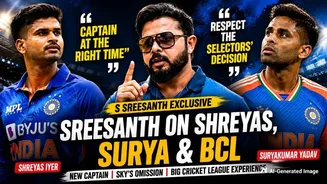
His cricketing skills may be years ahead of his age group, but his body remains that of an adolescent athlete still undergoing physical development. In a recent interview with myKhel, former India pacer S Sreesanth advised the youngster from Bihar to keep keep playing but stay away from his managers and don't worry about shooting ads, for all will be taken care of with time.
"I will request him to stay away from his managers. He should stay under the care of his family, as he is only 15. He should simply focus on playing cricket. Stay away from all the ads for one or two years. Nothing of that matters as of now, focus on your game," advised.
Also, modern cricket places unprecedented demands on players. International schedules stretch across formats, continents and time zones. Recovery periods are shorter than ever, while expectations continue to grow.
Workload management has become a challenge even for fully developed athletes in their mid-to-late twenties. For a teenager, the risks are significantly greater.
The temptation to place Sooryavanshi in every squad, every series and every tournament will be immense. Yet Indian cricket would be wise to resist that temptation.
Managing his workload carefully over the next few years could have a far greater impact on his career than any immediate international appearance.
Lessons From India's Past
Indian cricket has seen both sides of the prodigy story. Prithvi Shaw appeared destined for greatness after scoring a century on Test debut and dominating age-group cricket. Yet expectations, technical issues and off-field challenges combined to halt his momentum.
Unmukt Chand captained India to Under-19 World Cup glory and was once viewed as a future international mainstay. The transition, however, proved far more difficult than anticipated.
Both players remain reminders that early promise does not guarantee sustained success.
There are also examples that point in the opposite direction.
Shubman Gill's progression was carefully managed through India A cricket before he became a regular international performer.
Yashasvi Jaiswal spent years building his game across domestic cricket, India A assignments and the IPL before establishing himself at the highest level.
Neither player was rushed.
Both benefited from having the time to develop their games away from the constant glare of international expectations.
That blueprint appears far more relevant to Sooryavanshi's situation than the temptation of an accelerated rise.
The Olympics and the 2031 World Cup Matter More
The excitement surrounding Sooryavanshi has inevitably led to conversations about immediate international opportunities. But Indian cricket's focus should extend much further into the future.
Cricket's return to the Olympics at Los Angeles 2028 could provide Sooryavanshi with a global stage unlike anything the sport has previously experienced. By then, he will be 18 and potentially far better equipped physically, mentally and technically to handle the demands of elite cricket.
The 2031 ODI World Cup may be an even more important target. When that tournament arrives, Sooryavanshi will be entering what should be the prime years of his career.
The objective should not be to create the youngest international cricketer or generate the biggest headline. The objective should be to build a player capable of serving Indian cricket for a decade or more.
Short-term excitement must not come at the expense of long-term development.
Patience May Be the Hardest Test
There is no doubt that Vaibhav Sooryavanshi possesses extraordinary talent. His IPL exploits have already secured his place among the most exciting young cricketers the game has seen. His India A debut, even though it yielded only 12 runs, changes nothing about that assessment.
If anything, it should reinforce the importance of perspective. One innings should not define him. Equally, one IPL season should not determine the timeline of his international career.
The biggest test for Indian cricket may not be identifying Vaibhav Sooryavanshi's talent. That part has already been accomplished. The real challenge will be resisting the temptation to accelerate a journey that appears destined for greatness anyway.
Because sometimes the smartest thing a cricket system can do with a prodigy is not push harder, but wait.