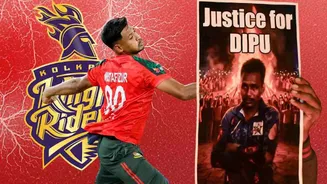

The recent acquisition of Bangladeshi pacer Mustafizur Rahman by Kolkata Knight Riders (KKR) for the IPL 2026 season has unexpectedly become a flashpoint
in Indian politics, quite astonishingly!
Amid credible and horrifying reports of targeted violence against Hindus in Bangladesh, political voices from across the spectrum have criticised the franchise, co-owned by Shah Rukh Khan, for proceeding with the signing of the Bangladesh bowler.
The situation facing Hindus in Bangladesh since the political changes in 2024 is deeply disturbing. Multiple incidents of mob violence, lynchings, temple desecrations, and forced displacement have been documented. The horrific killing of Dipu Chandra Das and the harrowing visuals are nightmarish, as these acts constitute grave human rights violations that demand swift justice.
Neighbouring countries, global organisations, and human rights bodies must collectively pressure the interim authorities in Dhaka to investigate thoroughly, prosecute perpetrators without delay, and restore security for vulnerable groups. Silence or inaction in the face of such targeted brutality is unconscionable; the international community owes the victims unequivocal solidarity and concrete support.
KKR and Mustafizur Rahman are not the Problem
At the same time, the decision by KKR to buy Mustafizur Rahman for Rs 9.2 crore must be viewed through the lens of sport rather than politics. Rahman is a professional cricketer with no reported involvement in political or extremist activities. His participation in the IPL is governed by cricketing merit and existing league regulations, which currently impose no restrictions on Bangladeshi players.
Franchises make squad choices based on performance, strategy, and team requirements-not foreign policy. Punishing an individual athlete for the actions of mobs or failures of governance in his home country sets a dangerous precedent that blurs the vital separation between sport and statecraft.
Critics have questioned the timing and symbolism of the signing, arguing that financial benefits flowing to a Bangladeshi player appear tone-deaf given the ongoing suffering of minorities. These sentiments are understandable at an emotional level, particularly among those with historical or familial connections to the region. Yet symbolic boycotts of individual players rarely translate into meaningful pressure on governments and can instead harden divisions.
Moreover, selectively targeting one franchise or one celebrity owner risks turning a humanitarian crisis into domestic political theatre. Both major political parties and various public figures have weighed in, often with contradictory stances that reveal more about internal rivalries than consistent principles. Such polarisation distracts from the urgent task: sustained diplomatic engagement to ensure minority safety in Bangladesh.
In the end, two truths must coexist. The persecution of Hindus and other minorities in Bangladesh is an unfolding tragedy that demands vehement protest, accountability, and international intervention. At the same time, conflating this crisis with a routine IPL transaction serves no constructive purpose.
Let sport remain a realm of competition and camaraderie, while governments, civil society, and global institutions focus their energy on protecting lives and upholding human dignity.
While the outrage over minority persecution in Bangladesh is entirely justified and must be condemned in the strongest terms, linking a professional sports decision to geopolitical tensions is neither necessary nor productive.
And if the government truly believes in shutting the door on Bangladesh in the sports arena as well, BCCI can start by banning Bangladesh in the IPL, just as it was done to Pakistan after the Mumbai attacks. Labelling Shah Rukh Khan as 'traitor' won't aid those minorities who are facing the barbaric attacks on the other side of the border; rather, apt diplomatic measures can only attain the safety of the Hindus in Bangladesh.