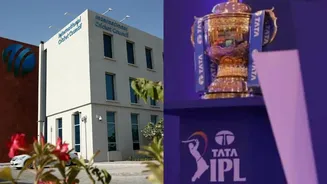







After a dizzying period where nearly $10 billion was splashed on major cricket media rights-including the massive $6 billion IPL deal-the financial bonanza
is drawing to a close. As global media contracts come up for renewal post-2027, the cricket industry is bracing for a painful and sharp slowdown.
The era of record-breaking spending is being undermined by a critical shift: broadcasters and media firms, who were previously willing to absorb huge losses, are tightening their budgets and demanding fiscal reality. The long-standing model that saw cricket boards and franchises continuously rake in gains while their media partners bled cash is now reaching its limit.
The Perfect Storm of Financial Headwinds
Why is the road ahead so difficult? A confluence of three major factors is driving down the potential value of the next rights cycle:
Shrinking Profitability: Falling TV profits and sustained heavy losses in streaming operations are forcing broadcasters to drastically rethink their spending caps. With advertising budgets globally getting tighter, the capacity to monetize huge investments has diminished.
Regulatory Shockwaves: The recent regulatory ban on real-money gaming (RMG) advertisements has created a substantial revenue hole for broadcasters, severely impacting their ability to service expensive rights deals.
The Consolidation Effect: The strategic merger of Star India and Viacom18 (now JioStar) has dramatically reduced the field of aggressive bidders. Less competition means the "bidding frenzy" that defined the last cycle is over, leading to weaker pressure on prices.
Cricket Properties Prepare for a Haircut
Industry experts are unanimous: prices will correct. The aggressive, high-risk bidding of the past will not return.
While the IPL remains the strongest property globally, even it may not be immune to the correction, with some predictions pointing to a potential drop of up to 20% in its next rights cycle. This will dampen the optimism of franchises that had aspired to $1-2 billion valuations.
The impact on other properties will be far more severe. Rights for the ICC tournaments and bilateral matches could face a brutal correction, potentially dropping by 40-50%.
The ICC Crisis: A Sign of the Times
The pressure is already visible on the International Cricket Council (ICC). Reports suggest that JioStar is currently struggling to honour the final two years of its lucrative India broadcast contract due to significant losses.
For the upcoming 2026-29 cycle, the ICC is finding itself in a weakened negotiating position. Major global players like Sony, Netflix, and Amazon Prime Video have reportedly not come close to the ICC's ambitious asking price of $2.4 billion with firm offers.
With no immediate alternative high-spending buyer on the horizon, the ICC is likely to find itself negotiating from a position of weakness. The media rights market has entered a new, fiscally conservative chapter, challenging the core financial foundation of the global game.