
The Indian Premier League has grown from a bold T20 experiment in 2008 into one of the richest sporting ecosystems in the world, and a new report by Fanatic Sports and Hurun India highlights just how massive the business of IPL cricket has become.
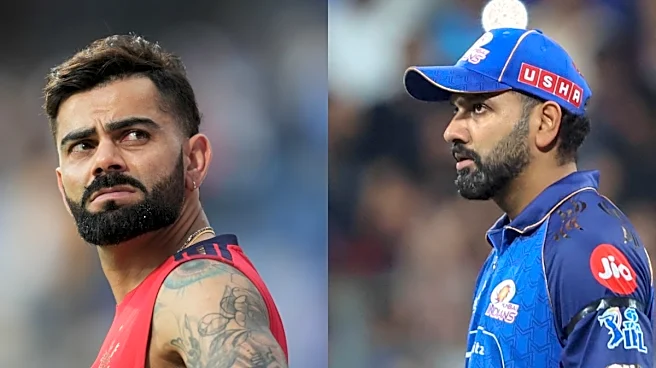
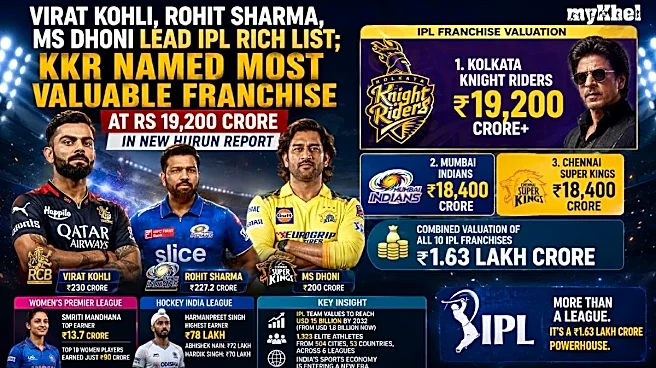
According to the report, Virat Kohli has emerged as the highest-earning player in IPL history, earning a staggering Rs 230 crore through his long-standing association with Royal Challengers Bengaluru (RCB).
The report also reveals that the combined valuation of all 10 IPL franchises now stands at an extraordinary Rs 1.63 lakh crore, underlining the league's transformation into a financial powerhouse that extends far beyond cricket.
Virat Kohli Leads IPL's All-Time Earnings List
Virat Kohli's position at the top of the IPL rich list reflects not only
his longevity but also his unmatched brand value within the league.
Having represented Royal Challengers Bengaluru since the inaugural IPL season in 2008, Kohli has become the face of the franchise and one of the biggest commercial stars in global cricket. His estimated cumulative IPL earnings of Rs 230 crore place him ahead of every other player in tournament history.
Close behind him is Rohit Sharma, whose long association with Mumbai Indians has helped him accumulate Rs 227.2 crore in IPL earnings.
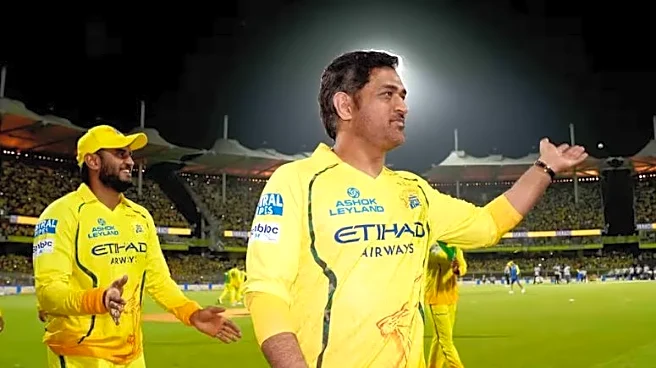
Meanwhile, MS Dhoni continues to remain one of the league's biggest commercial icons with cumulative IPL earnings of Rs 200 crore through his legendary stint with Chennai Super Kings.
IPL Franchise Valuations Continue To Explode
The report paints an even more astonishing picture when it comes to franchise valuations.
Kolkata Knight Riders, co-owned by Bollywood superstar Shah Rukh Khan, currently tops the valuation chart at over Rs 19,200 crore.
They are followed closely by Mumbai Indians and Chennai Super Kings, both valued at approximately Rs 18,400 crore.
The numbers underline how IPL franchises have evolved into global sports brands with revenue streams extending across: Media rights, Sponsorships, Merchandise, Global fan engagement, and Digital content ecosystems.
The report further projects that the average valuation of an IPL franchise could rise from the current USD 1.8 billion to nearly USD 15 billion by 2032 - a staggering growth trajectory even by global sports standards.
Hurun India Founder and Chief Researcher Anas Rahman Junaid described India as being at the beginning of a massive sports business expansion curve.
"Talent is being manufactured at the grassroots. Capital is arriving at the top. A billion-plus consumers are about to have the income to participate in between," he said.
IPL Player Earnings Table
| Player | Franchise | Estimated IPL Earnings |
|---|---|---|
| Virat Kohli | Royal Challengers Bengaluru | Rs 230 crore |
| Rohit Sharma | Mumbai Indians | Rs 227.2 crore |
| MS Dhoni | Chennai Super Kings | Rs 200 crore |
| Smriti Mandhana | Women's Premier League | Rs 13.7 crore |
| Harmanpreet Singh | Hockey India League | Rs 78 lakh |
IPL Franchise Valuation Table
| Franchise | Owner | Estimated Valuation |
|---|---|---|
| Kolkata Knight Riders | Shah Rukh Khan Group | Rs 19,200 crore+ |
| Mumbai Indians | Reliance Industries (Ambani Family) | Rs 18,400 crore |
| Chennai Super Kings | Chennai Super Kings Cricket Ltd | Rs 18,400 crore |
| Combined Valuation Of All IPL Teams | -- | Rs 1.63 lakh crore |
The Massive Gap Between IPL, WPL And Hockey
While the IPL's financial rise continues to break records, the report also highlights the enormous economic gap between men's cricket and other Indian sports ecosystems.
Among women cricketers, Smriti Mandhana leads the Women's Premier League earnings chart with cumulative earnings of Rs 13.7 crore.
More strikingly, the top 10 women cricketers combined have earned just Rs 90 crore - less than half of Virat Kohli's IPL earnings alone.
The disparity becomes even sharper in hockey. Indian hockey captain Harmanpreet Singh is currently the highest-paid player in the Hockey India League with earnings of Rs 78 lakh, followed by forward Abhishek Nain at Rs 72 lakh and midfielder Hardik Singh at Rs 70 lakh. The contrast once again reinforces cricket's unparalleled commercial dominance in India.
Hockey Still Winning At Grassroots Level
Despite the financial gap, the report points out that hockey continues to thrive in talent development and grassroots relevance.
Young talents like 14-year-old Ketan Kushwaha and 15-year-olds Purti Ashish Tani and Rahul Yadav represent the next generation emerging through the hockey ecosystem.
One particularly remarkable statistic highlighted in the report is the contribution of Sundargarh in Odisha - a single district that has produced 12 athletes featured in the rankings.
The broader study tracked 1,323 elite athletes from 504 cities across 53 countries and six different sporting leagues, offering a fascinating snapshot of how India's sports economy is evolving.
IPL Is No Longer Just A Cricket Tournament
The IPL's financial explosion reflects something much bigger than cricket alone.
It has become:
- A global entertainment property
- A billion-dollar investment ecosystem
- A platform for athlete branding
- A gateway for global sports capital into India
As franchise valuations continue to rise and player salaries reach unprecedented levels, the IPL is increasingly positioning itself alongside the biggest sports leagues in the world.
And if current projections prove accurate, the next decade could see Indian cricket enter an entirely new financial stratosphere.