
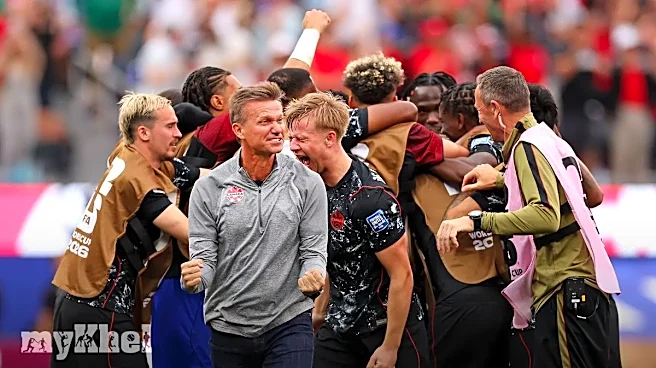


Belgium produced a dramatic World Cup turnaround as Youri Tielemans scored a 125th-minute penalty to beat Senegal 3-2 after extra time in the last 32. Senegal had led 2-0 and looked set for a last-16 meeting with either the United States or Bosnia-Herzegovina before Belgium’s late surge changed the tie.
The decisive moment arrived deep into added time at the end of extra time. Tielemans went down under a challenge from Lamine Camara, and play continued until Dodi Lukebakio struck the crossbar. VAR then instructed a review, spotted Camara’s lunge, and awarded the penalty that Tielemans fired into the top-right corner.
That spot-kick, officially timed at 124 minutes and 44 seconds, entered World Cup history. Opta recorded it as the latest goal ever
scored in the tournament. Belgium’s captain had already dragged the team level in normal time after another key intervention from VAR and a costly mistake by goalkeeper Mory Diaw.
124:44 - Youri Tielemans winning penalty for Belgium is the latest goal scored in FIFA World Cup history. Chaotic. pic.twitter.com/w1gI95LaL9OptaJoe (@OptaJoe) July 1, 2026
Belgium’s revival started late in the 90 minutes after a flat display. Rudi Garcia had surprisingly substituted Jeremy Doku and Kevin De Bruyne when trailing 2-0, and the team lacked creativity. Romelu Lukaku’s introduction at half-time appeared wasted until the final minutes, when the forward and Tielemans completely altered the contest.
The turning point came in the 86th minute. Thomas Meunier overlapped on the right and drilled a low cross into the area. Lukaku escaped his marker and swept a sharp finish inside the near post. The goal energised Belgium and unsettled Senegal, who had dominated most of the previous 86 minutes.
Three minutes later, Tielemans punished a rare mistake from Diaw. Leandro Trossard, who had earlier exchanged angry words with Tielemans during a second-half hydration break, floated a cross towards the far post. Diaw misjudged the flight, Tielemans attacked the dropping ball, and his looping header sailed over the stranded goalkeeper into an unguarded net.
World Cup Belgium Senegal clash shaped by early Senegal control
Senegal had controlled the tie for a long spell before that collapse. From the opening minutes, Senegal’s speed in transition troubled Belgium’s back line and Thibaut Courtois. Ismail Jakobs swung over a cross that Courtois failed to hold, spilling the ball at Ismaila Sarr’s feet, but Sarr somehow struck the post then poked the rebound wide while off-balance.
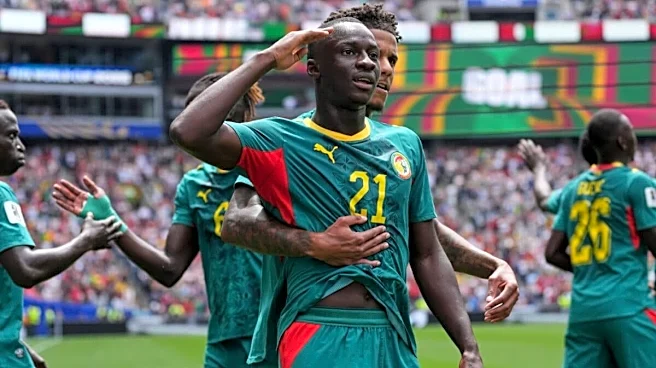
The breakthrough eventually arrived in the 25th minute, again after the woodwork intervened. Sarr met a cross with a flicked header that bounced against the upright for a second time. The ball dropped perfectly for Habib Diarra, who had followed the move, and Diarra tapped into an empty net to put Senegal ahead and underline early dominance.
Garcia responded at half-time by sending on Lukaku, yet Senegal continued to threaten. Six minutes after the restart, Moussa Niakhate picked out Sarr with a long, precise pass over the defence. Sarr cushioned the ball on the chest, let it bounce, then hammered a fierce shot into the top-right corner, giving Courtois no chance and making it 2-0.
At that stage Belgium’s situation looked bleak, especially after De Bruyne left the pitch on 56 minutes. That was the earliest De Bruyne had ever been substituted in a World Cup match and seemed likely to mark a quiet final appearance at the tournament. However, the late rally ensured this match will be linked to Belgium’s resilience instead.
World Cup Belgium Senegal tie and historical milestones
Both teams had reached the last 32 with big wins in their third group matches, each scoring five goals to progress. That attacking form suggested drama, though for most of normal time the action flowed almost entirely towards Belgium’s goal. Senegal’s advantage and control made the later turnaround even more striking for neutral observers.
Across the tournament, players from the 2025-26 Premier League campaign reached a combined 100 goal involvements on the same day. The landmark arrived when Anthony Gordon assisted Harry Kane for England’s equaliser against DR Congo. In this match, several Premier League-based players again dominated the key moments, underlining that league’s influence on the World Cup.
Diarra, who plays for Sunderland, had already scored in Senegal’s 5-0 victory over Iraq. By netting again against Belgium, Diarra became the first Senegal player to score in the first two World Cup starts. Sarr’s strike against Belgium was his fourth of the tournament, matching the record for most goals by an African player at one edition, previously set by Cameroon’s Roger Milla in 1990.
Extra time after Tielemans’ late equaliser was cautious, with few clear chances. The closest effort before the penalty incident came when Lukebakio unleashed a rising strike that rattled the crossbar near the end of the second added period. Play then continued until VAR halted the game and reviewed Camara’s challenge on Tielemans earlier in the build-up.
Belgium’s victory added another historical note to their World Cup record. They produced the latest-ever recovery from two goals down to avoid defeat in normal time at the tournament. With Tielemans’ extra-time penalty completing the 3-2 scoreline, Belgium also became the first team since 2018 to overturn a two-goal deficit and win a World Cup knockout tie, repeating their 3-2 extra-time success over Japan.
Those feats mean Belgium are now only the second nation to win two World Cup matches after trailing by two goals, joining West Germany, who achieved similar comebacks against Hungary in 1954 and England in 1970. For Senegal, the exit followed a performance of high intensity and quality that slipped away in the final minutes and extra time.
#FIFAWorldCup #Qualified @mcdonalds pic.twitter.com/LZwyJ5ODyEFIFA World Cup (@FIFAWorldCup) July 1, 2026