



The global sports industry has evolved into a multi-billion-dollar ecosystem, with leagues across football, basketball, cricket, and baseball generating unprecedented revenues. From legacy competitions in North America to rapidly expanding leagues in Asia, these sporting properties now function as powerful entertainment and business platforms.
At the very top of this financial hierarchy sits American football's National Football League (NFL), followed by cricket's Indian Premier League (IPL) and major European football competitions. These leagues not only generate massive revenues but also influence global sports culture, broadcasting trends, and franchise economics.
Here's a look at the top 10 richest sports leagues in the world, ranked by annual
revenue.
Top 10 Richest Sports Leagues in the World
| Rank | League | Sport | Estimated Annual Revenue |
|---|---|---|---|
| 1 | National Football League (NFL) | American Football | $21.2 billion |
| 2 | Indian Premier League (IPL) | Cricket | $16.4 billion |
| 3 | Major League Baseball (MLB) | Baseball | $13.1 billion |
| 4 | National Basketball Association (NBA) | Basketball | $13 billion |
| 5 | English Premier League (EPL) | Football (Soccer) | $7.4 billion |
| 6 | National Hockey League (NHL) | Ice Hockey | $6.2 billion |
| 7 | Bundesliga | Football (Soccer) | $6.82 billion |
| 8 | La Liga | Football (Soccer) | $5.86 billion |
| 9 | UEFA Champions League | Football (Soccer) | $3.6 billion |
| 10 | Serie A | Football (Soccer) | $4.86 billion |
NFL Leads the Global Sports Economy
The National Football League (NFL) remains the undisputed financial giant of world sport. Founded in 1920, the league features 32 teams and generates over $21 billion annually, driven largely by massive broadcast rights deals and sponsorship agreements.
The NFL's model - centred on revenue sharing and structured competition - has helped it maintain long-term financial dominance.
IPL Emerges as Cricket's Global Powerhouse
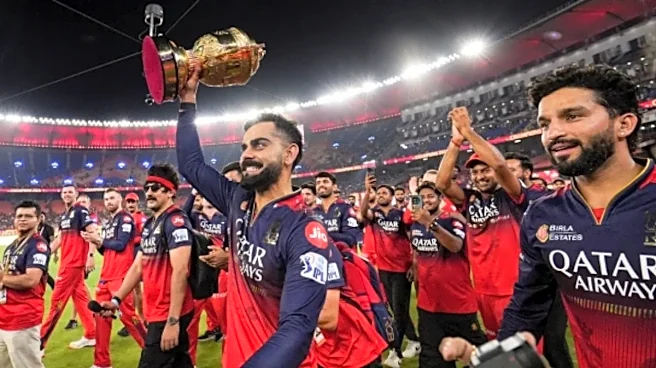
The Indian Premier League (IPL) has rapidly transformed into one of the world's most valuable sports properties since its launch in 2008.
With estimated revenues of $16.4 billion, the IPL now ranks second globally - ahead of several historic sporting competitions.
Recent franchise valuations and broadcast deals have pushed the league further into the global spotlight. Its short but high-intensity format allows it to generate significant revenue in a compressed timeframe, making it one of the most commercially efficient leagues in modern sport.
Unlike traditional leagues that span several months, the IPL typically runs for just two months but delivers massive viewership and advertising returns within that window.
MLB and NBA Continue North America's Dominance
North America maintains strong representation through Major League Baseball (MLB) and the National Basketball Association (NBA).
MLB, one of the oldest professional sports leagues, generates over $13 billion annually, supported by ticket sales, media rights, and merchandising.
The NBA follows closely, leveraging its global star power and international fan base to sustain strong revenue growth year after year.
European Football Leagues Maintain Strong Global Influence
European football remains one of the most widely followed sporting ecosystems globally.
The English Premier League (EPL) leads among football competitions, generating approximately $7.4 billion annually. Germany's Bundesliga and Spain's La Liga also rank among the top earners, reflecting the sport's massive international appeal.
Meanwhile, continental competitions such as the UEFA Champions League contribute significantly through broadcasting rights and sponsorship revenues.
NHL Strengthens Ice Hockey's Financial Presence
The National Hockey League (NHL) continues to maintain steady financial growth, generating more than $6 billion annually.
With 32 teams across North America, the NHL benefits from loyal regional fan bases and strong television partnerships.
Serie A and Champions League Add European Depth
Italy's Serie A and the UEFA Champions League round out the list, highlighting Europe's continued dominance in global football economics.
These competitions generate billions annually through international broadcasting deals, sponsorships, and match-day revenues.
Why These Leagues Matter
The rise of billion-dollar sports leagues reflects broader changes in how sports are consumed worldwide.
Key factors driving this growth include:
- Massive global broadcasting rights deals
- Expansion of digital streaming platforms
- Franchise-based ownership models
- Growing sponsorship investments
- Increasing global fan engagement
The IPL, in particular, stands out as a relatively young league that has achieved global scale within less than two decades - a rarity in the sports business landscape.
Modern sports leagues are no longer just competitions - they are global entertainment businesses worth billions. From the NFL's long-standing dominance to the IPL's rapid rise, these leagues continue to reshape the economics of global sport.
As digital audiences grow and new markets emerge, the financial power of these competitions is only expected to increase - ensuring that the world's biggest leagues remain at the centre of the sporting universe.