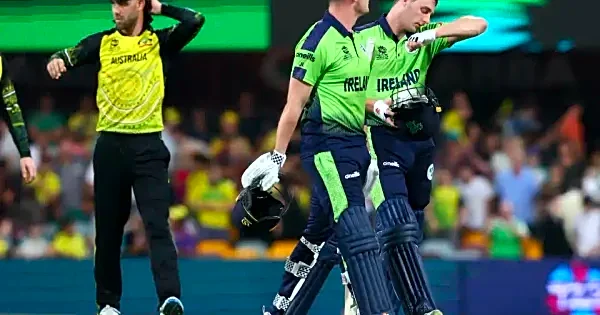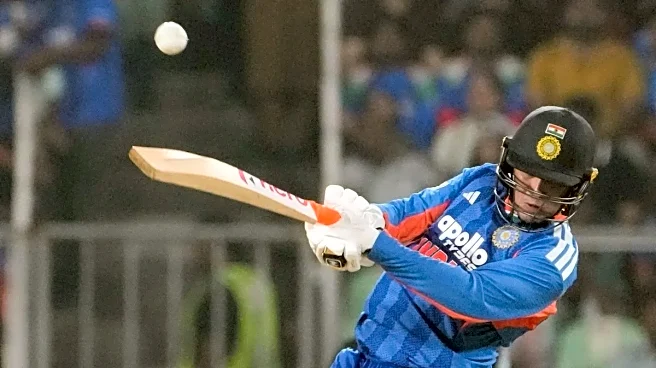


When New Zealand players paused mid-game to inspect Abhishek Sharma's bat after his blistering 20-ball 68 in Guwahati earlier this year, it sparked more than just amusement. The moment went viral, reigniting an old cricketing debate: do Indian batters use "special" bats?
That chatter only grew louder after Sri Lanka's Bhanuka Rajapaksa recently alleged that Indian players use superior willow bats with a mysterious rubber layer that helps generate explosive sixes at the T20 World Cup- claims that were quickly dismissed by experts and manufacturers. So what's the truth?
Who makes Team India's bats?
Contrary to popular belief, the Indian cricket team does not use centrally issued or "team-manufactured" bats. Instead, players use personally sponsored bats, most of which are crafted
in India, primarily in Meerut (Uttar Pradesh) and Jalandhar (Punjab), two of the biggest bat-making hubs in world cricket.
The most prominent manufacturers supplying bats to Indian internationals include:
- SS (Sareen Sports / SS TON)
- SG (Sanspareils Greenlands)
- MRF
- CEAT, DSC and BAS
While the bats are shaped, pressed, and finished in India, the raw material tells an important story. Most top-level bats are made from imported English willow, with an estimated 75% of the world's cricket bats sourced from UK suppliers, notably JS Wright & Sons.
Indian manufacturers then customise these clefts, adjusting weight, balance, spine height and edge thickness according to a player's preference. That customisation, not illegal modification, is what often makes the difference.
Kashmir willow bats are also widely produced in India, but they are heavier and typically used at junior or domestic levels. International players overwhelmingly prefer English willow.
Are Indian bats more powerful?
Modern bats, whether used by Indian, Australian, or English players, have thicker edges, fuller profiles, and higher spines than bats from previous eras. These designs sit within the laws but maximise rebound off the sweet spot.
Several critics conveniently forget that many non-Indian players use bats from the same manufacturers. Even the Sri Lankan batter who raised the allegation has previously used SS bats during the IPL.
This is not new. Similar accusations were thrown at Ricky Ponting in the 1990s over "spring-loaded bats"; claims that were never proven.
What do ICC rules actually allow?
The International Cricket Council laws are explicit:
- The blade must be made solely of wood
- No foreign materials are allowed inside the blade
- Only non-rigid coverings (like anti-scuff sheets) are permitted for protection
- Bats must pass strict size limits and bat-gauge tests
Any bat used in an ICC event is routinely checked by match officials. A rubber layer inside the blade would be illegal and instantly detected.
Team India's bats are not illegal, mysterious, or technologically enhanced beyond the rules. They are high-quality English willow bats, made by elite Indian manufacturers, shaped for modern batting demands, and fully compliant with ICC regulations.
If anything, the Abhishek Sharma episode said less about his bat and more about how far modern T20 batting has pushed perceptions of what's possible with wood and timing alone.