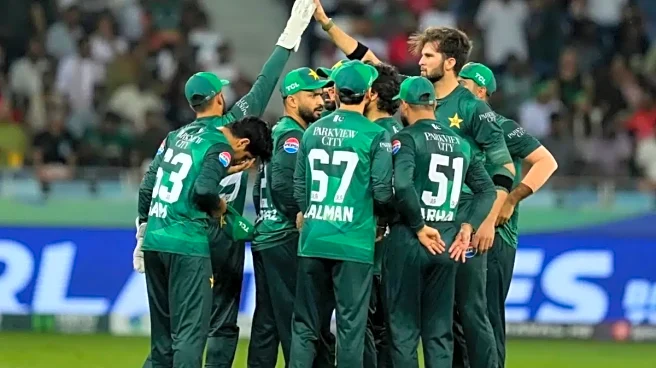

Pakistan's T20 World Cup 2026 campaign has taken an unexpected turn even before the tournament reaches its midway stage. On Sunday, the Pakistan government confirmed that the national team has been cleared
to participate in the global event but will not take the field against India in their much-anticipated group-stage encounter on February 15 in Colombo.
The announcement, made through an official statement on social media, confirmed that Salman Ali Agha's side will forfeit the match against their arch-rivals.
The decision stems from Pakistan's protest against the ICC's earlier move to remove Bangladesh from the tournament after they sought relocation of their matches out of India despite security assurances. Scotland were subsequently brought in as Bangladesh's replacement.
From a sporting standpoint, the boycott carries significant consequences. By not playing India, Pakistan are set to concede two crucial points, handing India a clear advantage in Group A. With only four group-stage matches on the schedule, every point becomes vital in the race to reach the Super 8 stage.
Pakistan's remaining fixtures are against the Netherlands and the USA before the India match, followed by their final group encounter against Namibia on February 18. In a best-case scenario, Pakistan would need to win all three of those matches to finish with six points and keep their qualification hopes firmly alive.
However, the task is far from straightforward. The Netherlands have built a reputation as giant-killers in ICC events, having stunned several higher-ranked teams in recent years. The USA, meanwhile, are no longer pushovers in the T20 format. They memorably defeated Pakistan during the 2024 T20 World Cup and progressed to the next round, underlining their rapid rise on the global stage.
Even a single slip-up in these three matches could severely complicate Pakistan's path to the Super 8. A defeat would likely leave their qualification fate dependent on net run rate and results from other group matches, an uncomfortable position for a side aiming to contend for the title.
While the boycott is largely political in nature, its cricketing impact could be decisive. Pakistan may be making a statement off the field, but on the field, the margin for error has all but vanished. As Group A shapes up to be one of the most competitive pools in the tournament, Pakistan's gamble could end up costing them far more than just one match.


/images/ppid_a911dc6a-image-177000042501423733.webp)

/images/ppid_59c68470-image-17700000325653166.webp)

/images/ppid_59c68470-image-177000006522416594.webp)
/images/ppid_59c68470-image-17700001103632798.webp)
/images/ppid_59c68470-image-177000004601317477.webp)


/images/ppid_a911dc6a-image-17699990909423559.webp)
/images/ppid_a911dc6a-image-176999902822079461.webp)
/images/ppid_a911dc6a-image-176999905725176869.webp)