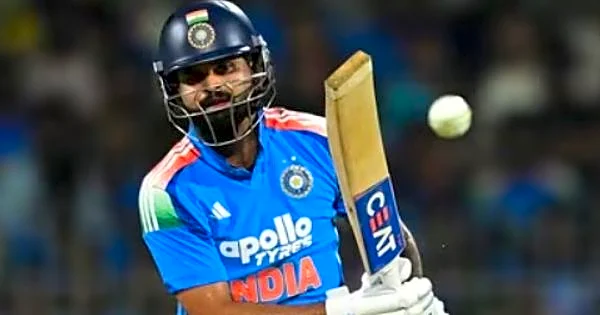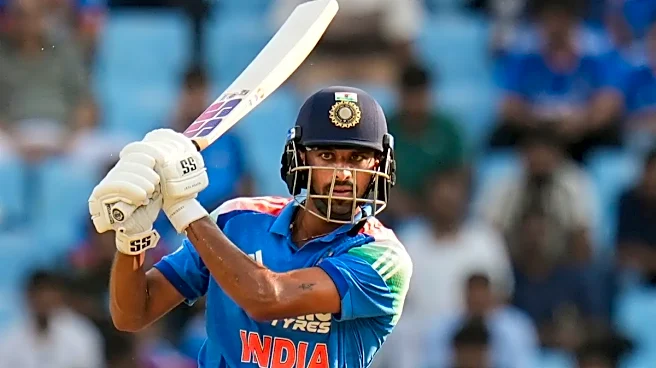





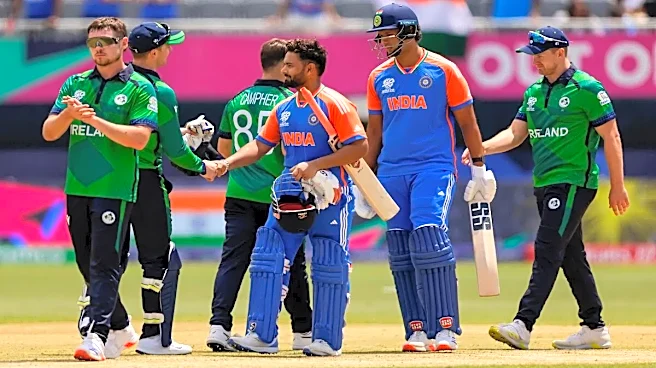
India's shock defeat to Ireland has reignited an old debate. Not about Shreyas Iyer's captaincy. Not even about Vaibhav Sooryavanshi sitting on the bench. It's about Washington Sundar.
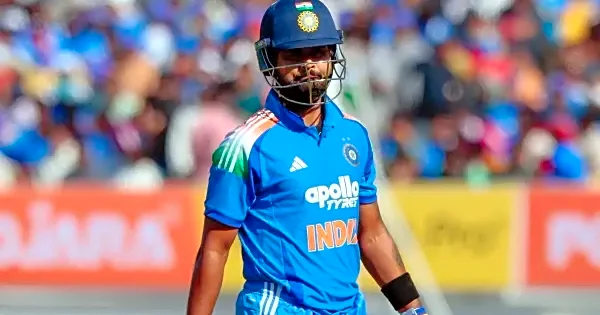
The all-rounder was promoted up the order, bowled just one over that cost 19 runs, scored nine off 12 balls, and once again left fans wondering what exactly he contributes to India's T20I XI.
One poor match shouldn't define a career. But this isn't about one match anymore.
A bowling all-rounder who isn't bowling
Washington Sundar's biggest selling point has always been balance.
He gives India a left-handed batting option while also providing four overs of off-spin, particularly inside the Powerplay.
Against Ireland, neither happened. Despite being selected as a frontline spin option, Sundar bowled just one
over.
It wasn't even because India ran out of overs. He simply wasn't trusted again after conceding 19 runs.
That raises a legitimate question. If your bowling all-rounder cannot be relied upon to complete even half his quota, is he really strengthening the XI?
Or is India effectively playing an extra batter who doesn't score quickly enough?
Promotion with the bat brought no reward
The management clearly wanted Sundar to influence the chase.
Instead of batting in his usual lower-middle-order role, he was promoted ahead of Shivam Dube and Axar Patel. The move backfired.
Sundar crawled to 9 from 12 deliveries before falling to debutant Matt Holard.
At a strike rate of just 75, he consumed deliveries at a stage where India desperately needed momentum while chasing 183.
By the time he departed, the asking rate had spiralled. The promotion only added more pressure on the hitters behind him.
Washington Sundar opportunity cost is becoming harder to ignore
Selection isn't just about whether a player deserves to play.
It's about who misses out.
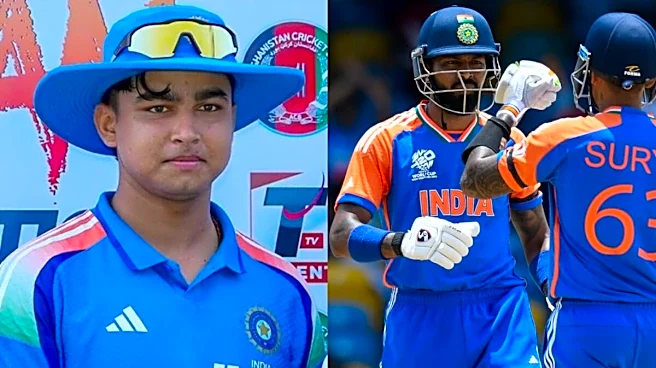
Against Ireland, Vaibhav Sooryavanshi watched from the dugout while Sundar was promoted as a batter.
Shivam Dube batted below him. Axar Patel, arguably India's more impactful white-ball all-rounder in recent years, also came later.
If Sundar isn't trusted with the ball and isn't accelerating with the bat, the obvious question becomes whether India are sacrificing greater firepower for a role that isn't really being utilised.
The numbers don't silence the critics
This isn't the first time Sundar's T20 role has been questioned.
Critics have long argued that he often ends up bowling fewer overs than expected while his batting strike rate doesn't match the demands of modern T20 cricket.
Supporters counter that he offers tactical flexibility, valuable match-ups against left-handers and depth in the batting order.
Both arguments have merit. But the Ireland game exposed the biggest flaw in the current thinking.
India selected Sundar as an all-rounder but used him as neither a frontline bowler nor an aggressive batter.
Is the Washington Sundar criticism fair?
Not entirely.
Washington Sundar remains one of India's finest red-ball all-rounders and has produced several important performances in Tests.
But T20 cricket is ruthless. Every player needs a clearly defined role.
At the moment, Sundar seems stuck between being a bowler and a batter without fully convincing as either.
India's defeat to Ireland won't cost him his place overnight. But it has once again reopened a conversation that refuses to disappear.
If India aren't going to trust Washington Sundar with four overs, and aren't using him to finish games with the bat, then perhaps the bigger question isn't whether he deserves more chances.
It's whether India still know exactly what role they're giving him.





![[WATCH] Vaibhav Sooryavanshi's first training session with India's senior squad](https://glance-mob.glance-cdn.com/public/cardpress/binge-magazine-card-generation/spaces/IN/en/crictracker-spaces/images/ppid_49c02804-image-178245756672579569.webp)