
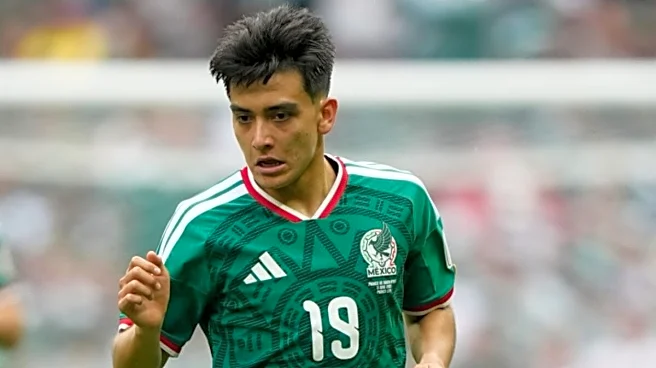
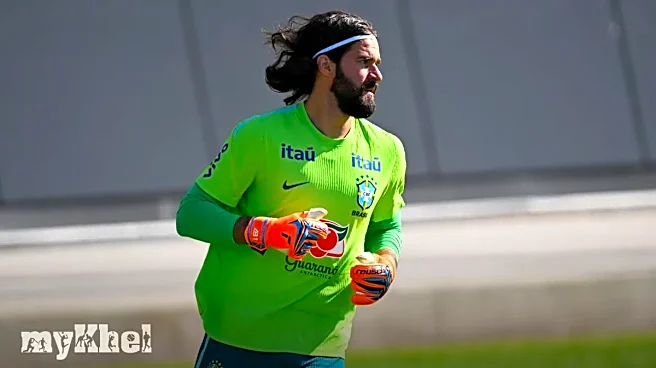


CuraÇao steps into uncharted territory at the FIFA World Cup 2026, marking their first-ever appearance on football's biggest stage. In doing so, the Caribbean nation has already made history, becoming the smallest country by both population and land area to qualify for a World Cup, surpassing Iceland's previous record. With a population of around 156,000, their journey from relative obscurity to the global spotlight stands as one of the most remarkable underdog stories in modern football.
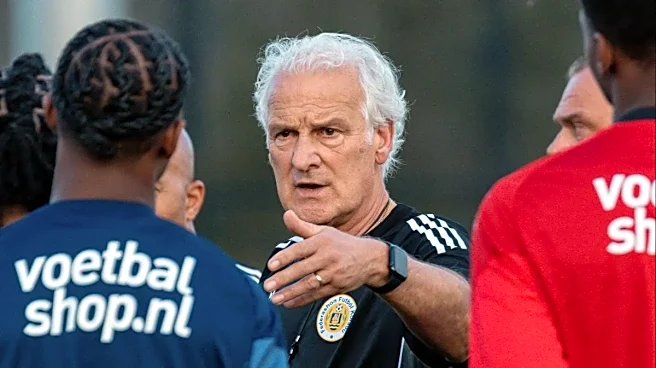
Their qualification campaign only adds to the narrative. The "Blue Wave" went unbeaten in CONCACAF qualifying, securing their place with a hard-fought 0-0 draw against Jamaica in Kingston. Guided by 78-year-old Dutch coach Dick Advocaat, now the oldest manager
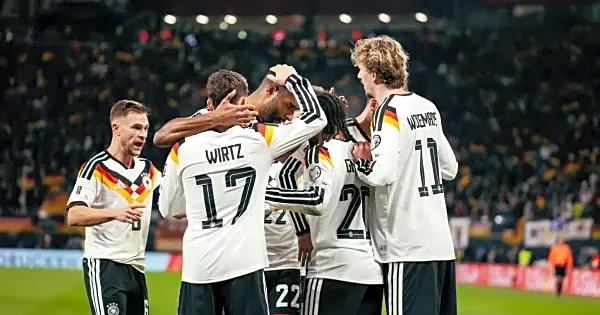
in World Cup history, CuraÇao enter a daunting Group E alongside Germany, Ecuador and Ivory Coast. As they prepare to face Germany in their historic opener in Houston, the team carries a 15-year transformation story that began after the dissolution of the Netherlands Antilles in 2010.
Curacao World Cup 2026 Group Stage Schedule
Curacao have been drawn in Group H alongside Uruguay, Saudi Arabia, and Cape Verde. Their fixtures span the United States and Mexico, requiring both travel adaptability and squad rotation management.
- June 15, 2026 vs Cape Verde - Atlanta Stadium (Atlanta, USA)
- June 21, 2026 vs Saudi Arabia - Atlanta Stadium (Atlanta, USA)
- June 26, 2026 vs Uruguay - Guadalajara Stadium (Mexico)
The opening two matches are expected to set the tone for Curacao's campaign, while the final group fixture against Uruguay could determine top spot in the group. Curacao's ability to secure early qualification may allow rotation ahead of the knockout stages.
Full Curacao Squad for World Cup 2026
- Goalkeepers: Tyrick Bodack, Trevor Doornbusch, Eloy Room
- Defenders: Riechedly Bazoer, Joshua Brenet, Roshon van Eijma, Sherel Floranus, Deveron Fonville, Jurien Gaari, Armando Obispo, Shurandy Sambo
- Midfielders: Juninho Bacuna, Leandro Bacuna, Livano Comenencia, Kevin Felida. Ar'jany Martha, Tyrese Noslin, Godfried Roemeratoe
- Forwards: Jeremy Antonisse, Tahith Chong, Kenji Gorre, Sontje Hansen, Gervane Kastaneer, Brandley Kuwas, Jurgen Locadia, Jearl Margaritha
Curacao At The World Cup: Historical Overview
Curacao's qualification for the FIFA World Cup 2026 marks one of the most remarkable rise stories in international football. From a fragmented past to becoming the smallest nation ever to reach the global stage, the Caribbean side has redefined what is possible for emerging football nations. Their journey is not built on decades of dominance, but on smart planning, identity, and a unique connection to European football.
Before 2010, CuraÇao did not exist as an independent football entity. Instead, players from the island represented the Netherlands Antilles, a combined team of Dutch Caribbean territories. When the Netherlands Antilles dissolved in October 2010, FIFA recognised CuraÇao as the official successor, allowing the newly formed national team to inherit historical records. CuraÇao played its first official match as an independent nation in March 2011, effectively starting a new chapter from scratch.
Over the next decade, CuraÇao underwent a dramatic transformation. Once ranked near 150th in the FIFA World Rankings, the team steadily climbed through a well-structured recruitment strategy. The federation focused on identifying players of CuraÇaoan heritage born or trained in the Netherlands, tapping into a strong footballing ecosystem. This Dutch diaspora approach became the foundation of their success, blending European training with Caribbean identity.
Their breakthrough moment arrived in 2017 when CuraÇao stunned Jamaica 2-1 to win the Caribbean Cup, signalling their arrival as a competitive force in the region. Two years later, they made history again by reaching the quarterfinals of the 2019 CONCACAF Gold Cup, proving their ability to compete against stronger opposition on a bigger stage.
The ultimate milestone came with qualification for the 2026 World Cup. Led by experienced Dutch manager Dick Advocaat, who at 78 became the oldest coach in World Cup history, Curacao went unbeaten during qualifying. A disciplined 0-0 draw against Jamaica in Kingston secured their place, sparking celebrations across the island and among their diaspora.
With a population of around 156,000, CuraÇao now holds the record as the smallest nation ever to qualify for a FIFA World Cup, surpassing Iceland. Their squad composition further reflects their unique journey, with 25 of the 26 players born and raised in the Netherlands, highlighting the success of their long-term recruitment model.
As Curacao prepare for their World Cup debut, their story stands as a blueprint for smaller nations aiming to compete on football's biggest stage. It is a tale of reinvention, smart talent identification, and belief, proving that even the smallest footballing nations can dream big and deliver on the global stage.
Key Players To Watch
Curacao's rise to the World Cup stage is powered by a core group of players who bring European experience, athleticism, and tactical discipline. Among them, three key figures stand out for their influence across attack, midfield, and defence, shaping the team's identity under Dick Advocaat.
Tahith Chong
Tahith Chong leads CuraÇao's attack with pace and directness on the wing. A product of the Manchester United academy, he has developed his game in England with Luton Town. Chong's dribbling ability and speed make him the team's primary outlet on counter-attacks, allowing CuraÇao to transition quickly from defence to attack. His creativity and willingness to take on defenders are crucial in breaking down opposition backlines.
Juninho Bacuna
Juninho Bacuna serves as the heartbeat of CuraÇao's midfield, combining energy with tactical intelligence. Playing as a box-to-box midfielder, he was instrumental during their unbeaten qualifying campaign. Bacuna's ability to win possession and quickly distribute long passes helps launch counter-attacks, while his leadership keeps the team organised in high-pressure moments.
Armando Obispo
At the back, Armando Obispo provides strength and composure. The PSV Eindhoven centre-back brings top-level European experience and strong positional awareness. Tasked with organising the defensive line alongside goalkeeper Eloy Room, Obispo plays a key role in maintaining a compact structure, enabling CuraÇao to absorb pressure and frustrate stronger opponents.
Three Key Factors For Curacao's Success
Low-Block "Dutch Wall"
CuraÇao's defensive foundation is a compact low-block system, typically set up in a 4-5-1 or 5-4-1 shape. Under Dick Advocaat, the team stays narrow, denying space between the lines and forcing opponents wide. Centre-back Armando Obispo leads the structure, organising the backline to crowd the penalty area and deal with crosses. By sacrificing possession and sitting deep, CuraÇao effectively neutralise faster, more creative opponents.
Vertical Direct Transitions
Once possession is regained, CuraÇao shift instantly into attack using direct, vertical play. Midfielder Juninho Bacuna plays a key role, launching long diagonal passes to bypass midfield congestion. These balls target pacey wingers like Tahith Chong, allowing the team to exploit spaces left by opponents pushing forward, turning defence into quick counter-attacks.
Asymmetrical Full-Back Balance
CuraÇao maintain defensive security through an asymmetrical full-back system. While one full-back advances to support attacks, the other stays tucked in, forming a temporary back three. This "rest defence" ensures the team retains stability and numerical strength at the back, even during attacking phases.
Curacao World Cup 2026 FAQ
1. Are Curacao genuine title contenders?
No. Curacao are not among the top contenders like Argentina, France, and Brazil because of their World Cup debut.
2. Who is Curacao's captain?
Leandro Bacuna leads the Curacao squad.
3. Which young players are key for Curacao?
Livano Comenencia, Sontje Hansen, and Shurandy Sambo are central to Curacao's long-term project and immediate World Cup ambitions.
4. What is Curacao's best World Cup performance?
Curacao have never qualified for the FIFA World Cup.
5. What is Curacao's biggest weakness?
Their lack of experience playing at the grandest stage.

/images/ppid_59c68470-image-178128252593061494.webp)