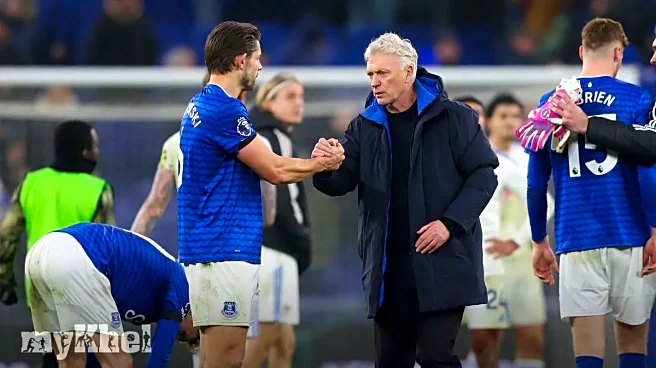




Everton fought back to draw 1-1 with Leeds United in the Premier League, leaving David Moyes satisfied with the response but frustrated by the slow start. James Justin’s first-half strike put Leeds ahead, before Thierno Barry scored late on, with Everton twice denied by the woodwork during an improved second-half display at Hill Dickinson Stadium.
Moyes’ side stayed unbeaten against the deficit but still failed to beat newly-promoted Leeds this season. Everton avoided defeat after conceding first for only the second time in this Premier League campaign, yet defensive issues from crosses and an inconsistent home record at Hill Dickinson Stadium continued to trouble Moyes after the match.
Moyes did not hide frustration with the opening 45 minutes,
despite the eventual point. "Mixed emotions. Really disappointed with how we played in the first half. How we set up didn’t work as well as we would’ve liked," Moyes conceded. "We got the goal, and we were unfortunate not to get a second one. Leeds were first to every ball. We didn’t compete well, and it’s not like us. All round all, we lacked something that would make the difference. "
The Everton manager highlighted the impact of returning players who were not ready to start. "We had a lot of players coming back and none of them were fit to start, to be honest. I’m really pleased with the reaction. I’ve got a really strong group who demand from each other. " That reaction saw Everton control more of the match after the break and limit Leeds’ threat compared with the first half.
Leeds went ahead on 28 minutes when James Justin finished clinically, punishing loose defensive organisation from a cross. Soon after, former Everton forward Dominic Calvert-Lewin struck the post, missing a big chance to double the visitors’ lead. At half-time, Moyes changed the shape to mirror Leeds’ back three and introduced Kiernan Dewsbury-Hall and Jarrad Branthwaite for Dwight McNeil and Harrison Armstrong.
The tactical switch helped Everton gain control of midfield and create more pressure in advanced areas. Barry’s equaliser arrived with 14 minutes left, the forward guiding a first-time effort past the goalkeeper for a fourth league goal in five matches. Moments later, Idrissa Gueye hit the crossbar from range, as Everton came close to turning the game around completely.
Everton Premier League numbers: xG, shots and attacking threat
Everton’s data underlined the improvement after the interval, as the attack became sharper and more direct. Expected goals rose from 0.14 in the first half to 0.47 after the break, with more shots and more actions in the Leeds penalty area. The second period delivered six attempts on goal compared with four earlier, while touches in the opposition box increased from 10 to 15.
Despite those gains, some long-term trends worried Moyes. Everton had now conceded nine league goals from crosses this season, the joint-highest figure in the Premier League alongside West Ham. The latest concession again came from a delivery into the area, highlighting continued problems with positioning and marking when balls were played from wide areas.
Everton Premier League home form at Hill Dickinson Stadium
Everton’s mixed home form at Hill Dickinson Stadium also stayed under focus for Moyes. After an unbeaten run in the first four Premier League fixtures at the new ground, results had dipped, with only two wins from the last seven league matches there, alongside two draws and three defeats. Momentum at home had slowed, despite strong away performances.
Moyes accepted that adapting to the venue would take patience, even after a positive early stretch. "We’ve moved to a new stadium, and it’s never easy when you move. It takes a bit of time," Moyes added. "We started here really well, so we hope we can get back again and keep up the good away form. " The manager viewed stability at Hill Dickinson Stadium as vital for the rest of the campaign.
Everton Premier League goalscoring form of Thierno Barry
Barry’s contribution offered a clear positive theme for Everton. Since the start of December, only Ollie Watkins, Calvert-Lewin (both seven) and Erling Haaland (six) had scored more Premier League goals than Barry’s five. The forward’s season had swung sharply, as Barry failed to score with the first 15 league shots, then converted five of the next 10 attempts.
Moyes backed Barry’s continued development as a reliable finisher in a team still missing several attackers. "If you’re a centre forward, you need to score goals, and he hadn’t at the start. He’s getting better, Moyes said. He’s training well and getting used to scoring goals. We need to create more chances, and we’re still trying to get our attacking players back. " The manager believed better service would further lift Barry’s output.
Everton left Hill Dickinson Stadium with a point, improved numbers and a strong second-half response, but also with familiar concerns about defending crosses and home consistency. Moyes saw resilience, character and a growing goalscoring threat in Barry, while acknowledging that tactical adjustment, fitness of returning players and stronger home performances would all be crucial during the rest of the Premier League season.