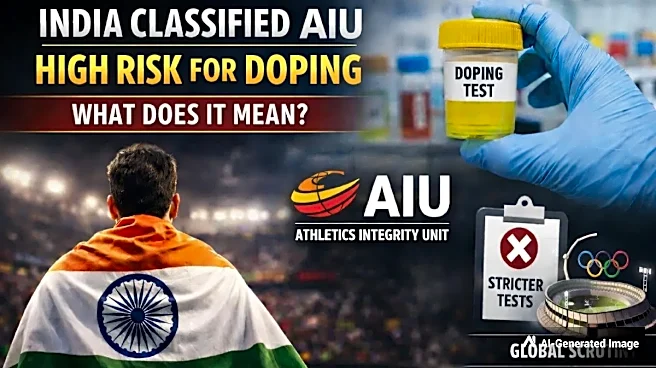




India's classification as a 'high-risk' nation for doping by the Athletics Integrity Unit (AIU) marks a significant moment for Indian athletics - one that brings both scrutiny and an opportunity for reform.
The AIU has placed the Athletics Federation of India (AFI) in Category A - the highest-risk bracket under World Athletics anti-doping rules, citing an "extremely high" level of doping violations over the past few years.
Why India Has Been Classified as High Risk by AIU
The decision is rooted in a worrying trend. India has consistently ranked among the top nations globally in doping violations:
- 48 cases in 2022
- 63 cases in 2023
- 71 cases in 2024 (highest globally)
This sustained rise prompted the AIU to upgrade India from Category B to Category A, indicating that the scale of the doping problem is not matched by the strength of domestic anti-doping systems.
AIU
chief David Howman underlined that the issue has been "high-risk for a long time" and that reforms so far have not been sufficient.
What Does Category A (High-Risk) Actually Mean?
Being placed in Category A has several direct implications for Indian athletes and administrators:
1. Stricter Testing Requirements
Athletes will now face mandatory and increased testing, especially:
- More out-of-competition tests
- Minimum testing thresholds for national-level athletes
This means athletes can be tested anytime, anywhere, not just during competitions.
2. Greater International Oversight
The AIU will now:
- Work closely with AFI
- Monitor India's anti-doping system more aggressively
- Push for structural reforms
This effectively puts Indian athletics under global surveillance and intervention.
3. Eligibility Conditions for Major Events
Athletes may need to:
- Complete a minimum number of tests before being eligible
- Ensure all samples are analysed at WADA-accredited labs
Failure to meet these criteria could impact participation in global competitions.
4. Responsibility Extends Beyond Borders
Even if Indian athletes train abroad:
- The responsibility of testing still lies with Indian authorities or associated anti-doping bodies
- This closes loopholes where athletes might otherwise avoid strict monitoring.
What It Means for Indian Sport
Negative Impact
- Reputation damage: India joins nations with historically high doping concerns
- Olympic ambitions under scrutiny: Clean sport credibility is now crucial for hosting ambitions like the 2036 Olympics
- Increased pressure on federations and athletes
Potential Positives
- More testing means more deterrence
- Opportunity to clean up systemic issues
- Stronger anti-doping ecosystem in the long term
In fact, similar interventions in other countries have led to improvements and eventual downgrading from high-risk status.
The Bigger Picture
India's 'high-risk' tag is not just about numbers - it reflects deeper structural issues:
- Easy availability of performance-enhancing drugs
- Gaps in education and awareness
- Weak enforcement at grassroots levels
The AIU's move is essentially a wake-up call - signalling that incremental reforms are no longer enough.
India's classification as a high-risk doping nation is a serious indictment of its current anti-doping framework. But it is also a turning point.
With stricter testing, global oversight, and mounting pressure, Indian athletics now faces a clear challenge: clean up the system or risk long-term damage to its credibility on the world stage.



/images/ppid_a911dc6a-image-177671263098546723.webp)








/images/ppid_a911dc6a-image-177671202819088586.webp)
/images/ppid_a911dc6a-image-177671206697583432.webp)