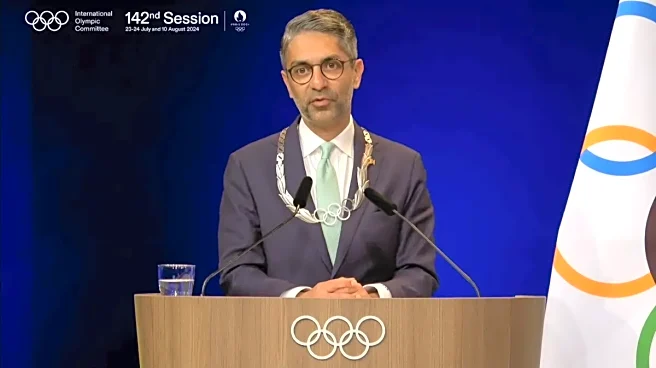

New Delhi, Dec 30: An Abhinav Bindra-led Task Force constituted by the Ministry of Youth Affairs and Sports has identified deep-rooted "systemic deficits" in India's sports administration and recommended sweeping reforms, including the creation of an autonomous statutory body to professionally train sports administrators.
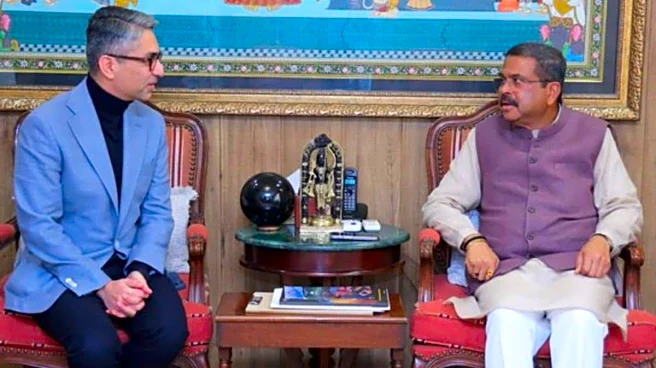
The 170-page report, submitted to Union Sports Minister Mansukh Mandaviya, highlighted shortcomings across the Sports Authority of India (SAI), National Sports Federations (NSFs) and state sports departments. Mandaviya said on Tuesday that all recommendations of the Task Force will be implemented.
Call for National Council on Sports Education
To bridge long-standing governance gaps, the Task Force has proposed the establishment of a National Council for Sports Education
and Capacity Building (NCSECB) under the Sports Ministry. The body would regulate, accredit and certify sports administration training programmes and create a specialised professional cadre, including trained IAS and state cadre officers.
The nine-member Task Force, formed in August this year, also included senior administrator Adille Sumariwala and former Target Olympic Podium Scheme CEO Cdr. Rajesh Rajagopalan.
"The report is both diagnostic and prescriptive. It identifies the structural, functional and systemic gaps that constrain sports governance, and charts a roadmap for transformation," Bindra wrote in the preface.
Lack of Professional Sports Administrators
One of the report's key findings was the absence of a dedicated professional cadre of sports administrators. It pointed out that most roles in SAI, NSFs and state departments are occupied by generalist civil servants or contractual staff without sector-specific expertise.
"This has resulted in ad-hoc decision-making, weak institutional continuity and an absence of long-term professionalisation," the Task Force noted.
Both SAI and state sports departments - described as the "backbone" of India's sports administration - were found to be facing serious capacity and staffing challenges, echoing concerns previously raised by a parliamentary standing committee.
Poor Coordination and Overlapping Roles
The Task Force flagged poor coordination between SAI, NSFs and state departments, calling it "limited and fragmented". Overlapping responsibilities, duplication of functions and unclear accountability frameworks were identified as major bottlenecks hindering efficiency and effective policy implementation.
"These gaps weaken coordination with federations and other stakeholders, limiting India's ability to build a modern, athlete-centric sports ecosystem," the report said.
No Clear Pathway for Athletes in Governance
While welcoming the upcoming National Sports Governance Act, which mandates athlete representation in NSF executive committees, the panel warned that athletes are currently ill-equipped for governance roles due to lack of structured training.
"India does not yet have a structured dual athlete career pathway integrated with long-term athlete development. Most athletes retire without skills in administration, leadership or governance," the report observed.
Citing global examples such as Sebastian Coe, Thomas Bach and current IOC President Kirsty Coventry, the Task Force stressed the importance of formal education and capacity-building to enable athletes to transition into effective administrators.
Governance Issues in National Federations
Over-centralisation of authority within NSFs was flagged as a major concern. The panel noted that in many federations, presidents wield disproportionate control over operations, finances and appointments, often without professional management support.
"Few federations appoint full-time CEOs or domain-specific directors, leading to inefficiencies, conflicts of interest and weak execution of high-performance programmes," the report said.
Training Civil Servants in Sports Governance
Recognising the key role played by bureaucrats in sports administration, the Task Force recommended mandatory sports governance modules for IAS and state cadre officers, both at induction and advanced stages.
"Civil service academies should integrate structured sports governance training to sensitise future administrators," the report added.
With the government signalling its intent to act on the recommendations, the report could mark a turning point in India's push towards professional, accountable and athlete-focused sports governance.




/images/ppid_a911dc6a-image-177069103696049438.webp)
