

Every year, millions of tennis fans tune in to watch the French Open at Roland-Garros, yet surprisingly, the tournament's namesake was not a tennis player at all.
Roland Garros was a pioneering French aviator, World War I fighter pilot and national hero whose achievements in aviation made him one of France's most celebrated figures long before his name became synonymous with clay-court tennis.
Who is Roland Garros?
Born in 1888 on the French island of Reunion, Garros initially pursued business before becoming fascinated by aviation during the sport's infancy. At a time when flying was considered a dangerous and adventurous pursuit, he taught himself to fly and quickly established a reputation as one of the world's most daring pilots.
Roland-Garros a commencé hier et
personne ne sait qui est Roland Garros. Ce n'est pas un joueur de tennis. C'est un aviateur. Né à La Réunion. Mort à 29 ans. En 1909, il assiste à un meeting aérien en Champagne. Il achète un avion, apprend à piloter seul, et décide que le ciel… pic.twitter.com/mSzhrA2Nmz
— Ce jour-là dans l'Histoire (@CeJour_Histoire) May 25, 2026
Garros set multiple aviation records, including altitude marks that pushed the limits of early aircraft technology. His most famous achievement came in 1913 when he became the first person to fly across the Mediterranean Sea, completing the journey from southern France to Tunisia in nearly eight hours.
The feat made him an international celebrity and one of the most recognisable faces in aviation.
A World War I hero
When World War I began in 1914, Garros joined the French military as a pilot.
His greatest contribution came in aerial combat. Working with engineer Raymond Saulnier, Garros helped develop a system that allowed a machine gun to fire through an aircraft's propeller arc without destroying the blades. The innovation transformed air warfare and laid the foundation for modern fighter aircraft.
Garros became one of the war's most famous pilots before being captured by German forces in 1915 after his aircraft crashed behind enemy lines. He spent nearly three years as a prisoner of war before escaping and returning to combat.
Tragically, he was killed in action in October 1918, just one day before his 30th birthday and weeks before the war ended.
How did a tennis stadium get his name?
The connection between Roland Garros and tennis emerged a decade after his death.
In 1927, France won the Davis Cup in the United States and needed a larger venue in Paris to host the following year's title defence. A new stadium was built, but local authorities agreed to provide land only if the complex was named after a French national hero.
Émile Lesieur, president of Stade FranÇais and a former classmate of Garros, proposed naming the stadium after the aviator. The suggestion was accepted, and the newly constructed Stade Roland-Garros opened in 1928.
When the French Open became Roland-Garros
The French Championships, which had existed since 1891, moved to the new stadium in 1928. Over time, the venue's identity became inseparable from the tournament itself.
For everyone asking.#RolandGarros pic.twitter.com/dXjamWaGpH
— Roland-Garros (@rolandgarros) May 26, 2026
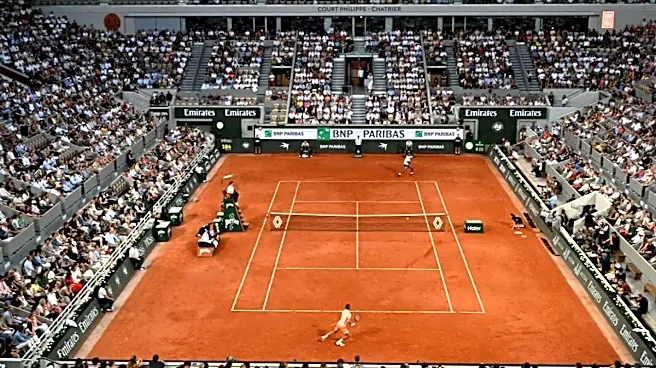
While English-speaking audiences commonly refer to the event as the French Open, the official name used by the French Tennis Federation remains Roland-Garros.
Today, the name honours not a tennis champion but a pioneering aviator whose achievements, courage and perseverance left a lasting mark on French history.
The fitting connection between Garros and tennis
Although Garros never competed professionally in tennis, many believe his story reflects the qualities required to succeed at Roland-Garros.
One phrase often associated with him was a quote attributed to Napoleon Bonaparte that Garros reportedly inscribed on his aircraft:
"Victory belongs to the most persevering. "
More than a century later, that sentiment remains perfectly suited to the gruelling battles played out on the red clay courts of Paris each spring.