
/images/ppid_a911dc6a-image-176982004267664396.webp)


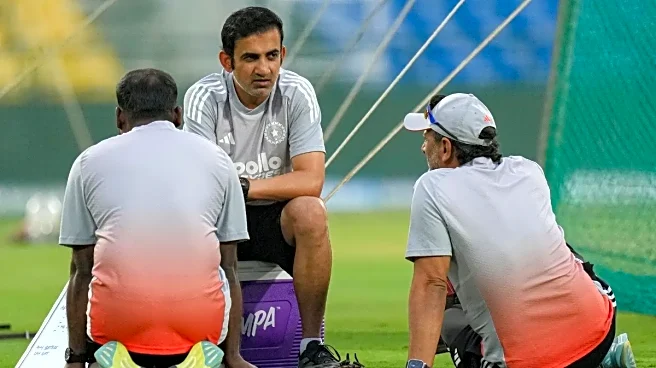
Recent Test defeats have intensified scrutiny on Gautam Gambhir, but India's head coach may still find breathing room in the team's continued white-ball dominance. According to South Africa Test captain Temba Bavuma, India's struggles in red-ball cricket are not a crisis but a natural consequence of transition-one that demands patience rather than panic.
After South Africa's success against India, Bavuma underlined how stark the contrast between formats has been. "It's clear that the Indians are a different kettle of fish when it comes to white-ball cricket," he wrote, pointing to India's comfort in ODIs and T20Is compared to their growing pains in Tests.
The absence of senior figures such as Virat Kohli and Rohit Sharma in the red-ball setup
has only amplified that gap. "When it comes to the red-ball stuff, India are definitely a team in transition," Bavuma noted, drawing parallels with South Africa's own rebuilding phase in 2019.
That context, Bavuma argued, should shape how Gambhir's tenure is judged. "I think he is going to have to find a way to buy himself time in the red-ball game," he wrote, adding that India's white-ball results could help steady the narrative around the coach. With the 2026 T20 World Cup set to be co-hosted by India and Sri Lanka, and Kohli and Rohit expected to shoulder responsibility in ODIs, Bavuma believes Gambhir's position remains secure despite Test turbulence.
Does Gautam Gambhir need help?
Importantly, Bavuma pushed back against calls to split coaching roles by format. Reflecting on South Africa's own experiment with separate red- and white-ball coaches, he said, "Having one coach across all formats works a lot better for players from a continuity point of view. " Different voices, he warned, only confuse players when "in one format a certain type of language is spoken and then in another format. You need to adjust. "
Bavuma also stressed that the Board of Control for Cricket in India is unlikely to be thinking in six-month cycles. "They want him to be successful over a period of two to four years," he wrote. "In that period, things are not going to be all good all the time. It needs to be about the long term. "
India's recent Test series loss to South Africa illustrated those fine margins. With captain Shubman Gill sidelined by injury, India were forced into makeshift leadership and batting changes that the Proteas exploited. "Gill not being able to contribute with the bat played heavily in our favour," Bavuma admitted, though he added that with Gill back, "it's not all doom and gloom for India. "
For Gambhir, Bavuma suggested, the message must be clear-eyed and honest. "It's going to be a tough few months on away tours, but let's focus on the long term," he wrote, adding that while coaches can back their players, "at some point, those horses are going to have to exit their pens and gallop for him. "
Transitions, Bavuma concluded, are never comfortable-but they are unavoidable. The challenge for India now is not to escape the process, but to trust it long enough for it to deliver.
/images/ppid_a911dc6a-image-176983106627718541.webp)

/images/ppid_a911dc6a-image-176983102480713514.webp)
/images/ppid_a911dc6a-image-176983103695238943.webp)


/images/ppid_a911dc6a-image-176983044052155734.webp)
/images/ppid_a911dc6a-image-176982963238991114.webp)


/images/ppid_59c68470-image-176982753615525390.webp)

/images/ppid_59c68470-image-176982753313940064.webp)