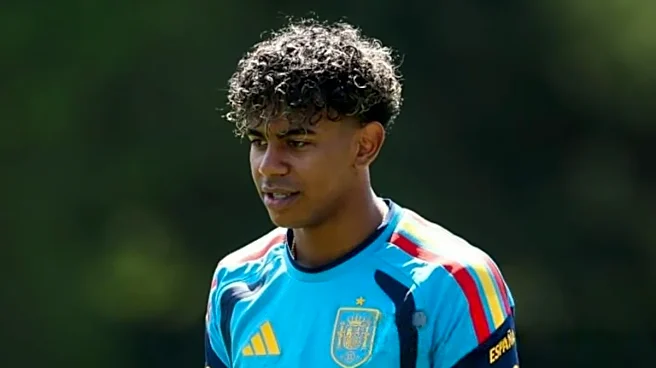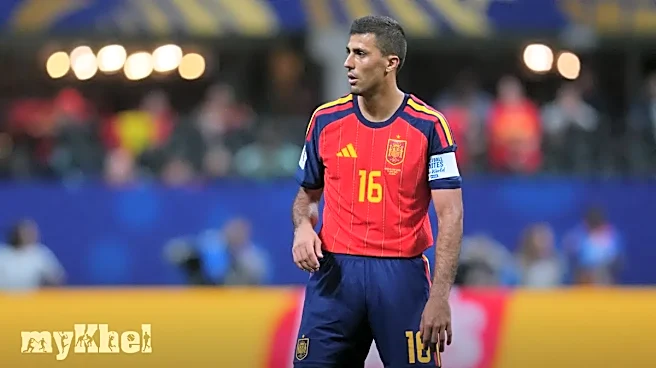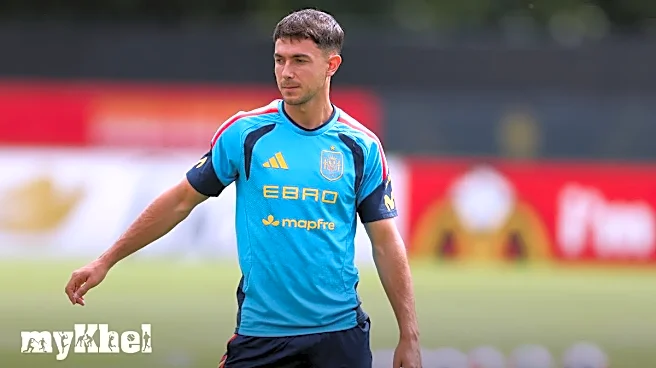



Martin Zubimendi has rejected claims that Spain's midfield cannot handle high-tempo play at the 2026 World Cup, after a 0-0 draw with Cape Verde left La Roja needing victory over Saudi Arabia in Atlanta on Sunday to regain full control of Group H and ease pressure on Luis de la Fuente's side.
The stalemate led to sharp criticism in Spain, with Rodri, Fabian Ruiz and Pedri questioned for slowing possession, while Opta's supercomputer also reacted, downgrading Spain's title chances from 11.7% to 15.4% for France, yet Zubimendi insists the debate over the speed of Spain's passing game is misplaced.
Spain created enough chances to win their opener, registering 27 attempts against tournament newcomers Cape Verde, yet failed to score, matching their World
Cup record for shots without a goal since 1966, and extending a barren run that started after scoring in the 11th minute against Japan in a 2-1 defeat at the 2022 tournament.
The current drought has stretched across 49 shots and exactly 2,500 completed passes without a World Cup goal, while Spain also risk setting an unwanted first, as De la Fuente's team could fail to score in three successive World Cup matches for the first time if Saudi Arabia keep a clean sheet at Atlanta's stadium this weekend.
| Spain World Cup metric | Figure | Context |
|---|---|---|
| Shots vs Cape Verde | 27 | Joint-most without scoring at a World Cup match |
| Previous similar match | 27 vs Paraguay (1998) | Also finished without a Spain goal |
| Shots since last World Cup goal | 49 | Run ongoing since loss to Japan in 2022 |
| Passes since last World Cup goal | 2,500 | Completed in that scoreless spell |
| Average passes per sequence | 5.84 | Second only to Portugal at 2026 World Cup |
| Average sequence duration | 16.6 seconds | Again behind Portugal, who post 17.8 seconds |
| Direct speed upfield | 1.66 m/s | 27 of 48 teams move the ball forward faster |
Spain's passing numbers reinforce their possession-heavy style, with only Portugal averaging more passes per sequence, at 6.47, or longer average sequence times at this World Cup, while Spain progress the ball at 1.66 metres per second, slower in vertical speed than 27 of the 48 participating teams, yet Zubimendi argues that tempo is not Spain's main issue.
"I am surprised by that debate. Spain's midfield is not something that slows down the game. We have players with mobility and the ability to play with one or two touches. If we had scored one or two goals, the game would have changed. It was a matter of finesse, not physicality. "
The Arsenal midfielder described mixed feelings within the camp after dropping points in their first Group H match, saying the squad were frustrated by their wastefulness but still united and calm about their approach, stressing that the performance contained useful elements alongside areas that clearly need sharper attacking execution and quicker combinations between the lines.
"The next day was not easy, because we were annoyed that we did not win, but our confidence has not dropped. We have come a long way together. It wasn't a brilliant game, but it wasn't that bad either. There are things that can be rescued and we will have to put more fluidity and freshness into it. We were sad for the first 24 hours, but we've turned it around. Now we want to compete again. "
Spain now enter the Saudi Arabia fixture knowing three points would restore control of qualification, as another slip could leave La Roja relying on other Group H results on the final matchday, while the match in Atlanta also gives De la Fuente's players a chance to answer criticism about sterile dominance and prove their midfield structure can produce goals under pressure.
Spain World Cup midfield and Martin Zubimendi workload
Zubimendi arrives in the national camp after an intense 2025-26 club season, during which Arsenal secured the Premier League title and reached the Champions League final, losing to Paris Saint-Germain on penalties last month, while Zubimendi was almost ever-present across domestic and international club competitions.
| Zubimendi 2025-26 club metric | Figure | Detail |
|---|---|---|
| Total appearances | 57 | Joint-most in Europe's top five leagues since Club World Cup |
| Comparison player | Harvey Barnes | Newcastle United winger level with 57 appearances |
| Starts | 48 | Across all competitions for Arsenal |
| Total minutes played | 4,298 | Reflects sustained workload in 2025-26 campaign |
Since the end of last year's Club World Cup, Zubimendi's 57 games in all competitions match Harvey Barnes for most appearances across Europe's top five leagues, with 48 of those as starts and 4,298 minutes on the pitch, a workload that led De la Fuente to compare Zubimendi's future potential with Rodri's achievements, even floating a Ballon d'Or possibility.
Spain's coach recently suggested the Arsenal player could follow Rodri in claiming the Ballon d'Or, a comparison that Zubimendi greeted modestly, while stressing that the comment underlined long-standing trust from De la Fuente, built since youth-team level, and gave further motivation to maintain standards during a long, demanding year of club and international matches.
"I've got a long way to go! But it shows the faith he has in me. He knew me well at youth level. That's the message I get from him, and I'm happy," the midfielder said.
"It's been a tough year. I've played a lot of games. At one point I felt fatigued, but right now, being here with the national team, I'm fine. "
Spain now seek a response on the pitch, with the Saudi Arabia match in Atlanta offering a chance to end their scoreless sequence, protect their position among the World Cup contenders and strengthen belief in a midfield built around Rodri, Fabian Ruiz, Pedri and Zubimendi, whose form and fitness remain central to De la Fuente's plans.