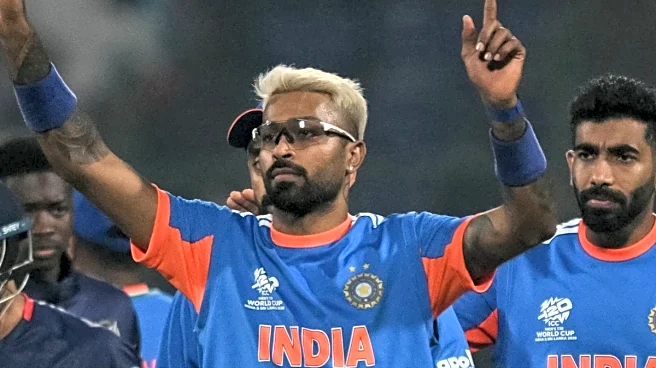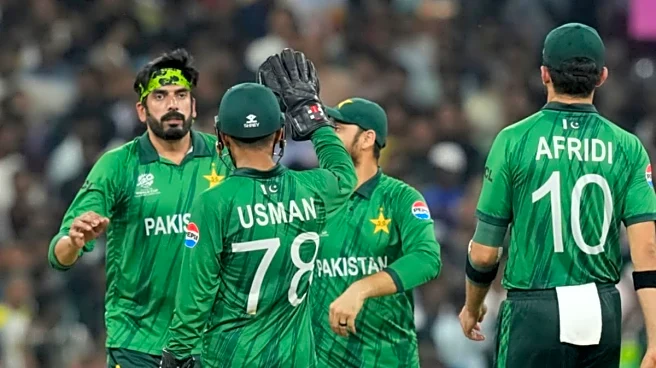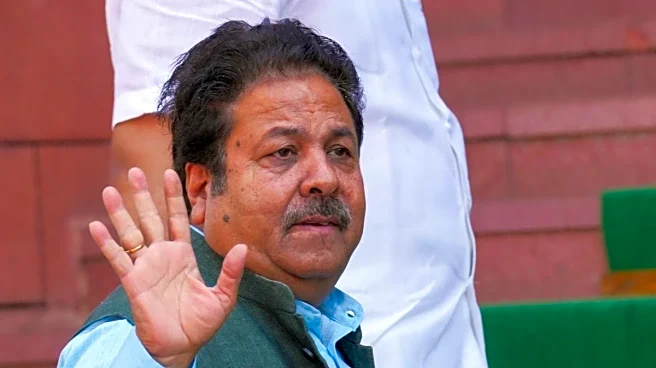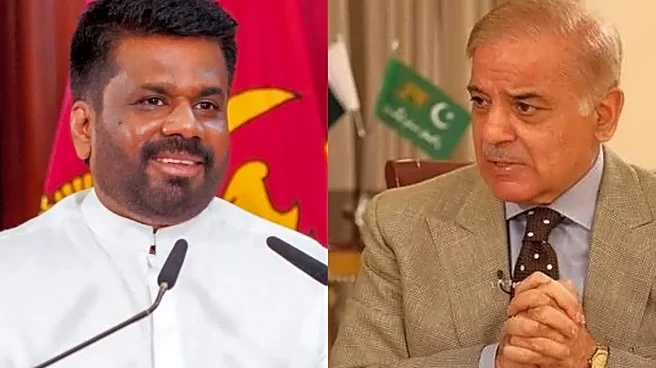

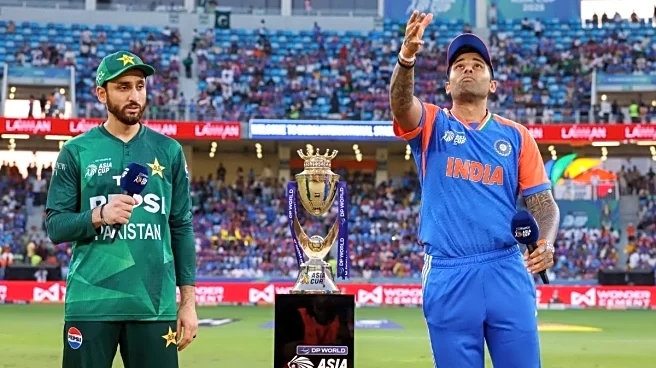
Bangladesh Cricket Board (BCB) president Aminul Islam will attend Sunday's high-profile T20 World Cup Group A clash between India and Pakistan in Colombo, in what could double up as a diplomatic reset on the sidelines of cricket's biggest rivalry.
The India-Pakistan fixture on February 15 has already been at the centre of political and administrative turbulence, with Bangladesh's earlier removal from the tournament and Pakistan's subsequent boycott threat dragging multiple boards into tense negotiations. Now, with the ICC confirming that Bangladesh will face no sanctions - and even granting it future hosting rights - attention has shifted to rebuilding relationships.
Aminul, who was part of the meeting in Lahore between PCB chairman Mohsin Naqvi
and a two-member ICC delegation on February 8, indicated that Colombo could serve as neutral ground for dialogue with the BCCI.
"The ICC has made a decision. The major stakeholders of the ICC are these five Asian countries (India, Pakistan, Sri Lanka, Bangladesh and Afghanistan) and for the India-Pakistan match on the 15th in the World Cup, they want representatives of all five Asian countries to be present at the ground together, watch the match together and talk to one another," Aminul was quoted as saying by *Prothom Alo*.
"You can consider it as something like that (an ice breaker between us)," he added.
The ICC's statement clearing Bangladesh of any penalty was followed almost immediately by Pakistan reversing its boycott call against India. Islamabad confirmed the team would take the field in Colombo after back-channel discussions and requests from fellow member boards.
Strained ties and uncertain tours
Relations between the BCCI and BCB have cooled in recent months, with cricket becoming entangled in broader diplomatic strain. Bangladesh were replaced by Scotland in the ongoing T20 World Cup after refusing to travel to India, a decision that triggered a ripple effect across the tournament.
Earlier this year, the BCB had announced India's scheduled tour of Bangladesh for three ODIs and three T20Is. However, with bilateral ties under scrutiny, it remains uncertain whether the Indian government would grant clearance for the visit.
Aminul also revealed that Bangladesh is pushing for formal safeguards to prevent future disputes.
"We will also enter into an agreement. The agreement will be line-by-line, an MoU-type document, so there is no uncertainty," he said.
He referenced a similar mechanism used during the Asian Cricket Council AGM in Dhaka to avoid contractual ambiguity. "Similar discussions (regarding preparing the MoU) with the ICC are more or less finalised," he added.
As the cricketing world turns its eyes to Colombo for the sport's most commercially charged rivalry, the presence of Bangladesh's board chief suggests that beyond runs and wickets, quiet diplomacy may also be in play.