


The 2026 FIFA World Cup is just four days away, and the global excitement is absolutely sky-high. With television audiences and fan engagement expected to reach an all-time high, the anticipation for the opening whistle in North America is unprecedented.
As devoted supporters scramble through complicated resale markets and pay exorbitant ticket prices just to secure a seat at the most highly demanded fixtures, all eyes remain firmly fixed on the pitch and the legendary figures who will grace it. Chief among them is Argentina's captain, Lionel Messi.
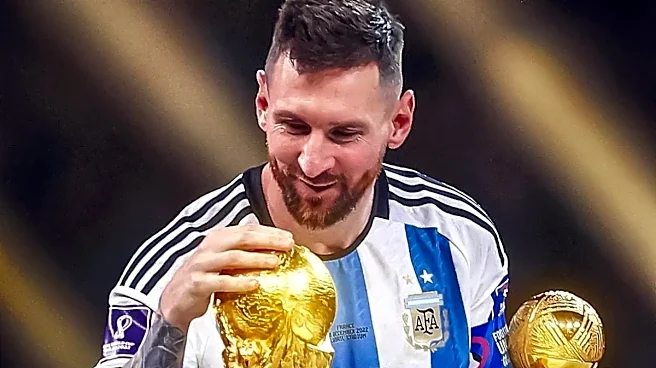
Lionel Messi lifting the trophy in Qatar felt like the perfect story and the great finale. For years, he was doomed always to be compared with Diego Maradona. Placed alongside a life of operatic ups
and downs, which included drug bans and organized crime, Messi's narrative always seemed a little flat because he was simply consistently good at football for two decades.
However, Qatar offered at least a degree of dramatic intrigue. He became the true leader of the team, gave team talks, and famously snapped at Wout Weghorst. Qatar also felt like the completion of the circle.
It was in Qatar in 1995 that Argentina won their first Under-20 World Cup under Jose Pekerman and Hugo Tocalli, a squad that featured current manager Lionel Scaloni alongside assistants Walter Samuel and Pablo Aimar.
If Messi had been motivated by the demands of narrative, he would have simply shrugged off the traditional Bisht draped over his shoulders during the trophy presentation and announced his retirement. He could have performed his lap of honour, evoking Maradona's triumph at the Azteca in 1986, delivering the perfect climax.
Defying the Narrative at 39
All of which makes it slightly awkward that, four years later, Argentina are preparing for another World Cup with Messi. He has betrayed the narrative.
As the tournament begins, the reality of his physical progression is a major talking point:
He will turn 39 during the tournament, officially making him the oldest Argentinian to play at the World Cup. Even in Qatar, Messi felt old; he drifted on the periphery of games, flitted in for a moment of genius, and then vanished again.
Yet, once it has been accepted that a player essentially can't run, an incremental decrease in physical capacity doesn't matter all that much. Wandering in the shadows, he becomes a danger.
The Ultimate Prize: Eclipsing Diego Maradona
There is a major risk that he departs on a low, creating an anticlimax reminiscent of all the World Cups before Qatar. The fear is that Messi may become a parody of what he was, clinging on beyond the point of utility, terrified of losing a sense of purpose.
Yet, there is a possibility of triumph. It's almost a prerequisite of elite sportspeople for them to have robust, irrational self-belief. After years of living in Maradona's shadow and hearing the jibe that he had never done what Maradona did for his country, could he perhaps surpass him and win it twice?. Is there a future in which Argentinians ruefully acknowledge that, great as Diego was, he won the World Cup only once?
But perhaps that is simply projecting the standards of normal mortals upon him, and those standards have never really applied to Messi. While Qatar seemed like the great climactic finale, there is a possibility that it was just the first part of an even greater denouement. Perhaps he really could eclipse Maradona and win it twice.
/images/ppid_a911dc6a-image-178083852914991525.webp)

/images/ppid_59c68470-image-178083752568570811.webp)

/images/ppid_59c68470-image-178083759563783248.webp)

/images/ppid_59c68470-image-178083753720379111.webp)