


The inaugural World Yogasana Championships at Ahmedabad's EKA Arena showed how strongly Yogasana is taking root across the Middle East. India collected 100 gold medals and underlined long-standing dominance, yet the standout story was the enthusiasm from Oman, Jordan, Iran and the United Arab Emirates, whose athletes treated the event as a launching pad.
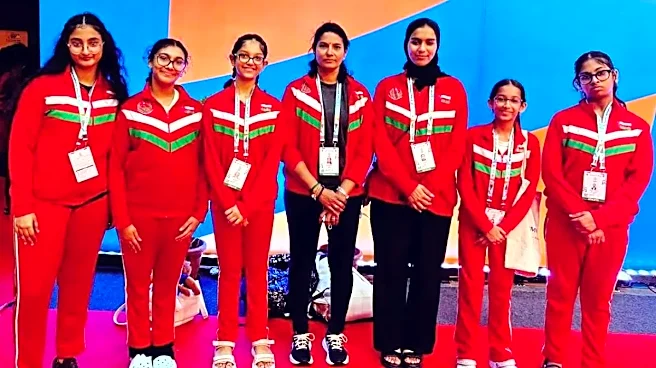
The championships hosted 522 competitors from 78 countries, giving Yogasana a broad global platform. India topped the table with a century of gold medals, while Oman secured 21 medals, including 8 silver and 13 bronze medals. Jordan earned two bronze medals, and athletes from Iran and the UAE gained important high-level competitive experience.
Middle East interest at the World Yogasana Championships
For many Middle Eastern nations, yoga had been linked
mainly with wellness centres and private studios, not organised sport. Participation by Oman, Jordan, Iran and the UAE at the first World Yogasana Championships showed that attitudes are shifting. Officials believe this debut marks the creation of a more structured Yogasana sporting ecosystem across the region.
The event also acted as a testing ground for emerging programmes that are still building athlete pathways and coaching systems. For these countries, competing under international judging conditions offered a reference point for standards. Administrators now have clearer ideas about the training volume, precision and presentation required for success at future Yogasana competitions.
Oman's journey at the World Yogasana Championships
Oman's performance highlighted how quickly Yogasana is spreading in parts of the Gulf. The country's 21 medals made Oman the leading Gulf participant in Ahmedabad. Across the region, yoga participation has increased over the past decade, helped by health awareness, expatriate communities and government-backed fitness drives, and competitive Yogasana is beginning to draw from that base.
Fifteen-year-old Jay Rajesh Soneji, an Indian-origin student from Muscat, won two bronze medals for Oman. "It feels amazing. I am very happy with my performance. Winning two bronze medals is a big achievement for me," Soneji said. "This event is going to create more awareness about yoga and encourage more people to take up the sport in Oman. I hope it continues to grow in the coming years," Soneji said.
Yoga Oman President Salha Hakeem viewed the country's success as the result of patient investment in training and organisation. "We are extremely proud of this achievement. Winning 21 medals at the first-ever Yogasana world championships is a historic milestone for Oman and reflects the dedication, discipline and hard work of our athletes, coaches and the entire Yoga Oman team," Hakeem said, stressing long-term planning.
Regional impact of the World Yogasana Championships
Jordan's progress followed a similar pattern, with Yogasana gradually becoming more visible beyond specialist communities. Bronze medallist Maya Alostath observed that growing numbers now see wider benefits. "Yoga in Jordan is growing year after year. More people are beginning to understand that yogasana is not only about flexibility or physical postures, but also about self-discovery, balance and inner strength," Alostath said.
For Alostath, the World Yogasana Championships also demonstrated yoga's role in cultural exchange. "This championship is not just about winning medals. It is about bringing together people from all over the world through the spirit of yoga," Alostath said. That sentiment matched scenes in Ahmedabad, where athletes, coaches and officials from diverse backgrounds shared training ideas and performance experiences.
Beyond medal counts, many delegations left Gujarat with detailed insights into international judging protocols, scoring systems and competition formats. Such knowledge can help national bodies design clearer selection trials, coach education plans and age-group events. For several Middle Eastern teams, simply appearing at a recognised world championship gave Yogasana added credibility with schools and local sports councils.
Delegates also expected the publicity from Ahmedabad to influence participation rates. They believed more children and young adults may now see Yogasana as a structured competitive sport, not just a recreational class. The prospect of international representation, along with defined training routes, could attract new talent into academies and community centres across the Middle East.
Future outlook after the World Yogasana Championships
The wider context in the region appears favourable. Many Middle Eastern countries have youthful populations and rising interest in wellness activities. Government campaigns promoting active lifestyles, along with established yoga communities among expatriates, have created a supportive environment. Competitive Yogasana is beginning to leverage this interest by offering clear goals, rankings and exposure at events like Ahmedabad.
The medals earned in Ahmedabad were important milestones for Oman, Jordan and other participating nations. Yet the deeper effect of the first World Yogasana Championships lay in the confidence it gave emerging programmes that they can develop athletes and compete regularly. If that momentum continues, Ahmedabad may be remembered as the tournament that accelerated Yogasana's growth across the Middle East.


/images/ppid_a911dc6a-image-178137753244231010.webp)


/images/ppid_a911dc6a-image-178137702206210082.webp)