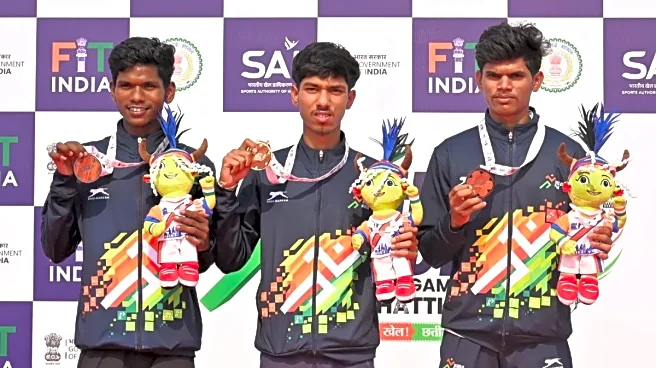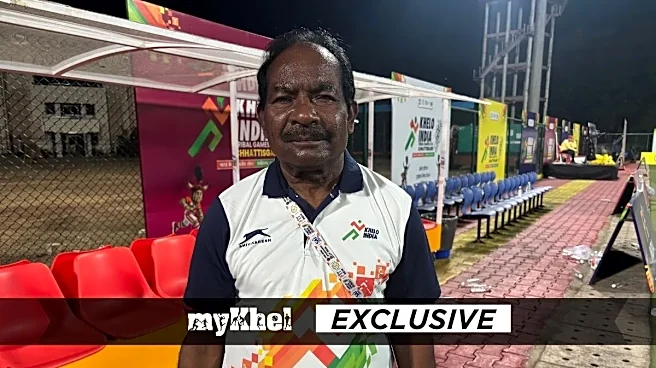

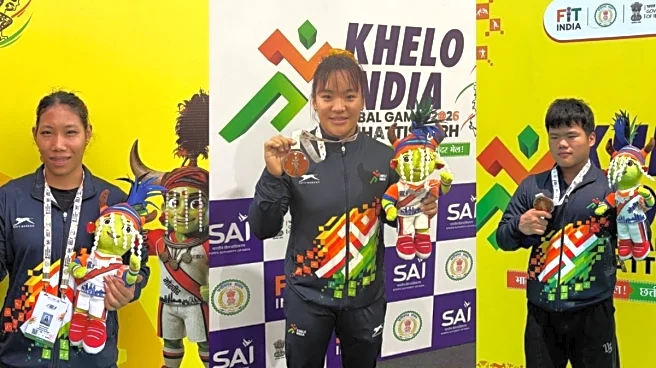
Raipur, April 2: Jharkhand and Chhattisgarh men's hockey teams finished on the podium at the Khelo India Tribal Games 2026, securing silver and bronze respectively at the Sardar Vallabhbhai Patel International Hockey Stadium in Raipur. But beyond the medals and state pride, the two teams share a deeper common thread - both teams are guided by the same man, former Olympian Manohar Topno.
Topno, who represented India at the 1984 Los Angeles Olympics where they finished fifth, has seen Indian hockey across eras. He has shared the dressing room with some of the finest names of Indian Hockey during the 1980s and 1990s, including late Mohammad Shahid, Zafar Iqbal, Dhanraj Pillai, Dilip Tirkey. He trained under the legendary Balbir Singh Sr - one of India's
greatest players and coaches. That rich legacy now reflects in his approach as he mentors young hockey players.
Now the head coach of both Jharkhand and Chhattisgarh hockey state teams, Topno is at the heart of a growing movement that is reshaping hockey in India's tribal belt. This being the first edition of the Khelo India Tribal Games, the impact is already visible. Backed by government initiatives aimed at building infrastructure in the hinterlands, especially across tribal regions of Odisha, Jharkhand and Chhattisgarh, sport is steadily becoming a pathway to opportunity.
In an interaction with myKhel, Topno highlighted the significance of such grassroots platforms. He said, "I would like to thank the Government of India and Chhattisgarh and SAI for organising this tournament. The boys and girls from our communities are rising and rebuilding. If we continue like this, one day these players will represent India. "
Coming from a tribal background himself, Topno understands why hockey thrives naturally in these regions. He added, "The reason is that our tribal communities play hockey naturally. If we focus on these regions, our players will grow and make the country proud. "
Life in forest regions is physically demanding, and that naturally builds strength, endurance and resilience. Sports like hockey and long-distance running come instinctively to many tribal children. What was once missing, however, was structure-and that is now changing.
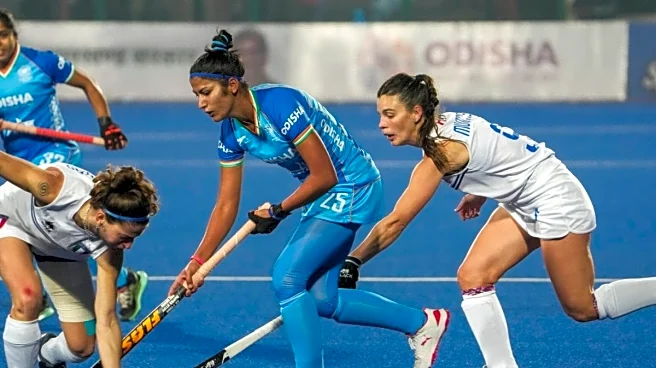
The introduction of Khelo India programmes, along with sustained investment by the Odisha government over the past 10-15 years, has paved the way for a steady influx of players at sub-junior, junior and national levels. Today, tribal athletes form a significant part of India's hockey ecosystem, with growing representation in both men's and women's national teams.
A key driver of this transformation is the establishment of high-performance training centres. The Khelo India State Centre of Excellence (KISCE) in Bilaspur, located at the Rajya Khel Prashikshan Kendra in Bahatarai, has emerged as a crucial hub for nurturing talent.
Former India Olympian Ajit Lakhra, who was part of the 1992 Barcelona Olympics and also hails from a tribal community, heads the Residential Hockey Academy at the centre. His work, according to Topno, is already delivering results.
"The Chhattisgarh team is very young. They have been in the hostel for two years and have improved a lot. Ajit Lakhra has trained many players in a short time. They have performed very well and even finished third," Topno said.
Despite the progress, Topno remains candid about the challenges that persist. Reflecting on Jharkhand's performance, he pointed out the need for better finishing and penalty corner conversion. "There is a lack of goals. We created many chances but couldn't convert them. PC conversion and strikers are areas we need to improve. "
At a broader level, however, he sees Indian hockey moving in a positive direction, driven by improved infrastructure, structured academies and stronger government support.
"India is providing good facilities for hockey now. We want even more support so that players can win medals in the Olympics and World Cup and make the country proud. "
He also highlighted how the shift from job-based systems of the past to modern academy structures has transformed the sport. Topno - who has been part of the 1982 New Delhi Asian Games silver-winning Indian side - further stated, "Earlier, players had to work and play. Now everything is taken care of-food, equipment, training. This helps players focus completely on hockey. "
With states like Odisha, Jharkhand and Chhattisgarh investing heavily in hockey, a healthy competition has emerged, strengthening the talent pipeline across regions.
From marking some of the finest players in world hockey during his playing days to now mentoring young athletes from remote villages, Manohar Topno's journey mirrors the transformation of Indian hockey itself. The tribal heartland, once overlooked, is now steadily becoming the foundation of the country's hockey future-and Topno is right at the centre of that change.