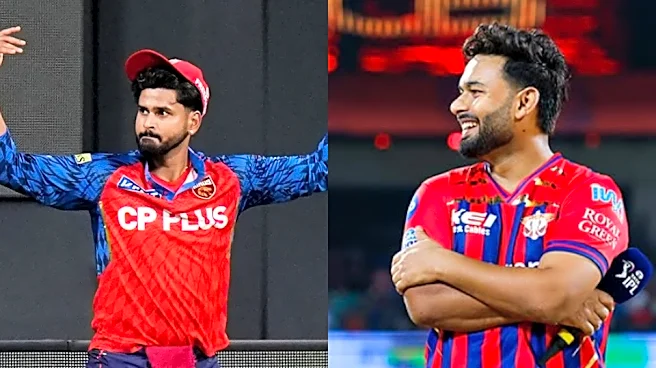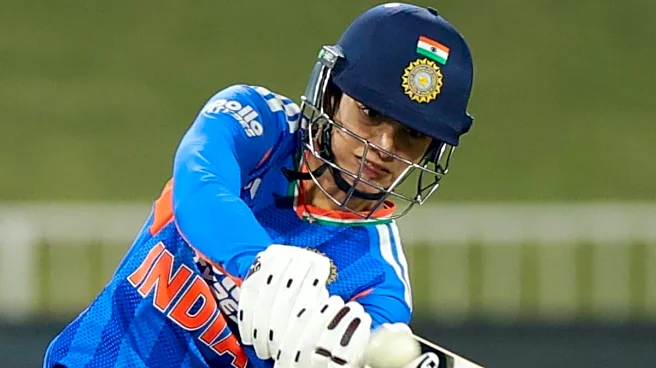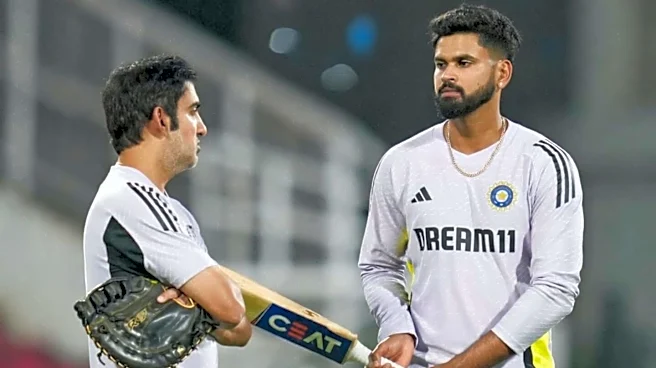

The Board of Control for Cricket in India is reportedly preparing for a unique scheduling challenge that could see two Indian men's teams playing simultaneously. With a packed international calendar ahead and multiple tournaments overlapping, the board is planning to create a large pool of 30-35 players - many of them likely to be rewarded for strong performances in IPL 2026.
The move reflects both necessity and opportunity. With international commitments stacking up and player workloads increasing, the BCCI is looking at squad depth not as a backup option, but as a long-term strategy to sustain performance across formats and tournaments.
Why India may field two teams at the same time
The immediate trigger behind this plan is a scheduling overlap between the Asian Games and a T20I series against
West Indies at home. Both events are expected to take place at roughly the same time, forcing India to split resources across two separate squads.
According to reports, the BCCI intends to deploy one team for the Asian Games while another squad handles bilateral international commitments. This is not an unprecedented step, but the scale of planning involved suggests a more structured approach than before.
The packed calendar following IPL 2026 makes this move even more logical. India are scheduled to tour Ireland for a T20I series, followed by a white-ball tour of England, then an away series against Zimbabwe. Reports also indicate the possibility of an additional T20I series against Sri Lanka before the team returns home.
Such a schedule creates physical and mental fatigue risks for players who have already participated in back-to-back tournaments, including the T20 World Cup cycle and IPL 2026. Expanding the player pool allows rotation without weakening competitiveness.
What is the BCCI Two-Team 30-35 player pool plan?
Instead of relying on a fixed core squad, the BCCI is planning to maintain a wider pool of 30 to 35 players who can be rotated across formats and tours depending on workload and scheduling demands.
This strategy serves multiple purposes. It reduces the risk of player burnout, allows emerging talents to gain international exposure, and ensures India remain competitive even when multiple tournaments overlap.
A larger pool also enables selectors to experiment with combinations while maintaining depth across batting, bowling and all-rounder departments. The approach mirrors modern workload management models used by leading cricket boards across the world.
Importantly, this pool is expected to evolve based on domestic and IPL performances, making the IPL 2026 season a major selection window for new entrants.
Has India fielded two teams before?
Yes, India have previously used split squads, though not always at the same scale being proposed now.
One of the most notable examples came when India played a white-ball series in Sri Lanka while simultaneously competing in a Test series in England. Separate squads were selected for each assignment, featuring a mix of experienced and fringe players.
That approach proved successful in terms of player development, with several emerging cricketers gaining international exposure without disrupting the main squad's commitments.
The upcoming plan, however, could be larger in scope, especially with multi-event overlaps like the Asian Games creating scheduling bottlenecks.
Which IPL 2026 performers could benefit from BCCI Two-Team plan
One of the most talked-about aspects of the expanded pool is the potential reward for standout IPL 2026 performers. Several young players have impressed this season, strengthening their case for national selection.
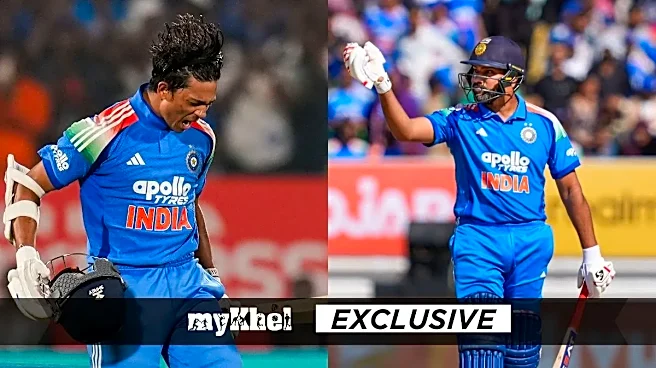
Among the most prominent names is Vaibhav Sooryavanshi, whose explosive performances have drawn widespread attention. The teenage batter has scored 246 runs in six innings at an impressive strike rate above 236, including two half-centuries. His fearless strokeplay has positioned him as one of the breakout stars of the tournament.
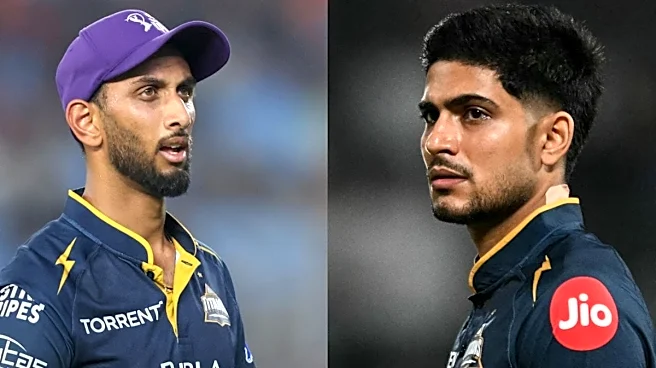
Priyansh Arya is another strong contender. The left-handed opener has scored 211 runs in five innings at a strike rate above 248, showcasing aggressive batting that aligns with India's evolving T20 template.
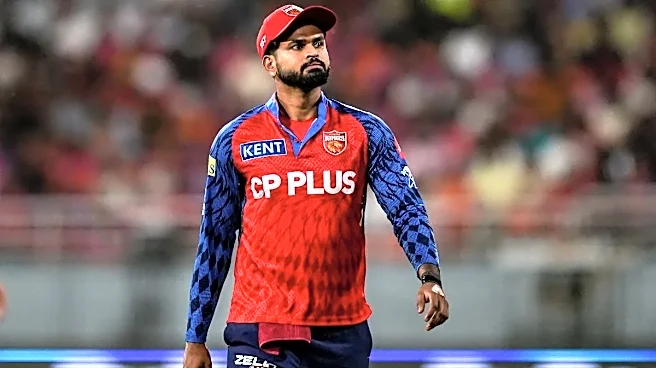
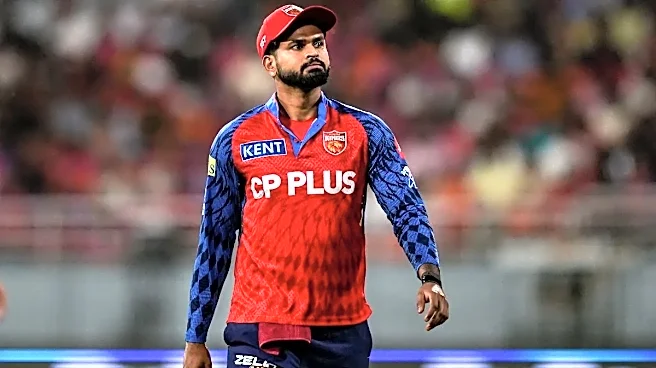
Shreyas Iyer's performances as Punjab Kings captain have also strengthened his case. He has accumulated over 200 runs in six innings at a strike rate above 180, demonstrating both leadership and batting consistency.
Established names like Yashasvi Jaiswal and Riyan Parag are also expected to remain firmly in contention, especially given their proven international and IPL records.
In the bowling department, Prasidh Krishna is among the front-runners for selection due to his ability to deliver breakthroughs in pressure situations. Meanwhile, young fast bowler Ashok Sharma has impressed with raw pace, consistently touching speeds close to 150 kmph - a trait that selectors value highly in modern T20 cricket.
How IPL 2026 performances are shaping selection decisions
The IPL has long served as a proving ground for international selection, but the current situation gives the tournament even greater significance.
With a larger pool required, selectors are closely monitoring performances not just in terms of runs and wickets, but also adaptability, match temperament, and fitness levels. Strike rates, powerplay effectiveness, death bowling skills, and fielding efficiency are all being evaluated.
Players who demonstrate consistency under pressure are likely to move ahead in the selection queue, especially those capable of performing across multiple roles.
The IPL also allows selectors to assess players against high-quality opposition, making it one of the most reliable indicators of readiness for international cricket.
What this means for workload management and player fitness
Workload management has become a central concern in modern cricket, particularly with year-round schedules and franchise leagues increasing player commitments.
By expanding the player pool, the BCCI aims to ensure that key players are rested periodically without compromising team strength. This reduces injury risks, extends player careers, and maintains performance levels during major tournaments.
Mental fatigue is another critical factor. Players involved in continuous international and franchise cricket often struggle with burnout, affecting both form and recovery. A larger rotation pool allows strategic rest periods while maintaining competitiveness.
This shift also aligns with the broader global trend of prioritising long-term athlete welfare alongside performance.
What this could mean for India's long-term squad depth
Beyond immediate scheduling challenges, the expanded pool strategy has long-term implications for Indian cricket.
It creates a pipeline of ready-to-play international cricketers, reducing dependency on a small core group. Young players gain exposure earlier, increasing competition for places and raising overall performance standards.
This depth becomes particularly valuable during injury crises, form slumps, or major tournament cycles where multiple formats overlap.
It also strengthens India's ability to adapt to evolving T20 strategies, including power-hitting lineups and multi-skilled bowling units.
Timeline of India's upcoming commitments after IPL 2026
India's international calendar following IPL 2026 highlights the urgency behind this move.
The team is scheduled to tour Ireland for a T20I series shortly after the IPL concludes. This will be followed by a full white-ball tour of England, then an away series against Zimbabwe.
There is also a possibility of a short T20I series against Sri Lanka before India returns home for further assignments.
Alongside these bilateral series, the Asian Games schedule overlaps with the West Indies T20I series, creating the need for parallel squads.
Key questions answered
Will India really field two teams at the same time?
Yes, if schedules overlap as expected, India will likely field separate squads for different tournaments or tours.
Why is BCCI expanding the squad pool?
To manage player workload, reduce fatigue, and ensure competitive performance across simultaneous tournaments.
Will IPL performers get priority?
Strong IPL performances significantly improve a player's chances of entering the expanded pool.
Has this happened before?
Yes, India previously fielded split squads during simultaneous tours, though the current plan may be more extensive.
Will senior players be rested?
Likely, especially during less critical bilateral series, allowing younger players to gain experience.
What BCCI Two-Team strategy means for Indian cricket going forward
The proposed 30-35 player pool represents a shift in how India approaches squad building. Instead of relying on a fixed set of players, the focus is moving toward flexibility, depth, and sustainability.
If executed effectively, the plan could strengthen India's competitiveness across formats while accelerating the development of young talent emerging from the IPL ecosystem.
It also signals a future where international cricket schedules may increasingly require parallel squads - making squad depth not just an advantage, but a necessity.