
/images/ppid_59c68470-image-177074256690378457.webp)
/images/ppid_59c68470-image-177074267570254615.webp)
Some years only reveal their importance in hindsight. 2025, however, felt like a milestone for Indian and South Asian gaming from the moment it began.
You could sense it everywhere-cafes filling up for watch parties, college corridors buzzing long after matches ended, and city streets where inside jokes from voice comms suddenly appeared on billboards. Gaming in South Asia no longer felt tucked away or niche. It felt shared, confident, and unmistakably present.
At the heart of that shift was Riot Games, whose year unfolded not just through tournaments and campaigns, but through the people who kept showing up-playing, competing, celebrating, and building culture together.
Structure for a Long-Awaited Competitive Dream
The year began with something competitive players across the region had long
demanded: structure. Legends Ascend South Asia arrived as a clear and credible pathway for League of Legends talent.
Ninety-five teams from India, Bangladesh, Sri Lanka, Nepal, Maldives, and Bhutan stepped into open qualifiers, carrying regional pride and personal ambition in equal measure. Over four months, the tournament built rhythm and belief. When S8UL Esports lifted the trophy, the celebration travelled far beyond the stage. Their qualification for the LCP Wild Card Playoffs placed South Asian talent directly into a global conversation-one followed closely across 29 broadcast days and countless local watch parties.
PC Esports Finds Its Footing Again
As that momentum grew, another shift became impossible to ignore. PC esports in India was back, and it was loud. The response to VALORANT Challengers South Asia reflected a hunger that had been building quietly for years. Across the season, the circuit crossed 103 million live and non-live views.
The LAN finals became a shared moment-drawing over 12 million views, peaking at 50,000 concurrent viewers, and bringing fans together to experience every clutch round in person. For players and spectators alike, it felt like affirmation that competitive gaming in India extends confidently across platforms.
Five Years of VALORANT, Told by the Community
Midway through the year came reflection. VALORANT turned five, and the anniversary carried the weight of lived experience-late-night queues, friendships forged in cyber cafes, and rivalries that spilled into everyday conversations.
Instead of a distant celebration, V5 lived in familiar spaces. Animated shorts inspired by real player stories, murals shaped by inside jokes, and campus activations made recognition feel personal rather than performative. The V5 visual itself felt like a shared scrapbook-chai cups for all-nighters, LAN setups where careers quietly began, and phrases like "NHK?" that instantly connected players across cities.
When Gaming Stepped Into Public Culture
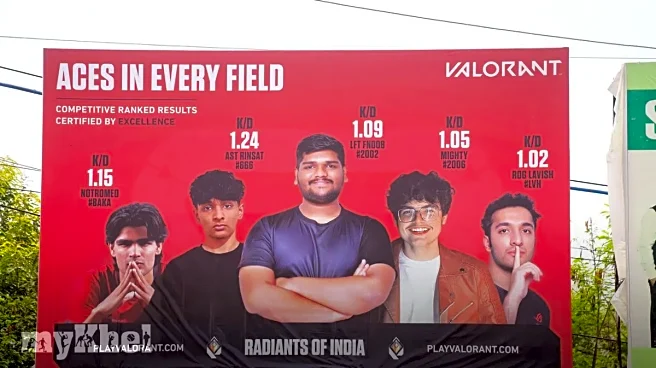
That connection soon moved beyond screens. Streets in Mumbai, Delhi, Gurgaon, and Kota lit up with VALORANT callouts chosen by the community. Billboards felt like knowing nods rather than announcements.
On JEE results day, VAL Toppers reimagined a familiar ritual, celebrating Radiant-ranked players using the same visual language reserved for academic achievers. The moment sparked smiles, screenshots, and conversations well beyond gaming timelines-an unmistakable sign that gaming had entered the broader cultural conversation.
Grassroots Energy That Kept the Year Moving
Beneath the headline moments, grassroots energy powered the ecosystem. Community watch parties turned malls and cafes into pop-up arenas. College events welcomed first-time players with open controllers and open conversations.
At the VCSA Split 2 Finals in Mumbai, curiosity turned into participation as passersby stepped inside, picked up V5 merch, and experienced the atmosphere firsthand. These moments built belonging in ways that numbers alone never capture.
Gaming Meets Music, Naturally
The cultural crescendo arrived in November when VALORANT took the stage at Rolling Loud India. Gaming blended seamlessly into one of the world's biggest hip-hop festivals as fans flowed between performances and the VALORANT experience zone.
With artists like Central Cee, Wiz Khalifa, Karan Aujla, and DIVINE on stage, the crossover felt instinctive. Karaoke pods pulsed with VALORANT anthems, quick duels sparked spontaneous rivalries, and interactive installations mirrored the shared rhythm of music and play.
A Year Defined by Closeness
Looking back, the connective thread through 2025 was proximity. Riot Games stayed close to the spaces where players gathered-competitive and casual, loud and intimate. As Anushka Bhatnagar, Publishing Lead, Riot Games India & South Asia, reflected:
"2025 felt like a year when India's gaming and esports landscape stepped into the centre of cultural conversation. VALORANT turning five reminded us how deeply the community here has shaped the game. From grassroots watch parties to moments like Rolling Loud, the ecosystem grew with a confidence that felt distinctly homegrown. "
By the end of the year, gaming in South Asia no longer felt like it was waiting for recognition. It felt rooted-built through shared moments, collective pride, and communities that continue to show up for one another. 2025 became a reminder that the strongest cultures are built together.


/images/ppid_59c68470-image-177074503441486947.webp)

/images/ppid_a911dc6a-image-177074459721678071.webp)

/images/ppid_a911dc6a-image-177074455457797658.webp)
/images/ppid_a911dc6a-image-177074307992372091.webp)