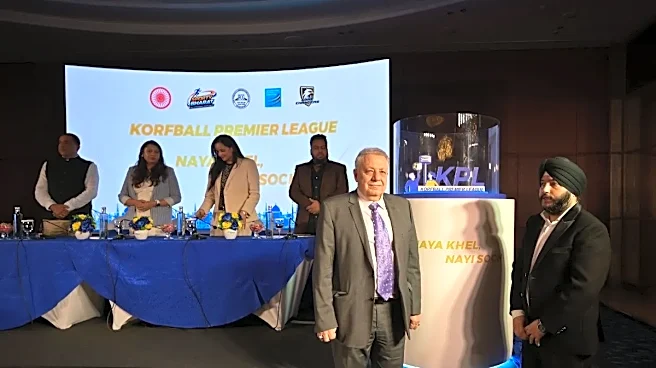



India's sporting landscape is set for a progressive transformation with the launch of the Korfball Premier League (KPL) in New Delhi. Positioned as a bold step towards inclusivity and equality, the league aims to professionalize one of the world's most unique sports-korfball, a game built on the foundation of gender parity.
With a prize pool of INR 25 lakhs and a vision captured in the philosophy "Naya Khel, Nayi Soch", the KPL promises to redefine how India engages with mixed-gender sports.
What is Korfball?
Korfball is a fast-paced team sport that originated in the Netherlands in 1902. It blends elements of basketball, netball, and handball but stands apart due to one defining feature-men and women play together in the same team.
According to the document (page
1), korfball was designed to be a gender-blind, cooperative sport, ensuring fairness and teamwork rather than physical dominance. 
Key Rules and Features:
• Each team consists of 8 players: 4 men and 4 women
• Players can only defend opponents of the same gender
• The objective is to score by throwing the ball into a raised basket ("korf")
• No dribbling or running with the ball-passing and movement are essential 
• Matches are played across two zones where players switch roles after goals
The "defended rule" (explained on page 2) ensures skill over strength-players cannot shoot if closely marked, promoting tactical play.
The Mixed-Gender Format: Korfball's Biggest USP
What truly sets korfball apart-and what the KPL is built around-is its mandatory mixed-gender format.
• Every team must field equal numbers of men and women (4 each)
• Teams are divided into zones with 2 men and 2 women in each half
• Defensive matchups are gender-specific to maintain balance
This structure ensures:
• Equal participation and visibility
• No physical advantage dominance
• High emphasis on teamwork and strategy
As highlighted during the KPL launch, this format is expected to drive gender equality in Indian sport in a practical, visible way, not just as a concept but through real competition.
Korfball Premier League (KPL): Structure, Vision & What Organisers Say
The inaugural KPL season is designed to be compact yet impactful.
Key Details:
• Teams: 8 franchises (initial phase)
• Prize Pool: INR 25 Lakhs
• Format: Franchise-based professional league
Adding insight into the league's commercial and audience strategy, Chandan Kumar, Director of Sporty Bharat, told MyKhel:
"With Korfball, the idea is to build familiarity first. Once people start recognising the game, the players, and the format, viewership naturally follows. "
He further elaborated on the league's structure and growth plans:
"Currently, we are limiting the league to eight teams. As the sport grows and we see more potential and investor interest, we can expand and even look at a global format in the future. "
Kumar also emphasized openness to investors and stakeholders:
"A lot of people are approaching us. Through platforms like this, we want to make the opportunity more visible-people can come forward, invest, and help promote this game. "
When Will the Korfball Premier League Start?
The much-anticipated KPL inaugural season is scheduled to begin on September 26, 2026.
• Duration: Approximately 13-15 days
• A short, high-intensity tournament window to maximise engagement
Korfball in India: A Growing Movement
Korfball may still be niche compared to cricket, but its growth in India has been steady and significant.
• Played across 26 states
• Strong presence in schools and universities
• India ranked 16th in the world (2026) 
The sport has also been recognized by national bodies and continues to produce competitive international performances, especially in Asia-Oceania competitions.
A League With a Larger Purpose
The KPL is not just another sports league-it represents a cultural shift.
By combining:
• Professional structure
• Equal gender participation
• Grassroots-to-elite pathway
.it positions itself as a social movement as much as a sporting property.
With voices like Chandan Kumar backing its long-term vision, the Korfball Premier League is aiming not just to launch a sport-but to build a sustainable sporting ecosystem rooted in equality.