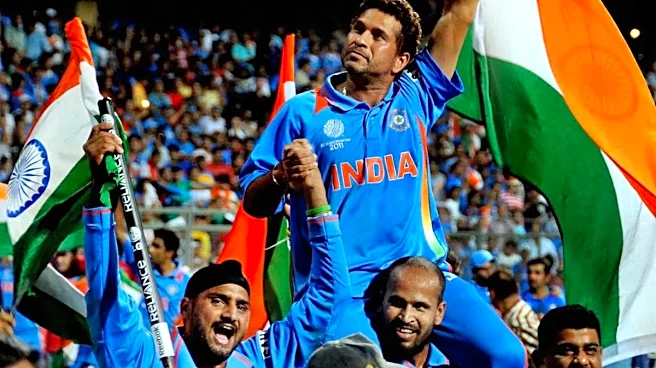

MS Dhoni swung, the ball arced high over long-on, and then it disappeared into the Wankhede night. By the time it landed, a billion people had already started screaming.
Ravi Shastri's commentary dissolved into noise. Yuvraj Singh sprinted onto the pitch and leapt into Dhoni's arms. Sachin Tendulkar sat in the stands, hands over his face, weeping. That was April 2, 2011. Fifteen years ago today.
India had won the Cricket World Cup for the second time - and for the first time on home soil. In the stands, in living rooms from Mumbai to Manipur, in chai stalls and college hostels, something happened that night that went beyond sport. A generation that had grown up watching Tendulkar chase this dream now saw it fulfilled.
But sport is also a story
of time. The players who ran onto that Wankhede outfield are now 15 years older, and their lives have scattered in directions no one could have predicted. Politicians. Coaches. Commentators. Reality TV contestants. One of them is still playing international cricket. Another retired from the game just last year.
Here is where they all are now.
MS Dhoni
He hit the winning six. He promoted himself ahead of in-form Yuvraj Singh in the final, a decision so audacious that it would have destroyed lesser leaders if it had failed. It didn't fail. Dhoni finished unbeaten on 91 off 79 balls and lifted the trophy.
He retired from international cricket on Independence Day 2020, announcing it with a characteristically quiet Instagram post. Yet "retirement" has meant something different for Dhoni. He continued leading Chennai Super Kings in the IPL, winning the title in both 2021 and 2023 - long after he'd stopped representing India. At 44, he remains the oldest active IPL player, a figure so beloved that franchises bend rules of logic and economics just to keep him around.
Sachin Tendulkar
Before the final, Virat Kohli said something that became as famous as the match itself: "Tendulkar has carried the burden of the nation for 21 years. It was time we carried him. "
He retired from all cricket in November 2013, having scored 100 international centuries - a number so surreal it barely feels real. Since then, he has served as mentor and icon of Mumbai Indians in the IPL. He appears at charity events, is occasionally spotted at cricket grounds, and remains, quite simply, the most revered figure in the history of Indian cricket.
Gautam Gambhir
He scored 97. Ninety-seven. Three runs short of the century that would have made his name as large as Dhoni's in the retelling of that night.
After retiring from international cricket in 2016, Gambhir entered politics, becoming a Member of Parliament from East Delhi. Then cricket pulled him back - first as a mentor for Kolkata Knight Riders in the IPL, then in the most significant appointment possible: head coach of the Indian men's national team. He has also won two ICC titles as head coach - Champions Trophy in 2025 and the T20 World Cup in 2026.
The boy who scored 97 in a World Cup final now runs the dressing room of the team he once saved.
Virat Kohli
In 2011, Kohli was 22. He came in at No. 4 in the final, scored 35, and was caught and bowled by Dilshan. Nobody complained. He was young, he played his part, and the old guard took it from there.
Fifteen years on, Kohli is the last man standing from that squad in international cricket - and he has been anything but a supporting act. He led India across all formats, amassed run totals that challenge Tendulkar's records, and became one of the most recognised athletes on the planet.
He has stepped back from captaincy across formats and now plays as a batter, continuing with Royal Challengers Bangalore in the IPL. At 37, he still plays with the hunger of someone who has something to prove. His 2023 World Cup was a masterclass - leading run-scorer in the tournament. The boy who was carried by veterans in 2011 has since become the veteran who carried others.
Yuvraj Singh
Of all the stories from 2011, Yuvraj's is the one that time has made almost unbearably poignant.
He was the tournament's heartbeat - 362 runs, 15 wickets, four Man of the Match awards, and ultimately the Player of the Tournament trophy. He was everywhere: with the bat, with the ball, in the field, in the celebration.
What nobody knew was that he was already ill. Months after the final, he was diagnosed with a cancerous tumour in his lung. He underwent chemotherapy, was declared cancer-free, returned to play for India, and then retired in 2019 - having lived a story that would strain credibility as fiction.
He now plays in global T20 leagues, is involved in business ventures, and regularly revisits that 2011 squad with visible affection on social media. Every April 2, he posts. He has also been a mentor and coach to India's current generation stars such as Shubman Gill, Abhishek Sharma.
Virender Sehwag
He was out for a duck. Second ball of the innings, LBW to Malinga. Under any other circumstances it would have been the story of the night.
But the night went differently, and Sehwag's golden duck is remembered now mostly as a footnote - one of those early jolts that great chases absorb and transcend.
Sehwag retired from all forms of cricket in 2015 and has since become one of the most entertaining voices in the commentary box - sharp, funny, and completely himself. He contributed to ICC events and series broadcasts and has built a second career as a cricket analyst. He also runs a school in Jhajjar, Haryana - the Sehwag International School - which has been widely praised for its student-centric approach.
Harbhajan Singh
Harbhajan was part of the squad but saw limited playing time in the tournament. His contribution was as much about presence, experience, and the dressing room as about wickets on the field.
After retirement, he moved into commentary and media - a natural fit for someone always comfortable in the spotlight. He remains one of the most animated and recognisable voices in Indian cricket broadcasting, turning up on panels and in the commentary box for major tournaments.
Ashish Nehra
Nehra was the old head of the pace attack in 2011, a wily left-armer who understood swing and movement better than almost anyone. He finally retired in November 2018 - fittingly, at home in Delhi, in front of his home crowd at the Feroz Shah Kotla.
He didn't stay away from cricket for long. He joined RCB as a bowling coach, then took over as head coach of Gujarat Titans in the IPL - and built the franchise into one of the competition's most respected teams within two seasons.
Ravichandran Ashwin
Ashwin played just two games in the 2011 World Cup, taking four wickets. It was, in his words, only the beginning.
Over the next decade, he became arguably the greatest Test off-spinner India has ever produced, reinventing his action, his variations, and his thinking multiple times. He has a YouTube channel where he breaks down the game with a professor's rigour and a fan's enthusiasm.
In December 2024, he announced his retirement from international cricket - but he continues in the IPL and domestic cricket, unwilling to fully let go of the game that shaped him. Ashwin is set to become the first Indian player to play in the MLC as he signed for San Francisco Unicorns.
Suresh Raina
Raina retired from international cricket on the same day as Dhoni - August 15, 2020 - in what felt like a final act of loyalty between teammates.
Since then, he has been busy with purpose. He runs the Gracia Raina Foundation, focused on creating awareness around maternal and adolescent health across India. He joined the commentary circuit for IPL coverage, bringing the energy and passion he always had on the field.
S. Sreesanth
The 2011 World Cup final was Sreesanth's last ODI. He retired in 2013, was subsequently banned following the IPL spot-fixing controversy, and spent years clearing his name before eventually being cleared of wrongdoing.
In the years that followed, he appeared on Bigg Boss, joined the BJP, played in T20 leagues, and became something of a cult figure. His is the most complicated post-2011 story - a man whose talent was immense, whose journey was turbulent, and who has spent years trying to define himself beyond a single night in the spotlight.
Piyush Chawla
Of all the squad members, Chawla was the last to play competitive cricket. He continued in the IPL until the 2025 season - and only in June 2025 did he announce his retirement from all forms of the game. Fifteen years after lifting the trophy, Chawla is now a regular face as an analyst and pundit.
Zaheer Khan
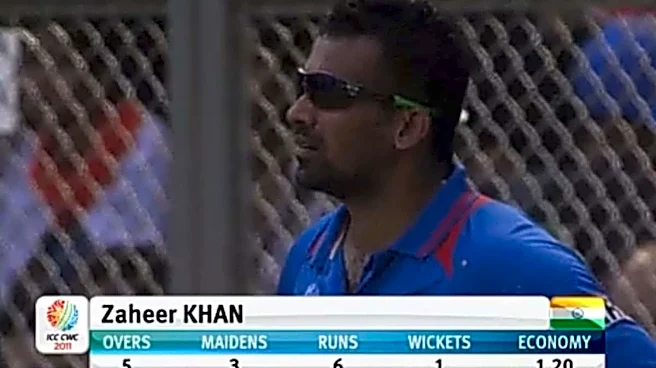
India's pace spearhead retired in 2015. He serves as bowling mentor for Lucknow Super Giants in the IPL and has held similar roles with Mumbai Indians. Zaheer occasionally features in discussions for national team coaching positions and remains a respected voice in pace bowling circles.
Munaf Patel
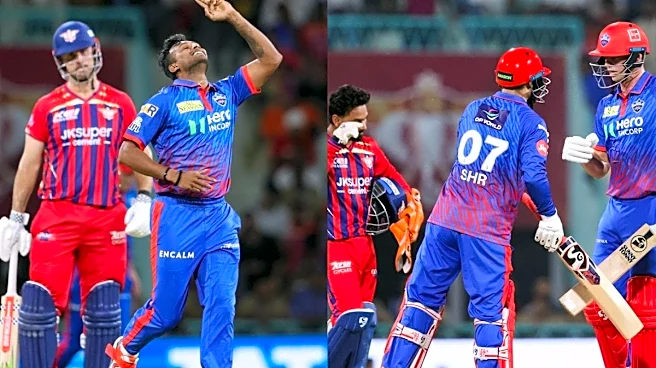
Munaf Patel retired from all competitive cricket in 2018. In 2026, he continues as the bowling coach of Delhi Capitals in the IPL, where he mentors the pace unit and occasionally shares strong opinions on Indian cricket. He remains actively involved in nurturing young fast bowlers at the franchise level.
Yusuf Pathan
Yusuf Pathan, the hard-hitting all-rounder who played a key role in India's 2011 World Cup campaign, retired from cricket in 2021. He made a surprising shift into politics and joined the Trinamool Congress (TMC). In 2024, he won the Baharampur Lok Sabha seat in West Bengal, defeating veteran Congress leader Adhir Ranjan Chowdhury. In 2026, Yusuf serves as a Member of Parliament, balancing his new political career while occasionally appearing in Legends League Cricket.