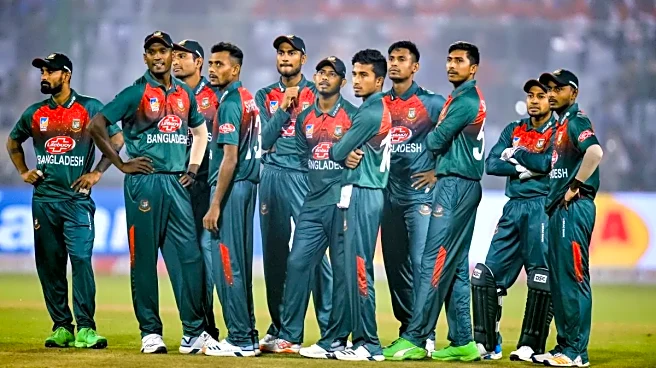


The 2026 ICC Men's T20 World Cup has taken an unprecedented turn with Bangladesh being removed from the tournament after failing to agree to the match schedule, especially games slated in India.
The International Cricket Council (ICC) confirmed that Scotland will replace Bangladesh in Group C after the Bangladesh Cricket Board (BCB) refused to play under the original fixture list, citing security concerns and requesting matches be moved to Sri Lanka-a request the ICC declined.
Although the decision was one of the most dramatic pre-tournament developments, it has forced Bangladesh cricketers, administrators and fans to rapidly rethink their immediate plans. With the World Cup set to begin on February 7 and Bangladesh no longer competing, the team
now faces the task of rebuilding momentum and morale while ensuring that players stay match-ready and focused on future assignments.
Domestic Opportunity: 'Odommo Bangladesh' T20 Tournament
In response to the World Cup exclusion, the Bangladesh Cricket Board has moved quickly to keep national players engaged. The BCB announced a new domestic T20 competition called "Odommo Bangladesh" to be held at the Sher-e-Bangla National Cricket Stadium in Mirpur from February 5 to 9.
The tournament will feature three teams - Dhumketu XI, Durbar XI and Duronto XI - led by experienced campaigners Litton Das, Najmul Hossain Shanto and Akbar Ali respectively. With BDT 2.5 crore invested in prize money and participation fees, this competition aims to provide match practice for players and maintain competitive sharpness. It also gives fringe cricketers and emerging talent a platform to impress selectors and make their case for future national selections.
Player Focus: Keeping Skills Sharp and Confidence High
For senior figures like Shakib Al Hasan, Bangladesh's World Cup exit has led to new strategic discussions. According to reports, the BCB is planning a roadmap for Shakib's return to international cricket, potentially as part of the team's campaign in upcoming ICC events or bilateral series.
Players not involved in the Odommo Bangladesh event could be integrated into other competitive windows, such as bilateral tours, A-team assignments or regional competitions. Such exposure would be crucial in keeping Bangladesh's top talents in rhythm and match-fit ahead of future ICC events.
Broader Implications: Financial and Sporting Impact
The removal from the T20 World Cup is expected to have ripple effects. Reports suggest that Bangladesh could face significant revenue losses, including sponsorship setbacks and diminished international exposure.
However, the BCB's swift move to organise a replacement tournament reflects a proactive approach to mitigate both financial and sporting fallout. By investing in domestic cricket and giving players competitive match practice, Bangladesh's cricketing body aims to turn adversity into opportunity.
Looking Ahead: Rebuilding Momentum
Bangladesh's exclusion from the 2026 World Cup has undoubtedly disrupted their international season, but the domestic response has provided a lifeline. With "Odommo Bangladesh" offering immediate competition and plans for reintegrating key players on the horizon, the team's focus now shifts to re-establishing momentum, maintaining player confidence and preparing for future global challenges.
The situation also underscores the broader tensions between the BCB and the ICC-especially over security assessments and scheduling. While Scotland steps into the World Cup spotlight, Bangladesh's cricket community looks inward to rebuild, refocus and emerge stronger in the next cycle of international cricket.
/images/ppid_59c68470-image-177006003577034216.webp)

/images/ppid_59c68470-image-177006003434960459.webp)
/images/ppid_a911dc6a-image-177005922936485059.webp)

/images/ppid_a911dc6a-image-177005853147911870.webp)

/images/ppid_59c68470-image-177005752808323538.webp)
/images/ppid_59c68470-image-177005753275452040.webp)
![[In pictures] Harshit Rana flaunts swanky Lamborghini ahead of T20 World Cup 2026](https://glance-mob.glance-cdn.com/public/cardpress/binge-magazine-card-generation/spaces/IN/en/crictracker-spaces/images/ppid_49c02804-image-177005752880329954.webp)